

Singapore Swallows 92% of Southeast Asia's Startup Capital
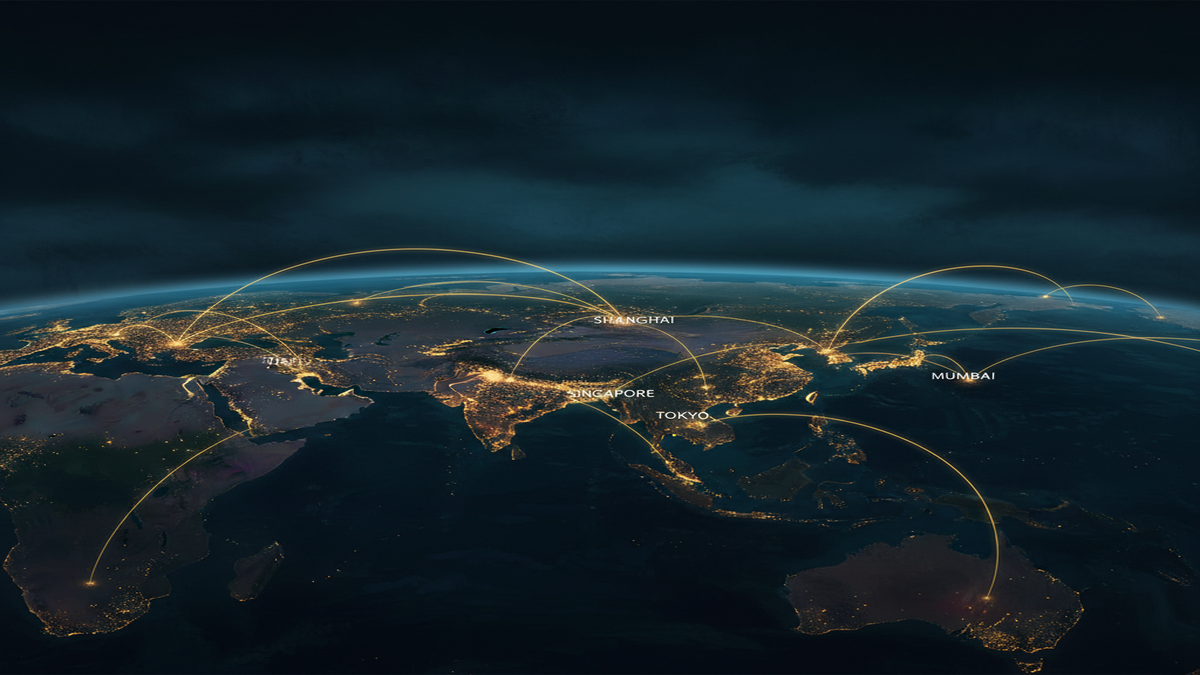
A single city-state with fewer than six million people is vacuuming up nearly all the venture capital flowing into Southeast Asia. Singapore captured approximately 92% of the region's total startup funding in the first half of 2025, a pattern that has only intensified into 2026. Through early March, Singaporean startups have already raised $2.01 billion this year, while seed-stage funding across the rest of the region collapsed by 57% year-on-year to just $214 million in 2025.
The numbers tell a story of a region where startup funding increasingly means Singapore funding. For founders in Jakarta, Ho Chi Minh City, or Manila, the message is stark: incorporate in Singapore or risk being locked out of growth capital entirely.
The Late-Stage Surge and the Seed-Stage Desert
Southeast Asia raised between $5.4 billion and $6.79 billion in total startup funding in 2025, depending on which tracker you use, a modest 14% year-on-year increase. But the distribution was anything but even. Late-stage rounds surged 140% in the first half to $1.4 billion, driven by a handful of mega-deals concentrated almost exclusively in Singapore.

Airwallex's $330 million Series G, Atome's $345 million round, and a string of other nine-figure raises kept the headline numbers healthy. Meanwhile, approximately 10 companies raised nearly 80% of total AI funding through mega-rounds exceeding $500 million. The region's trillion-dollar ambitions are being financed from a remarkably narrow base.
| Metric | Singapore | Rest of SEA |
|---|---|---|
| Share of 2025 funding | 91-92% | 8-9% |
| 2026 YTD raised | $2.01 billion | Limited data |
| Active unicorns | 22-23 | Fewer than 5 |
| Top 100 global tech firms hosted | 80 | Varies |
| Seed funding trend (2025) | Stable | -57% YoY |
The seed-stage collapse is the most concerning signal. A 57% drop in early-stage funding means fewer companies entering the pipeline, which will constrain the deal flow for Series A and B rounds in 2027 and beyond. For countries like Indonesia, Vietnam, and the Philippines, where workforce training programmes are building AI capabilities, the capital to commercialise those skills is drying up.
"Funding data across 2025 shows a decisive concentration. Singapore captured roughly 92%, while seed funding fell 57%. Capital access is now permissioned."
, Oblique Asia analysis
Why Singapore Keeps Winning
Singapore's dominance is not accidental. The Monetary Authority of Singapore's regulatory sandbox has attracted fintech companies from across the region, with the sector alone pulling in $1.3 billion across 111 deals. The government's equity co-investment programme has deployed more than $757 million into deep tech, including AI and semiconductor ventures. The country hosts 80 of the world's top 100 technology companies and ranks as the third-largest AI hub globally after the United States and China.
AI and software-as-a-service is now the fastest-growing category for new company formation in Singapore, alongside health tech and green tech. For founders building AI products aimed at Southeast Asian markets, Singapore offers regulatory clarity, access to talent, and proximity to capital that no other city in the region can match.
By The Numbers
- 92% of Southeast Asian startup funding captured by Singapore in H1 2025 (Visible.vc)
- $2.01 billion raised by Singapore startups in 2026 year-to-date through early March (GrowthList)
- 57% year-on-year decline in seed-stage funding across Southeast Asia in 2025 (Oblique Asia)
- $757 million+ in government equity co-investment deployed into Singapore deep tech (Enterprise Singapore)
- 217% growth in AI startup funding across Southeast Asia, concentrated primarily in Singapore (multiple trackers)
The Bifurcation Problem
Analysts are using the word "bifurcation" to describe what is happening. On one side, Singapore-incorporated companies with late-stage backing from global funds. On the other, early-stage startups across the rest of Southeast Asia facing what one report calls "prolonged capital scarcity" without a Singapore foothold.
"Singapore captured approximately 92% of Southeast Asia's total startup funding and 88% of fintech funding. There are concerns about ecosystems in Indonesia, Vietnam, Malaysia, and Thailand."
, Visible.vc analysis
This creates a self-reinforcing cycle. The best founders in Jakarta or Bangkok incorporate in Singapore to access capital. Their success further inflates Singapore's share. Local ecosystems lose their strongest companies, making it harder to build the track record needed to attract investors in the first place.
- Indonesia and Vietnam combined account for roughly 14% of regional funding despite having populations 50 times larger than Singapore
- Malaysia, Thailand, and the Philippines receive minimal venture capital relative to their market size
- The Philippines has launched a dedicated tech board to try to retain local startups
- Regional co-investment programmes, such as those backed by South Korea's AX Sprint, are attempting to diversify capital flows
March 2026: The Pattern Holds
Early March 2026 deals continue the trend. Eezee, a B2B marketplace, raised $5 million in a Series B. Startale Group closed $13 million in a Series A in February. Sleek EV added $8.47 million. All Singapore-based. The region's dependence on sporadic late-stage mega-deals rather than consistent mid-stage funding remains the structural weakness.
For the broader Asian AI economy, the Singapore concentration has mixed implications. It provides a clear, well-regulated gateway for global capital entering Southeast Asia. But it also means that the region's innovation capacity is being shaped by a single jurisdiction's priorities, risk appetite, and regulatory framework.
Why does Singapore dominate Southeast Asian startup funding?
Singapore offers regulatory clarity through its MAS sandbox, over $757 million in government co-investment, hosts 80 of the top 100 global tech firms, and ranks as the world's third-largest AI hub. This combination of policy, capital, and talent creates a self-reinforcing cycle that other Southeast Asian cities cannot yet match.
Is the seed funding collapse affecting AI startups specifically?
Yes. While AI startup funding grew 217% overall, that growth is concentrated in Singapore's late-stage mega-rounds. Early-stage AI founders in Indonesia, Vietnam, and the Philippines face the same 57% seed-funding decline as the broader market, making it harder to get initial ventures off the ground.
What can other Southeast Asian countries do to compete?
Countries like the Philippines have launched dedicated tech boards. Regional co-investment programmes are expanding. But the core challenge is building local capital markets with enough depth to fund companies from seed to Series B without requiring Singapore incorporation.
Southeast Asia's AI ambitions are real, but the funding reality is increasingly a one-city show. Drop your take in the comments below.








No comments yet. Be the first to share your thoughts!
Leave a Comment