
We use cookies to enhance your experience. By continuing to visit this site you agree to our use of cookies. Cookie Policy

AI in ASIA
learn
beginner
ChatGPT

AI Tools for Learning Traditional Chinese and Taiwanese Culture

Accelerate your Mandarin learning and cultural understanding with AI tutors customised to Taiwan's language, history, and living culture
9 min read28 February 2026
Language Learning
Traditional Chinese
Taiwan Culture
Mandarin
Cultural Understanding
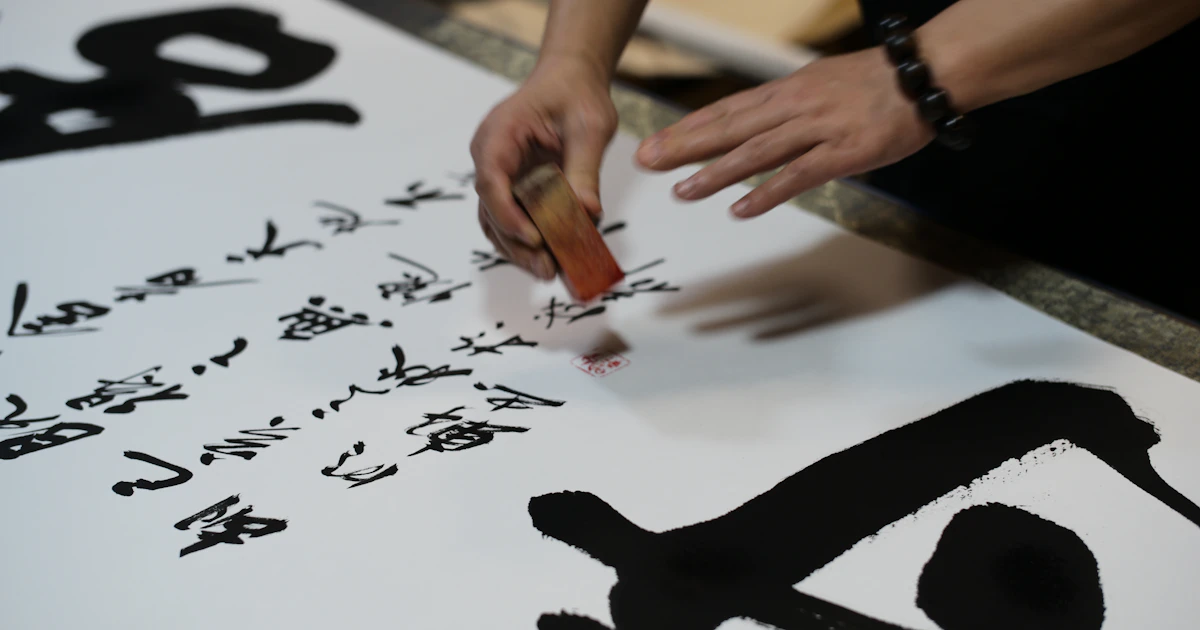
Person studying Mandarin Chinese with Traditional characters, Taiwan cultural artifacts visible

ChatGPT and Claude excel at explaining Traditional Chinese grammar, characters, and cultural context in ways standard textbooks can't match

AI tools can personalise learning to your proficiency level and create unlimited customised content - far superior to rigid textbook-based learning

Taiwan's Mandarin includes unique vocabulary, expressions, and cultural references that differ from mainland China Chinese and formal textbook Mandarin

Learning Taiwan culture and history through AI provides context for language - characters, idioms, and expressions make sense when you understand their cultural origins

Why This Matters

Learning Mandarin is challenging, especially Learning Traditional Chinese characters and Taiwan-specific language variations. Standard textbooks often miss Taiwan's unique expressions, internet culture, and historical context. AI tutors adapt to your learning style, answer unlimited questions, and provide cultural context that transforms language from abstract rules into meaningful communication. Whether you're moving to Taiwan, want to understand Taiwan's culture more deeply, or need to communicate with Taiwanese colleagues, AI-powered learning accelerates your progress dramatically. The combination of structured learning plus unlimited conversational practice creates learning conditions superior to traditional classrooms.

How to Do It

1

Set up AI tutors with Taiwan-specific instructions

Configure ChatGPT or Claude with custom instructions specifying Traditional Chinese characters, Taiwan Mandarin vocabulary, and cultural context preferences. Include your current proficiency level and learning goals in the system prompt. Test the setup by asking about Taiwan-specific terms like "機車" (scooter) versus mainland equivalents.
2

Create character learning sequences

Use Claude to generate progressive character learning plans based on frequency in Taiwan media and daily life. Request breakdowns of character components, stroke order, and real Taiwan usage examples. Focus on characters common in Taiwan street signs, food menus, and social media.
3

Build cultural context understanding

Ask AI tutors to explain Taiwan's history, from indigenous cultures through Japanese colonial period to modern democracy, connecting historical events to language evolution. Request explanations of how political and social changes influenced vocabulary and expressions still used today.
4

Practice with Taiwan media analysis

Upload screenshots of Taiwan social media, news headlines, or YouTube comments to ChatGPT for real-time translation and cultural explanation. Focus on internet slang, political terminology, and generational language differences that textbooks miss.
5

Develop conversational skills through roleplay

Use AI to simulate Taiwan-specific scenarios like ordering at night markets, discussing politics respectfully, or navigating workplace hierarchy. Practice Taiwan's indirect communication style and appropriate formal/informal register switching.
6

Master Taiwan-specific grammar patterns

Focus on Taiwan Mandarin's unique aspects like "有夠" constructions, sentence-final particles, and Taiwanese-influenced grammar patterns. Use Claude to generate comparative examples showing Taiwan versus mainland usage.
7

Build reading comprehension systematically

Start with Taiwan news websites like Liberty Times or Apple Daily, using AI to explain political terminology, cultural references, and context. Progress from headlines to full articles, building vocabulary specific to Taiwan's democratic discourse.

What This Actually Looks Like

The Prompt

I'm reading Taiwan news and saw "藍綠對立". Can you explain this term, its political context, and how it reflects Taiwan's unique political landscape? Also show me related terms I might encounter.

Example output — your results will vary based on your inputs

"藍綠對立" refers to the political divide between Taiwan's blue camp (pan-Blue, KMT and allies, traditionally pro-unification) and green camp (pan-Green, DPP and allies, traditionally pro-independence). This colour-coding system emerged from party flags and represents Taiwan's fundamental debate over cross-strait relations with mainland China.

How to Edit This

Ask for follow-up examples in real news contexts and request related vocabulary like "本土化", "統獨議題", and "兩岸關係" to build comprehensive political vocabulary. Also request historical context about how these divisions developed post-martial law.

Prompts to Try

Character Etymology Explainer

Explain the Traditional Chinese character [CHARACTER] including: component breakdown, historical evolution, Taiwan-specific usage vs mainland China, and 3 real examples from Taiwan daily life or media

What to expect: Detailed character analysis with cultural context and practical usage examples

Taiwan Culture Context Builder

I encountered [CULTURAL REFERENCE/PHRASE] in Taiwan media. Explain its cultural significance, historical background if relevant, and how it reflects Taiwan's unique identity. Include similar expressions I should know.

What to expect: Deep cultural explanation connecting language to Taiwan's history and society

Taiwan Mandarin vs Standard Mandarin

Compare how [CONCEPT/SITUATION] is expressed in Taiwan Mandarin versus mainland Chinese. Include vocabulary differences, pronunciation notes, and cultural reasons for the variations.

What to expect: Comparative analysis highlighting Taiwan's linguistic distinctiveness

Taiwan Media Language Decoder

Analyse this Taiwan [NEWS HEADLINE/SOCIAL MEDIA POST/COMMENT]: [PASTE TEXT]. Explain slang, cultural references, political context if relevant, and key vocabulary I should learn.

What to expect: Real-world language breakdown with contemporary usage patterns

Taiwan Conversation Simulator

Roleplay a conversation in Taiwan about [SITUATION]. Use appropriate Taiwan Mandarin, cultural politeness patterns, and realistic dialogue. Explain cultural nuances after each exchange.

What to expect: Interactive practice with cultural coaching and communication style guidance

Common Mistakes

Using mainland Chinese simplified characters

Many AI tools default to simplified characters used in mainland China, but Taiwan uses Traditional Chinese exclusively. Always specify Traditional Chinese characters in your prompts and double-check outputs, especially when learning to write by hand or reading Taiwan media.

Ignoring Taiwan's political sensitivity

Learning Standard Mandarin without understanding Taiwan's political context leads to cultural misunderstandings. Terms like "省" (province) or references to "China" can be politically loaded in Taiwan conversations and should be approached with cultural awareness.

Focusing only on formal textbook Mandarin

Taiwan's spoken Mandarin includes significant Taiwanese influence, internet slang, and generational variations that formal learning materials miss. Supplement AI tutoring with real Taiwan social media and casual content to learn authentic contemporary usage.

Overlooking tone variations in Taiwan Mandarin

Taiwan Mandarin has subtle tone differences from standard Mandarin, particularly with retroflex sounds and certain vocabulary. AI tools may not catch these regional variations unless specifically prompted to focus on Taiwan pronunciation patterns.

Not practicing Taiwan-specific registers

Taiwan's communication style emphasises indirect politeness and hierarchical awareness that differs from both Western directness and mainland Chinese patterns. Practice formal/informal switching and respectful disagreement through AI roleplay scenarios.

Tools That Work for This

ChatGPT Plus

Excellent for image analysis of Taiwan media and real-time cultural explanation with strong Traditional Chinese support

May default to mainland Chinese references without specific Taiwan prompting

Claude

Superior for generating structured learning plans and detailed cultural context explanations with nuanced understanding

Cannot analyse images directly, requiring text input for Taiwan media practice

Pleco Dictionary

Essential companion app with Traditional Chinese focus, Taiwan-specific entries, and handwriting recognition for character practice

Dictionary-focused rather than conversational practice tool

Anki with shared Taiwan decks

Spaced repetition for systematic character memorisation using community-created Taiwan-focused vocabulary decks

Requires manual setup and doesn't provide cultural context without additional research

HelloTalk

Connect with native Taiwan speakers for real conversation practice and cultural exchange beyond AI limitations

Requires confidence to engage with real speakers and navigate unstructured conversations

Taiwan News websites

Essential for authentic reading practice with contemporary Taiwan political and cultural vocabulary

Advanced vocabulary and cultural references require AI assistance for beginners to intermediate learners

Frequently Asked Questions

Taiwan uses Traditional characters exclusively and has significant vocabulary differences, especially for technology, food, and political terms. Pronunciation is softer with fewer retroflex sounds, and cultural communication patterns emphasise indirectness and politeness hierarchies unique to Taiwan's democratic society.
Yes, AI can explain political terminology objectively and help you understand different perspectives without taking sides. Focus on learning how to discuss politics respectfully in Taiwan's context, where cross-strait relations and identity issues require cultural sensitivity.
While Mandarin is sufficient for most situations, learning basic Taiwanese phrases shows cultural respect and helps understand Taiwan identity. Many older Taiwanese prefer Hokkien, and it appears frequently in Taiwan media, politics, and casual conversation as cultural markers.
Use AI to generate Taiwan-specific pronunciation guides and practice scripts, then verify with native speakers through HelloTalk or Taiwan media. AI can explain tone differences but you'll need real Taiwan audio sources for accurate pronunciation modeling.
Feed current Taiwan social media screenshots, PTT posts, or YouTube comments to AI for explanation and context. Focus on platforms like Instagram, TikTok, and PTT where Taiwan youth culture evolves rapidly with unique expressions and memes.

Next Steps

- Set up ChatGPT and Claude with custom instructions for Mandarin tutoring\n- Create a 12-week character learning plan using Claude's assistance\n- Start consuming Taiwan media daily (YouTube, news, social media)\n- Join a Taiwan language learning community to practice with real speakers\n- Practice 45 minutes daily: 30 min character/grammar study + 15 min conversation

Related Guides

No comments yet. Be the first to share your thoughts!

Leave a Comment

Your email will not be published