

iFLYTEK Just Bet Its Southeast Asia Future On Singapore
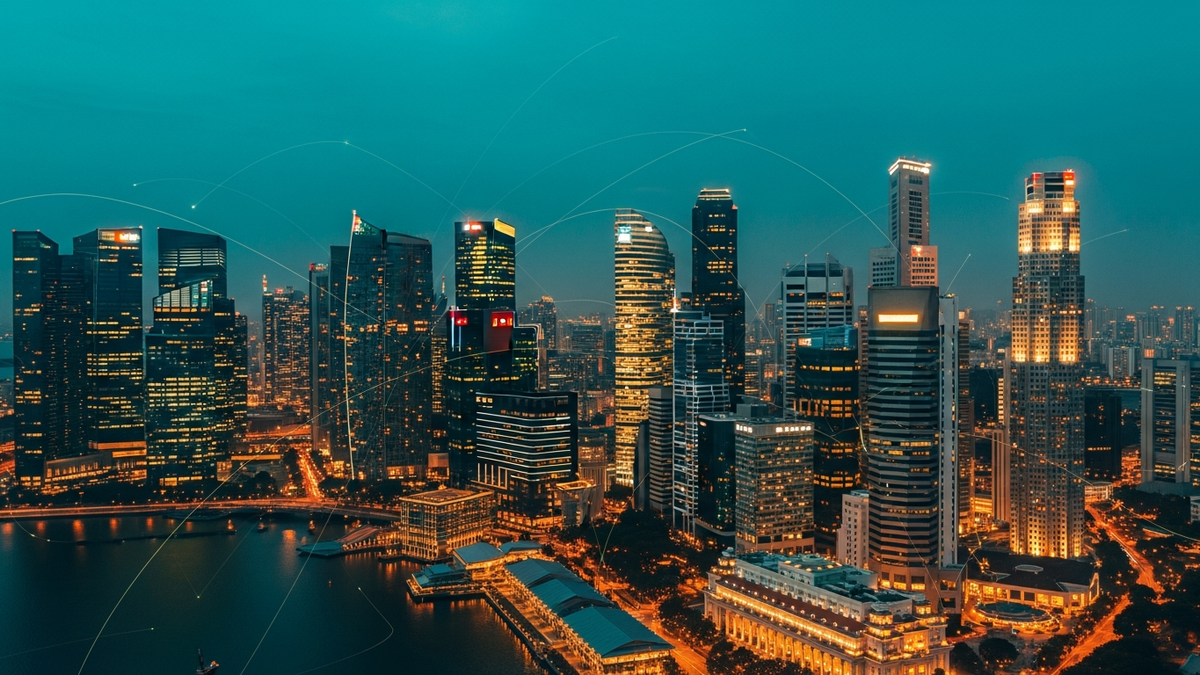
At GITEX Asia 2026 inside Marina Bay Sands, iFLYTEK made the quietest but most consequential announcement of the week. The Hefei-headquartered speech and AI giant said it will grow its Singapore headcount and overall business in the city-state by more than 50% within the coming year.
iFLYTEK was founded in 1999 and is now valued above SGD 20 billion on the Shenzhen exchange. Coming on top of more than 200% regional growth last year, the Singapore plan is not an expansion target. It is a relocation of strategic gravity.
Asian technology buyers have been watching iFLYTEK move quietly through Southeast Asian procurement pipelines for the past two years. The GITEX Asia announcement is the moment that quiet motion becomes public commitment, and regional cloud competitors should take it as a shot across the bow.
A Different Kind Of Chinese AI Firm In Singapore
iFLYTEK has been in Singapore only since 2024, yet it has already shipped more than 10,000 units of its AI hardware in the region, generating roughly RMB 200 million, or around SGD 40 to 50 million, in revenue. The company sells a mix of translation devices, meeting recorders, smart office products, and the enterprise-grade Spark LLM, built on its own decades of speech research.
Crucially, Singapore is now being positioned as iFLYTEK's command centre for Southeast Asia, not as a showroom. The firm has explicitly named Singapore, the Philippines, Indonesia, Thailand, and Malaysia as priority markets for its "all-in-one" private AI deployments in government, finance, and telecom. That is a direct tilt toward regulated, sovereignty-sensitive buyers, which is where Chinese AI vendors have struggled to win deals in Europe and North America.
By The Numbers
- 10,000+ units of iFLYTEK AI hardware sold in Southeast Asia since its Singapore office opened in 2024.
- RMB 200 million (roughly SGD 40 to 50 million) in regional revenue to date.
- Over 200% year-on-year revenue growth last year, above the company's internal plan.
- Over 50% planned growth in Singapore headcount and business scale in the next 12 months.
- USD 78 billion projected Asia-Pacific AI spend in 2026, per IDC, the backdrop against which this bet is being placed.
Why Singapore, And Why Now
The Singapore decision does three things at once for iFLYTEK. It puts the company inside an English-working, multilingual jurisdiction where Singapore's AI Verify Foundation testing toolkit is fast becoming the regional assurance standard. It keeps the company close to Bahasa Indonesia, Tagalog, Thai, Vietnamese, and Malay language data, which matters if you are selling private LLMs for contact centres, government hotlines, and telco customer care. And it gives iFLYTEK a physical desk in a neutral jurisdiction that is not subject to the same US export restrictions that have reshaped its home-market compute✦ options.
Singapore sits in the most useful geography for Chinese AI firms that want to serve Southeast Asia on local terms, not on export-controlled American ones.
The model on offer is not generic cloud AI. iFLYTEK is leading with on-premises, private LLM✦ deployments that match Indonesia's data residency rules under Regulation 71/2019, Vietnam's draft AI decree, and Thailand's Personal Data Protection Act. That is a very different sales motion from the hyperscaler✦ playbook and increasingly the one that Southeast Asian CIOs prefer.

What This Tells Us About The Broader Shift
Chinese AI vendors have spent eighteen months recalibrating after tighter US chip restrictions. iFLYTEK's Singapore posture is the clearest sign yet that the next phase is not about replacing the US market but about locking in Southeast Asia before the American and European incumbents can build culturally and linguistically comparable stacks. The domain where Chinese firms still hold a real edge is the one Silicon Valley underinvests in: very high-quality speech, translation, and small-language models across Asian tongues.
A Fast-Closing Window For Rivals
iFLYTEK's timing is sharp. It arrives in Singapore just as the city-state's Smart Nation 2.0 agenda pushes multilingual public-service AI, just as Indonesia finalises its sovereign AI✦ fund, and just as Thailand's AI Act compliance window opens. Competitors such as Alibaba Cloud and Huawei Cloud have deeper infrastructure footprints regionally, but iFLYTEK's advantage is narrower and therefore easier to defend: the combination of mature speech technology, on-prem deployability, and a genuine Southeast Asian language catalogue.
Where Buyers Push Back
The procurement reality in Southeast Asia is not always as sovereignty-forward as the pitch decks suggest. Many regional banks and telcos still default to AWS, Microsoft Azure, or Google Cloud because of existing contracts, skills bases, and certification investments. Switching those defaults for speech-heavy Southeast Asian workloads is where iFLYTEK's case lands best, but only if local implementation partners and training resources arrive with it. The 50% headcount growth target looks aggressive until you see how thinly spread Chinese AI vendors are across Southeast Asia compared with their Middle East or African positions.
There is also a service-level question. Private AI deployments demand hands-on support, maintenance cycles, and localisation work that differs sharply from cloud-console workflows. iFLYTEK's Singapore hub will have to recruit Southeast Asian language specialists, regulated-industry solution architects, and customer success staff at a pace that is hard to sustain even for well-funded firms.
Frequently Asked Questions
What does iFLYTEK sell in Southeast Asia?
iFLYTEK focuses on speech and translation devices, smart meeting and office hardware, and private enterprise deployments of its Spark large language model, particularly for government, financial services, and telco customers that require on-premises AI.
Is iFLYTEK restricted from operating in Southeast Asia?
Unlike the US market, iFLYTEK is not subject to broad restrictions in Southeast Asia. Its Singapore base allows it to serve regulated customers under local data residency rules while remaining close to Mandarin, Bahasa, Thai, Vietnamese, and Tagalog language data.
How big is the Asia-Pacific AI market iFLYTEK is targeting?
IDC projects Asia-Pacific AI spending will reach USD 78 billion in 2026, with Southeast Asia growing at roughly double the global average. iFLYTEK is targeting the slice that wants private, localised deployments rather than hyperscaler-first stacks.
Who are iFLYTEK's main rivals in the region?
The main regional rivals are Alibaba Cloud, Huawei Cloud, and increasingly SenseTime, alongside Western players like Microsoft, Google, and AWS, though iFLYTEK competes on speech, translation, and private AI rather than on raw cloud scale.
Closing
If Singapore really is the Asia command centre for the next wave of Chinese AI in Southeast Asia, the region's procurement maps are about to be redrawn. Does your organisation prefer a hyperscaler-first or a private, on-prem AI stack for regulated workloads? Drop your take in the comments below.






No comments yet. Be the first to share your thoughts!
Leave a Comment