

Singapore's $78 Billion AI Summit Puts Asia's Compute Race on Centre Stage
When GITEX AI ASIA opened at Marina Bay Sands on 9 April, the headline number was not the 550 participating enterprises or the 250 global investors in the hall. It was the US$78 billion Asia AI spending forecast that underpinned every keynote, every sovereign LLM✦ briefing, and every chip roadmap on display. Singapore has used the summit to reposition itself as the region's indispensable AI convenor, the place where capital, compute✦, and policy meet before they scale into the rest of the continent.
For a city-state that already produces around 15% of the world's semiconductors and hosts an outsized share of advanced AI research labs, this is not positioning for its own sake. It is a signal to the rest of Asia that the race for sovereign AI✦ capability runs through Singapore, whether that capital ends up deployed in Jakarta, Hanoi, or Hyderabad.
A Summit Built Around Sovereign AI
The strongest thread running through GITEX AI ASIA was sovereign AI, the push by national governments to own and shape their own large language models. Delegations from India, Indonesia, Malaysia, Vietnam, and Japan used the event to showcase domestic models, from Sarvam AI to Sahabat AI to ILMU and NTT Sarashina, each framed as critical digital public infrastructure rather than commercial curiosities.
What is new in 2026 is how seriously private capital is treating this thesis. The 250 investors present were managing more than US$350 billion in aggregate, and the term sheets being drafted between sessions pointed to regional champions, not just cross-border megadeals led from San Francisco. Sovereign AI is no longer a policy slogan. It is a line item. See our earlier piece on APAC banks going all-in on generative AI for how enterprise spend is tracking with this shift.
By The Numbers
- US$78 billion: forecast 2026 AI spending across Asia-Pacific, according to regional analyst briefings at the summit.
- 550+: enterprises and startups exhibiting at GITEX AI ASIA 2026, Singapore's largest AI gathering on record.
- US$350 billion: aggregate assets under management represented by the 250 global investors in attendance.
- 81%: share of Singaporeans who trust their government to regulate AI responsibly, the highest of 30 surveyed markets.
- 15%: approximate share of global semiconductors produced via Singapore-based supply chains.
Asia's Compute Clusters Are Now Competing With Each Other
A quieter story running underneath the headlines is that Asia's AI clusters are no longer just competing with the United States. They are competing with each other. Singapore, Tokyo, Seoul, and Taipei all want to be the regional hub for training, inference✦, and sovereign model hosting. India wants to be the compute backbone for the Global South, a theme we traced in our profile of Asia's AI talent shortage. Each of those pitches has measurable backing now, and GITEX gave every pitch a stage.
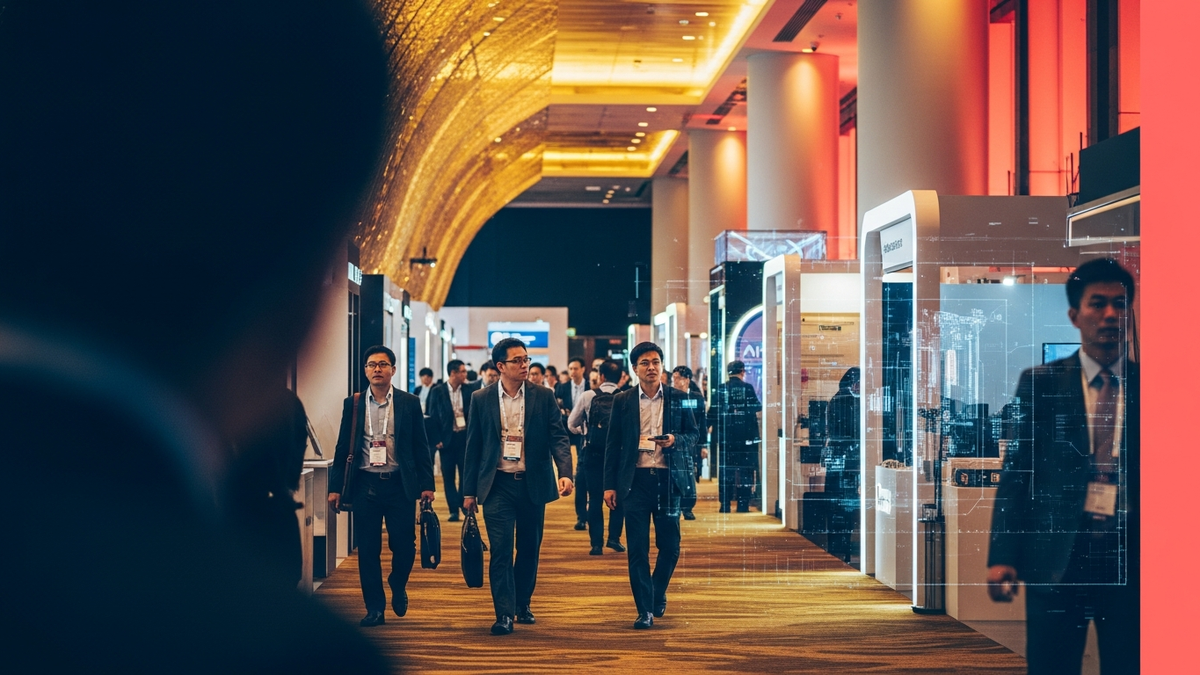
At least three sovereign wealth funds, two Japanese conglomerates, and one Saudi-backed vehicle confirmed active Asia AI mandates during the event, according to conversations on the show floor. Capital in the region is no longer waiting for a US-led AI boom to spill over. It is underwriting its own one.
What Singapore Actually Gains
Hosting GITEX AI ASIA does more for Singapore than fill hotel rooms. Related reading: our piece on Japan's physical AI gamble and how Tokyo is framing its own sovereign bet. It gives the Monetary Authority of Singapore and the Infocomm Media Development Authority a direct line to the people choosing where to put AI workloads for the next three years, and it lets Singapore set the conversational defaults for how sovereign AI, cross-border data flow, and regional chip policy get discussed in Jakarta, Manila, and Bangkok.
This is the year Asia stops asking for permission. Sovereign AI is now a capital allocation decision, not a policy preference.
We came here with two term sheets. We are leaving with six, all with Asia-headquartered companies. That is the shift.
Who Showed Up, And What They Pitched
| Delegation | Flagship Asset | Pitch to Investors | |---|---|---| | Singapore | SEA-LION v3 | Regional inference backbone for Southeast Asia | | India | Sarvam AI | Multilingual sovereign LLM for 1.4 billion users | | Indonesia | Sahabat AI | Archipelago-scale Bahasa model for public services | | Japan | NTT Sarashina | Enterprise-grade Japanese sovereign model | | Malaysia | ILMU | Bumiputera-aware model for government and finance | | Vietnam | VinAI | Mekong-focused model backed by the new AI Law |
This is a competitive map that did not exist 18 months ago. Every delegation is now building for export, not only for domestic use, and each is shopping for either growth capital or compute capacity.
Frequently Asked Questions
What is GITEX AI ASIA?
GITEX AI ASIA is the Asia edition of the global GITEX tech series, held at Marina Bay Sands in Singapore on 9 and 10 April 2026. It focuses specifically on AI infrastructure, sovereign models, chips, and regional investment, and drew more than 550 exhibitors and 250 investors.
Why is sovereign AI such a major theme?
Governments in Asia increasingly treat large language models as strategic national infrastructure, similar to roads or power grids. Sovereign AI models like Sarvam AI, Sahabat AI, and ILMU are designed to keep cultural context, language, and regulatory compliance inside the country deploying them.
How much is Asia actually spending on AI in 2026?
Regional forecasts cited at the summit point to around US$78 billion in AI spending across Asia-Pacific in 2026, with projections rising sharply through 2030 as sovereign LLM programmes, data centres, and enterprise deployments all scale simultaneously.
What does this mean for ASEAN countries without their own LLM yet?
For ASEAN economies still deciding their approach, the summit showed a clear menu, from building a domestic model like Vietnam's VinAI to partnering on regional models such as SEA-LION or Sahabat AI. Waiting is the expensive option, because compute capacity and capital are already being allocated.
Did GITEX AI ASIA change how you read Asia's AI race? Which delegation do you think left Marina Bay with the strongest hand? Drop your take in the comments below.






No comments yet. Be the first to share your thoughts!
Leave a Comment