

The Asia-Pacific AI spending surge is no longer a forecast. It is already happening.
Boardrooms across the Asia-Pacific region are committing to artificial intelligence at a pace that would have seemed ambitious just two years ago. Budgets are rising, sovereign infrastructure is being built at national scale, and the era of tentative proof-of-concept projects is giving way to full production deployments. The question is no longer whether to invest in AI. It is how fast organisations can scale without running out of the talent to do it properly.
By The Numbers
- 96% of Asia-Pacific organisations are increasing their AI investment budgets in 2026, according to IDC and Salesforce survey data.
- 88% of APAC business leaders expect positive ROI from AI deployments within 18 months.
- 63% of APAC organisations plan to increase spending on domestically hosted, sovereign AI✦ infrastructure.
- USD 13 billion committed by Japan's Ministry of Economy, Trade and Industry (METI) to semiconductor and AI infrastructure.
- USD 17 billion is the projected size of India's AI market by 2027, growing at 25 per cent annually.
Sovereign AI Investment Becomes the Region's Defining Trend
The most structurally significant shift in Asia-Pacific enterprise AI adoption is not the volume of spending. It is where the money is going. Sovereign AI infrastructure, meaning domestically hosted compute✦ capacity that reduces dependence on foreign cloud hyperscalers, has rapidly become the dominant strategic priority across the region.
Six in ten organisations across Asia-Pacific are actively planning to increase spending on locally controlled AI capabilities. Governments are leading from the front, committing sovereign wealth, industrial policy, and national security rationale in equal measure.
"Japan's METI has committed USD 13 billion to semiconductor and AI infrastructure, while Singapore's National AI Strategy 2.0 has earmarked SGD 1 billion for compute capacity." - IDC and Salesforce survey data, 2026
Singapore, Japan, South Korea, India, and Malaysia are all constructing national AI compute clusters. The motivations vary by country: Japan is focused on industrial competitiveness and supply chain resilience; Singapore is positioning itself as a trusted regional AI hub; India is investing in AI as a tool for economic leap-frogging; Malaysia is building capacity to capture investment flowing away from more expensive regional markets.
This is not simply a government story. Enterprises are following public-sector infrastructure investment with their own capital. As national compute capacity comes online, private-sector confidence in local AI deployments rises. The cycle is self-reinforcing.
From Pilots to Production: Enterprise AI Adoption at Scale
For the past three years, the dominant narrative in enterprise AI was caution. Organisations ran pilots, published case studies, and filed the results. That phase is ending. Across Asia-Pacific, generative AI✦ is being integrated into production systems at functional scale, not just demonstrated in controlled environments.
The use cases moving fastest into production include:
- Customer service automation, where conversational AI is handling first and second-line queries across multiple languages
- Supply chain optimisation, using predictive modelling to manage inventory, logistics disruptions, and supplier risk
- Financial compliance and reporting, particularly in highly regulated markets like Japan, Singapore, and Australia
- Manufacturing quality control, where computer vision✦ and real-time inference✦ are being deployed on factory floors
The shift from experimentation to deployment is reflected in boardroom expectations. The fact that 88 per cent of APAC business leaders now expect positive ROI from their AI investments within 18 months signals a maturation of enterprise understanding. Early adopters have returned enough data to make the case internally. Budgets are following.
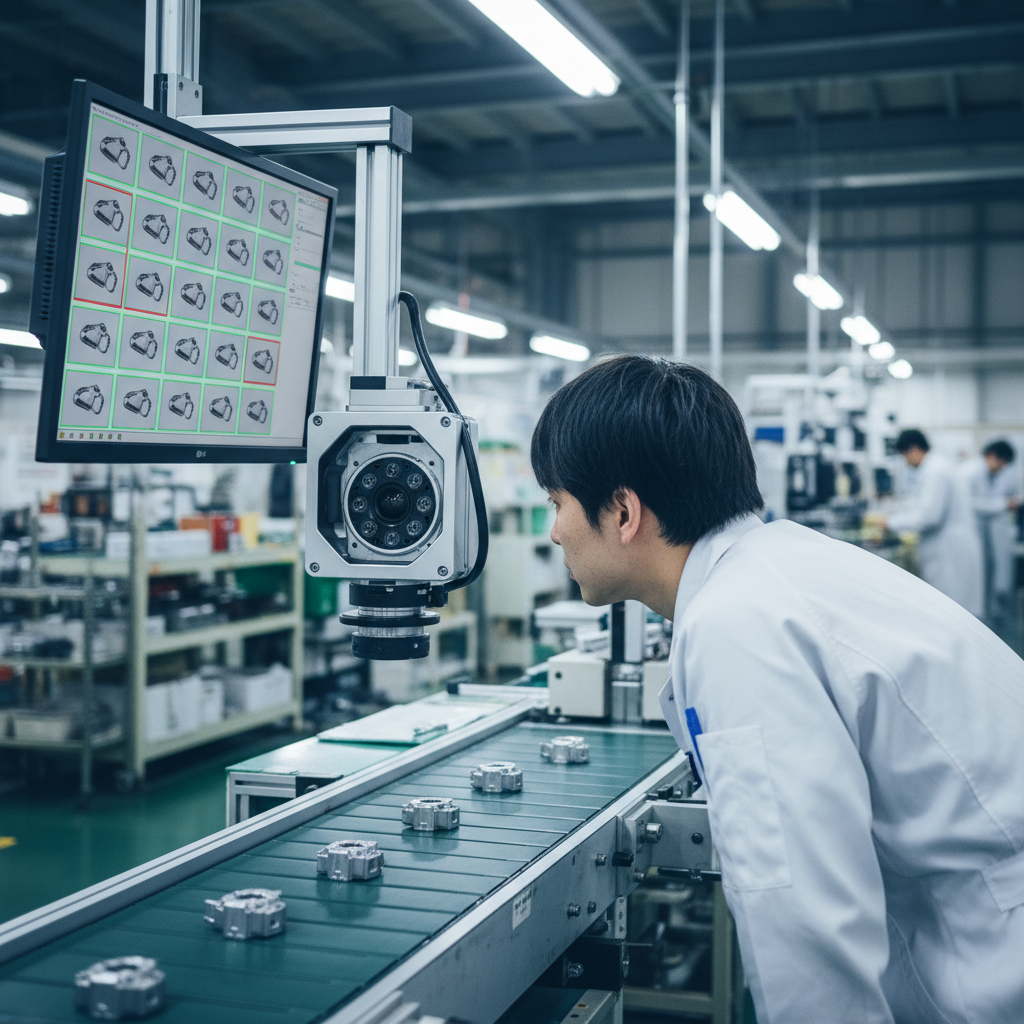
"96 per cent of Asia-Pacific organisations are increasing their AI investment budgets in 2026." - IDC and Salesforce, 2026
The Asia-Pacific Picture: Country by Country
The region is not a monolith. Each major market is approaching enterprise AI adoption with its own economic logic and institutional priorities.
| Country | Key Commitment | Primary Focus |
|---|---|---|
| Japan | USD 13 billion (METI) | Semiconductors, industrial AI, supply chain |
| Singapore | SGD 1 billion (National AI Strategy 2.0) | Compute capacity, trusted AI hub status |
| India | Market projected at USD 17 billion by 2027 | Economic development, AI services exports |
| South Korea | National compute cluster buildout | Semiconductor integration, enterprise AI |
| Malaysia | Sovereign AI infrastructure investment | Data centre capacity, regional AI hub ambitions |
India's trajectory deserves particular attention. A 25 per cent annual growth rate in a market projected to reach USD 17 billion suggests India is not simply following the regional trend but accelerating ahead of it. The combination of a large English-language technology workforce, a competitive domestic AI research community, and government-backed compute infrastructure creates a compounding advantage that will be felt across the region within three to five years.
Singapore's role is different but equally important. As a small, open economy with a sophisticated financial services sector and deep regional connectivity, Singapore is positioning itself as the trusted governance layer for Asia-Pacific AI. The SGD 1 billion compute commitment is as much about signalling as it is about raw capacity. For more on how Southeast Asia is approaching AI governance and regulation, the regulatory momentum is building rapidly across the sub-region.
The Talent Gap: The Constraint No Spending Can Solve Overnight
There is a significant tension running through the Asia-Pacific AI investment story. The money is there. The infrastructure is being built. The boardroom conviction is real. But the talent is not keeping pace.
McKinsey data shows that 80 per cent of APAC companies cite a shortage of AI-skilled workers as their primary barrier to scaling. This is not a niche technical problem. It affects every layer of an AI deployment: data engineering, model fine-tuning✦, integration architecture, AI governance✦, and change management at the organisational level.
The gap creates specific risks that organisations should be planning for now:
- Over-reliance on a small number of specialist contractors, creating single points of failure in critical AI projects
- Talent poaching between enterprises, which inflates costs without expanding the overall pool
- Pressure to deploy underdeveloped AI systems before sufficient human oversight capacity is in place
- Executive decisions being made about AI without adequate technical literacy at the decision-making level
For organisations grappling with the productivity paradox of AI, understanding the cognitive costs of accelerated AI adoption is as important as understanding the commercial upside. The human element of this story is consistently underweighted relative to the infrastructure and budget headlines.
Smaller enterprises face particular challenges. Without the recruitment budgets of large corporations, many small and medium businesses are navigating AI adoption with limited specialist support. Understanding how small businesses are building genuine AI advantage without deep technical teams offers a useful counterpoint to the enterprise narrative.
What the Investment Surge Means Beyond the Headlines
The USD 50 billion sovereign AI infrastructure figure captures attention, but the more significant story is the combination of signals: near-universal budget increases, high boardroom ROI confidence, domestically anchored infrastructure strategy, and a talent constraint that creates real execution risk.
Asia-Pacific is not simply following a global AI adoption curve. It is building a regionally distinct model characterised by state involvement, data sovereignty✦ concerns, and a competitive dynamic between major markets that has no equivalent in the US or European AI landscape. For context on how Chinese AI development fits into the broader regional picture, China's five-year AI strategy remains the most ambitious single-country AI programme in the world.
The organisations that will capture the most value from this environment are those building durable internal AI capability, not just buying access to external models. That means investing in people, governance, and data infrastructure with the same urgency currently applied to compute budgets.
Frequently Asked Questions
What is sovereign AI infrastructure and why is it important in Asia-Pacific?
Sovereign AI infrastructure refers to AI compute capacity that is domestically hosted and controlled, reducing dependence on foreign cloud providers. In Asia-Pacific, governments are prioritising sovereign AI to protect sensitive data, ensure supply chain resilience, and retain strategic autonomy over critical digital infrastructure. Countries including Japan, Singapore, India, South Korea, and Malaysia are all actively investing in national AI compute clusters.
Which Asia-Pacific country is investing the most in AI infrastructure?
Japan's METI has made the largest single national commitment publicly reported, at USD 13 billion for semiconductor and AI infrastructure. India's AI market is the largest by projected scale, forecast to reach USD 17 billion by 2027 at 25 per cent annual growth. Singapore's investment of SGD 1 billion, while smaller in absolute terms, is proportionally significant for an economy of its size and is strategically targeted at establishing Singapore as a trusted regional AI hub.
What is the biggest barrier to AI scaling in Asia-Pacific enterprises?
According to McKinsey, 80 per cent of Asia-Pacific companies identify a shortage of AI-skilled workers as their primary barrier to scaling AI deployments. This talent constraint affects every stage of AI implementation, from data engineering through to governance and organisational change management, and is not resolved simply by increasing infrastructure or software budgets.
With budgets rising, boardrooms betting on 18-month ROI, and governments committing billions to sovereign AI infrastructure, we want to know: is your organisation actually ready to deploy at scale✦, or is the talent gap quietly derailing your AI ambitions? Drop your take in the comments below.






Latest Comments (5)
actually wait, the 13 billion from Japan's METI is for their semiconductor strategy.
is that 96% of organisations increasing budgets really net new investment, though? or just reallocating existing tech spend into "AI" for optics. it's hard to tell. 📱
idk if 18 months for roi on AI deployments is realistic tbh. most of my side projects take longer to break even... 🤔📌
the 88% expecting positive ROI within 18 months seems really aggressive for enterprise AI adoption, especially thinking about implementation in healthcare environments where the lead times are so much longer.
that 63% of APAC organisations plan to increase spending on sovereign ai infrastructure, but this doesn't guarantee responsible development at all. the infrastructure alone is not enough to prevent misuse, you know, we still need robust governance frameworks.
Leave a Comment