
We use cookies to enhance your experience. By continuing to visit this site you agree to our use of cookies. Cookie Policy

AI in ASIA
Monday, 20 April 2026

3Before9

3 must-know AI stories before your 9am coffee

Who should pay attention

AI infrastructure buyers | Cloud providers | Enterprise developers | Chip designers | Memory manufacturers

What changes next

Foundry capacity stays tight through 2027 while Chinese model makers press their price and API-compatibility advantage.

1

SK Hynix Starts Mass Production of 192GB Memory Module for Nvidia's Vera Rubin
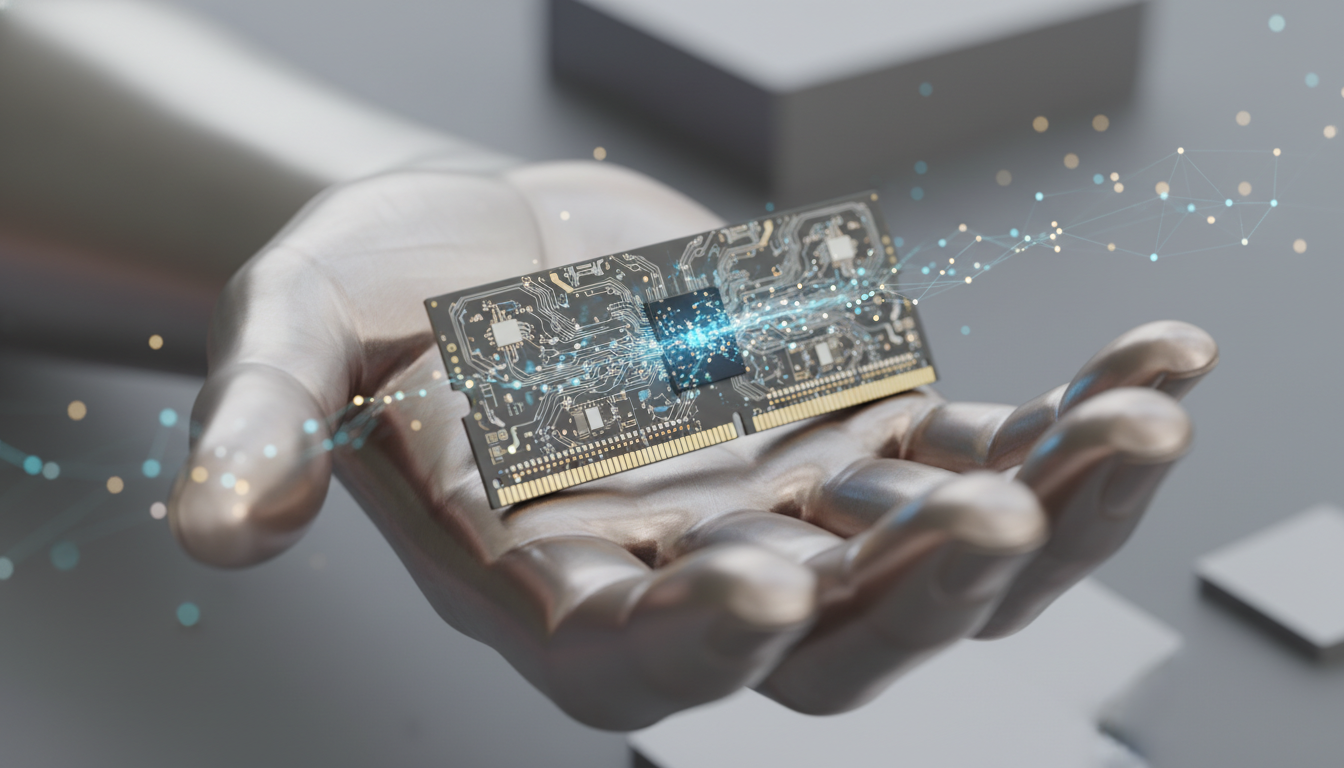
SK Hynix said on Monday it has begun mass production of its 192-gigabyte SOCAMM2 memory module, a low-power AI server part built on the Korean firm's sixth-generation 10-nanometre-class DRAM. The module delivers more than double the bandwidth of conventional server memory and uses 75 per cent less power, and it is tailored for Nvidia's Vera Rubin accelerator platform, which is due to ship in the second half of the year. Nvidia will also source the part from Samsung and Micron, spreading supply across three vendors as demand for training memory continues to exceed capacity.

Why it matters for Asia

Korea now supplies the scarcest single ingredient in the Nvidia stack, and SK Hynix just beat rival Samsung to the starting line on a chip destined for every large cloud and sovereign data centre being built across Asia this year. Enterprise buyers in Singapore, Japan and India planning 2027 AI infrastructure should assume high-end server memory prices stay firm through next year, and that capacity for Vera Rubin systems will be allocated first to hyperscalers who already have SOCAMM2 supply agreements in place.^


Read more
2

Alibaba Releases Qwen 3.6 Max Preview to Challenge Frontier Models

Alibaba on Monday rolled out Qwen3.6-Max-Preview, the strongest model yet in its Qwen series, claiming top scores across six coding benchmarks including SWE-bench Pro and Terminal-Bench 2.0. The preview is available through Alibaba Cloud's Bailian platform and Qwen Studio, with an API that is compatible with both OpenAI and Anthropic specifications, allowing developers to swap it into existing pipelines without rewriting code. The company also released Fun-ASR 1.5, a voice model covering 30 languages, and trailed a further unnamed launch for Tuesday.

Why it matters for Asia

Alibaba is positioning Qwen as the default open alternative for developers across Southeast Asia who want frontier capability without US export friction, and the OpenAI and Anthropic API compatibility removes the main lock-in that usually protects incumbents. For regional enterprises in Indonesia, Vietnam and Thailand that run coding agents on local cloud, Qwen 3.6 Max now offers a credible option hosted closer to users and priced in renminbi, which matters as AI inference costs become a line item on quarterly budgets.^

Read more
3

TSMC Raises 2026 Outlook as AI Chip Demand Lifts Profit 58 Per Cent

TSMC reported first-quarter net income of NT$572 billion, a 58 per cent jump on last year and ahead of analyst forecasts, and raised its full-year revenue guidance to growth of more than 30 per cent in US dollar terms. Chief executive CC Wei described AI chip demand as "extremely robust" and said supply still cannot keep up with orders, with second-quarter revenue now expected to land between US$39 billion and US$40.2 billion. Capital expenditure is set to trend toward the upper end of the existing US$56 billion ceiling, giving the foundry more capacity for 2 nanometre and advanced packaging later this year.

Why it matters for Asia

TSMC is the single clearest barometer of the AI buildout, and a raised 2026 outlook signals the hyperscaler capex cycle in China, Japan and India is still accelerating rather than plateauing. For Asia-based chip designers, equipment suppliers and data centre developers, this confirms another 12 to 18 months of tight foundry capacity, pushing pricing leverage toward the supply side and leaving latecomers scrambling for 2027 allocations.^

Read more

That's today's 3-Before-9.

Explore more at AIinASIA.com or share signals with us.

Get 3-Before-9 in your inbox

Three signals, every weekday, before 9am

Free forever. Unsubscribe anytime. No spam.

Recent Editions

View all

Monday

20 April 2026

  • 1.PwC's 2026 AI study finds 74% of AI's economic value is captured by just 20% of companies, with Singapore firms showing the highest risk appetite globally for AI investment.
  • 2.Google DeepMind released Gemma 4, a family of open-source models under Apache 2.0 that runs on a single GPU and ranks third on the Arena AI leaderboard.
  • 3.Southeast Asia leads the world in AI optimism with 80%+ of respondents expecting AI to transform their lives, but governance frameworks across the region remain largely voluntary.
Read edition

Saturday

18 April 2026

  • 1.TSMC reported a 58% increase in Q1 net profit, driven by record demand for AI chips and advanced node sales, leading to higher full-year revenue guidance and global expansion.
  • 2.Alibaba introduced "Happy Oyster", an AI world model that generates consistent, interactive 3D environments in real time, aiming to challenge Tencent in film, gaming, and VR applications.
  • 3.South Korean president Lee Jae Myung arrives in New Delhi for a state visit, with a Monday summit set to cover AI, shipbuilding, defence and small modular reactors alongside a $50 billion bilateral trade target.
Read edition

Friday

17 April 2026

  • 1.TSMC reported record profits and increased its revenue forecast for 2026, driven by extremely robust demand for advanced AI chips, with production capacity remaining tight.
  • 2.Stanford's 2026 AI Index reveals China has significantly narrowed the AI model performance gap with the US and now leads in several key AI metrics like citations and patents.
  • 3.Manycore Tech soared 144% on its Hong Kong debut, signalling investor appetite for Hangzhou's spatial-intelligence AI startups and opening the door for more IPOs from the "Little Dragons" cluster.
Read edition

Friday

17 April 2026

  • 1.STT GDC and SuperX opened an AI Innovation Centre in Singapore, offering free two-week trials of Nvidia Blackwell GPUs for regional enterprises to develop AI solutions.
  • 2.SoftBank, Sony, Honda, and NEC formed a new company with government backing to develop a sovereign Japanese AI model, targeting a one-trillion-parameter LLM.
  • 3.Huawei Cloud officially launched its Model-as-a-Service offering across Asia Pacific at Jakarta's AI Boost Day, giving enterprises pay-by-the-token access to GLM, DeepSeek and Qwen models.
Read edition

Thursday

16 April 2026

  • 1.The 2026 Stanford AI Index reveals China's AI model performance has nearly matched the US, with only a 2.7 per cent gap.
  • 2.SoftBank, NEC, Sony, and Honda have formed a joint venture in Japan to develop a domestic physical AI foundation model.
  • 3.Southeast Asian nations, led by Singapore with a 61 per cent adoption rate, are showing strong optimism and uptake in AI.
Read edition

Tuesday

14 April 2026

  • 1.Japan's major technology companies, including SoftBank, Honda, Sony, and NEC, have launched a joint venture to build a trillion-parameter AI for autonomous machines, ensuring all data remains within Japan.
  • 2.Chinese embodied AI startup Spirit AI secured $420 million from prominent investors, including Lei Jun and Jack Ma, to develop humanoid robots and general-purpose robotics.
  • 3.These investments signify a strategic pivot in Asian AI, with Japan prioritising data sovereignty for physical AI and China focusing on hardware and real-world embodied intelligence.
Read edition