

Asia is not waiting for the world to catch up on AI education
From classrooms in Chennai to retraining centres in Seoul, a continent-wide push to build AI literacy in Asia is underway at a scale that has no precedent in modern education history. Governments across the region are no longer treating artificial intelligence as a specialist subject for computer science graduates. They are embedding✦ it into national curricula, workforce development programmes, and public education initiatives with extraordinary speed and, in some cases, extraordinary ambition.
India and China are leading the charge, but South Korea and Japan are moving fast behind them. Together, these four nations alone account for well over two billion people. The ambition is clear: AI skills should be as universal as numeracy and literacy. The question critics are asking is whether speed is coming at the cost of depth.
By The Numbers
- 50 million learners reached by India's National AI Mission in its first quarter alone
- 12 regional languages covered by India's free AI course rollout, including Hindi, Tamil, Bengali, and Telugu
- 200,000+ mid-career professionals retrained through South Korea's AI Academy programme
- China is the first country in the world to mandate AI education starting from age six
- Japan's RIKEN institute has open-sourced its entire AI training curriculum across multiple Asian languages
India's National AI Mission Sets a New Benchmark
India's National AI Mission has made an immediate and measurable impact. Within its first quarter of operation, the programme reached 50 million learners through free AI courses delivered in 12 regional languages. This is not a token digital skills initiative. The curriculum covers AI fundamentals, practical machine learning✦ concepts, and applied tools relevant to industries from agriculture to healthcare.
The multilingual approach is deliberate and significant. India's digital divide has historically been a language barrier as much as an access barrier. By delivering AI education in regional languages, the Mission is reaching learners who would otherwise be excluded from English-dominant technology training. This positions India not merely as an AI consumer market, but as a nation building distributed AI capability at genuine population scale.
"AI skills are becoming as fundamental as reading and mathematics." - Asia-Pacific education policy consensus, 2026
The scale of India's ambition also reflects a broader economic calculation. With a young, large, and increasingly connected population, India's government has identified AI workforce development as central to its next phase of economic growth. The National AI Mission is the infrastructure layer beneath that strategy. For wider context on how sovereign AI✦ investment is reshaping the region, see our analysis of Asia-Pacific enterprise AI hitting the USD 50 billion mark.
China Makes AI Compulsory from Age Six
China's Ministry of Education has taken a more structural approach. The country now mandates AI curriculum from primary school, making it the first nation in the world to require AI education for children as young as six years old. This is a profound policy commitment. It means that within a generation, China's entire workforce will have grown up with AI concepts as part of their foundational education, alongside mathematics and language.
The Chinese curriculum is not simply an introduction to chatbots or voice assistants. It covers logical reasoning, data concepts, algorithmic thinking, and the social implications of automated systems. At higher levels, it integrates with existing STEM education to build applied capability. This long-term investment in cognitive infrastructure is arguably China's most significant AI strategy move, dwarfing even its headline investments in large language models and chip development.
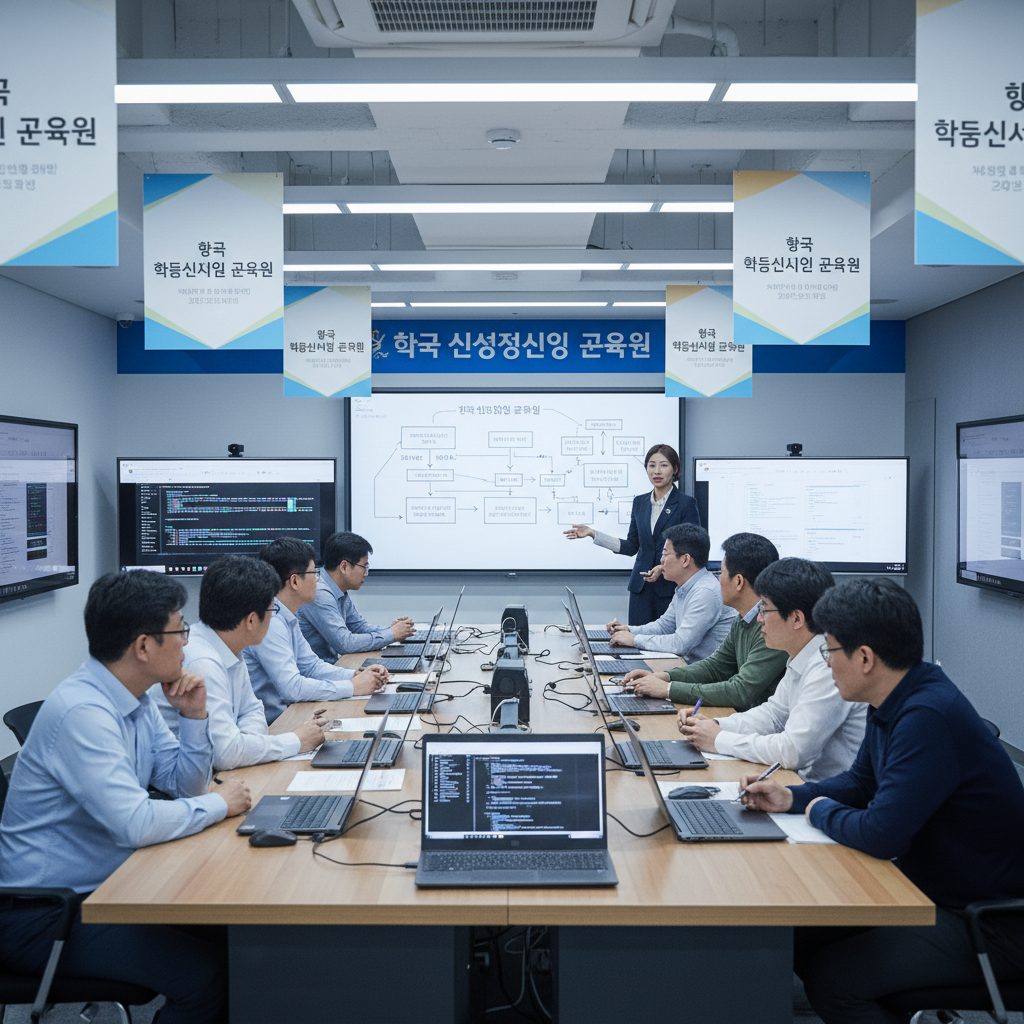
China's Ministry of Education now mandates AI curriculum from primary school, making it the first country to require AI education for children as young as six. - AIinASIA Research
The implications for the global AI talent pipeline are difficult to overstate. When today's six-year-olds in China enter the workforce in the 2030s, they will carry two decades of embedded AI reasoning as a baseline skill. Competing economies will need to respond in kind or accept a structural disadvantage that compounds with every passing year.
South Korea and Japan Fill the Mid-Career Gap
While India and China focus heavily on new learners and the next generation, South Korea and Japan are tackling a more immediate challenge: reskilling the existing workforce. South Korea's AI Academy programme has already trained more than 200,000 mid-career professionals to transition into AI-adjacent roles. These are not entry-level workers. They are experienced professionals in manufacturing, finance, logistics, and healthcare who need updated skills to remain relevant in AI-augmented workplaces.
Japan's approach differs in a meaningful way. RIKEN, the country's flagship scientific research institute, has open-sourced its entire AI training curriculum and made it available in multiple Asian languages. This is a rare example of a major national research institution treating AI education as a public good rather than a competitive asset. The open-source move extends Japan's influence beyond its borders and positions RIKEN as a genuine regional resource for AI capacity building.
- South Korea: Focus on mid-career reskilling through a structured AI Academy pathway, 200,000+ trained to date
- Japan: Open-source curriculum via RIKEN, distributed across multiple Asian languages for pan-regional access
- India: Multilingual free courses reaching 50 million learners through the National AI Mission
- China: Mandatory school curriculum from age six through a Ministry of Education mandate covering the entire national school system
These four approaches are complementary rather than competing. Taken together, they represent a multi-layered AI education strategy spanning early childhood through to experienced professionals. No single country has the full picture, but the region as a whole is building something genuinely comprehensive. Asia's broader healthcare ambitions depend on exactly this kind of workforce foundation, as explored in our coverage of the AI healthcare revolution reaching 4.7 billion Asians.
The Asia-Pacific Picture
Beyond the four major economies, the ripple effects of this AI literacy push are being felt across Southeast Asia and the Pacific. Vietnam, which recently became the first country in Southeast Asia to enforce a standalone AI law, is integrating AI education requirements into its regulatory framework✦. Governments across the region are watching India and China's programmes closely, with several in early stages of designing their own national AI curriculum standards. For context on Vietnam's legislative move, see our report on Vietnam enforcing Southeast Asia's first standalone AI law.
The competitive dynamic here is not purely economic. It is geopolitical. Nations that build large, AI-literate workforces will have structural advantages in attracting investment, developing sovereign AI capabilities, and participating meaningfully in global AI governance✦. Those that fall behind will increasingly find themselves dependent on AI tools and platforms built and controlled elsewhere.
Small businesses across the region stand to benefit significantly from a more AI-literate population. When customers, suppliers, and employees all understand basic AI concepts, adoption barriers fall and productivity gains become more equitable. Our analysis of how small businesses are winning in the AI era explores this dynamic in detail.
The Critics Are Not Wrong
Speed carries risk. Several education researchers and policy analysts have raised legitimate concerns about whether the rush to deliver AI literacy at scale✦ is squeezing out critical thinking, ethical reasoning, and media literacy from already crowded national curricula. There is a meaningful difference between teaching children how AI works and teaching them to question it.
The concern is particularly acute in systems where standardised testing dominates. If AI literacy becomes another subject to pass rather than a framework for thinking, these programmes risk producing workers who can operate AI tools but cannot evaluate their outputs, challenge their assumptions, or identify their harms. This tension between speed and depth is one the region's policymakers have not yet fully resolved.
| Country | Programme | Target Group | Scale / Reach |
|---|---|---|---|
| India | National AI Mission | All learners, 12 regional languages | 50 million in first quarter |
| China | Ministry of Education mandate | Primary school, age 6+ | Entire national school system |
| South Korea | AI Academy | Mid-career professionals | 200,000+ trained |
| Japan | RIKEN open-source curriculum | Regional, multi-language | Pan-Asian distribution |
There is also the question of what AI-heavy education does to human cognition over time. As we have explored in our examination of AI's darker side for cognitive productivity, the relationship between AI augmentation and independent thinking is not straightforwardly positive. Building AI literacy in Asia while protecting analytical independence is a challenge that deserves far more attention than it is currently receiving from policymakers.
Frequently Asked Questions
Which country has the largest AI education programme in Asia?
India's National AI Mission is currently the largest by reach, having delivered free AI courses in 12 regional languages to 50 million learners in its first quarter of operation. China's programme is arguably the most structurally significant, as it mandates AI education for all children from the age of six through the national school system.
What is China's approach to AI literacy in schools?
China's Ministry of Education has made AI curriculum compulsory from primary school level, starting at age six. This makes China the first country in the world to require AI education as a core subject for young children. The curriculum covers logical reasoning, data concepts, algorithmic thinking, and the social implications of AI systems.
Is AI education in Asia addressing ethics as well as technical skills?
This is the central tension in most national programmes. While countries like China include the social implications of AI in their curricula, critics argue that the speed and scale of rollouts risk marginalising critical thinking and ethical reasoning in favour of tool-based skills. The balance between technical AI literacy and ethical AI✦ reasoning remains unresolved across the region.
As AI becomes part of the school curriculum from age six, are we teaching the next generation to think with AI, or simply to depend on it? Drop your take in the comments below.






No comments yet. Be the first to share your thoughts!
Leave a Comment