

China's AI Video Tools Are Rewriting the Rules of Asian Filmmaking
The Asian creative industry is undergoing a seismic shift, and the engine driving it is not Hollywood. It is a cluster of Chinese AI video generation platforms that are fast outpacing their Western counterparts on price, accessibility, and cultural relevance. From film studios in Hengdian to independent creators in Ho Chi Minh City, the tools reshaping visual storytelling are increasingly made in China.
By The Numbers
- 60% reduction in pre-production costs reported by Hengdian World Studios using AI tools for pre-visualisation, storyboarding, and visual effects.
- 30% of commercial video production across Asia is projected to be AI-generated by 2027.
- Kuaishou's Kling AI, ByteDance's Dreamina, and Alibaba's EMO are among the leading Chinese platforms now competing directly with OpenAI's Sora.
- Southeast Asian content creators cite lower costs and no language barriers as the primary drivers of adoption of Chinese AI tools over Western alternatives.
The numbers tell a compelling story, but the real disruption is cultural. Chinese AI video tools are not simply cheaper versions of Sora. They are purpose-built for Asian storytelling contexts, trained on vast libraries of content that reflect the region's aesthetics, languages, and visual grammar. That distinction matters enormously for creators who have long felt underserved by Silicon Valley's one-size-fits-all approach.
Kling AI vs Sora: The Challenger Has Arrived
Kuaishou's Kling AI has emerged as the most direct challenger to OpenAI's Sora in the AI video generation space. Industry observers who have tested both tools report that Kling AI delivers cinematic-quality output at a fraction of the subscription cost, with particular strengths in rendering human motion, facial expressions, and scene continuity. For Asian studios working with tight budgets, this is not a minor advantage. It is a game-changer.
"AI-generated content is expected to represent 30% of commercial video production by 2027." , Industry projection cited in source reporting
ByteDance has entered the fray with Dreamina, its AI creative suite that integrates video generation with image editing and motion design. Alibaba's EMO takes a different approach, specialising in animating portrait images with realistic lip-sync and emotional expression, making it particularly useful for localised dubbing workflows. Together, these platforms represent a formidable ecosystem✦ of AI video generation tools that is rapidly maturing.
What Sets Chinese Platforms Apart
- Significantly lower cost per generation compared to Western equivalents.
- Multilingual interfaces and prompts optimised for Asian language inputs.
- Training data that reflects East and Southeast Asian visual aesthetics.
- Integration with existing Chinese creative software ecosystems already used by regional studios.
- Faster iteration cycles driven by China's competitive domestic AI market.
Hengdian: Ground Zero for AI-Assisted Film Production
China's largest film production base, Hengdian World Studios, has become an unlikely laboratory for AI-assisted filmmaking. The studio complex, which has hosted productions ranging from period epics to modern dramas, reports cost reductions of up to 60% in pre-production workflows after integrating AI tools for storyboarding, pre-visualisation, and visual effects planning.
These savings are not trivial. Pre-production has historically been one of the most expensive and time-consuming phases of film development, requiring skilled concept artists, storyboard illustrators, and VFX supervisors to spend weeks translating a director's vision into visual reference material. AI video generation tools can now compress that timeline dramatically, producing rough pre-vis sequences in hours rather than weeks.
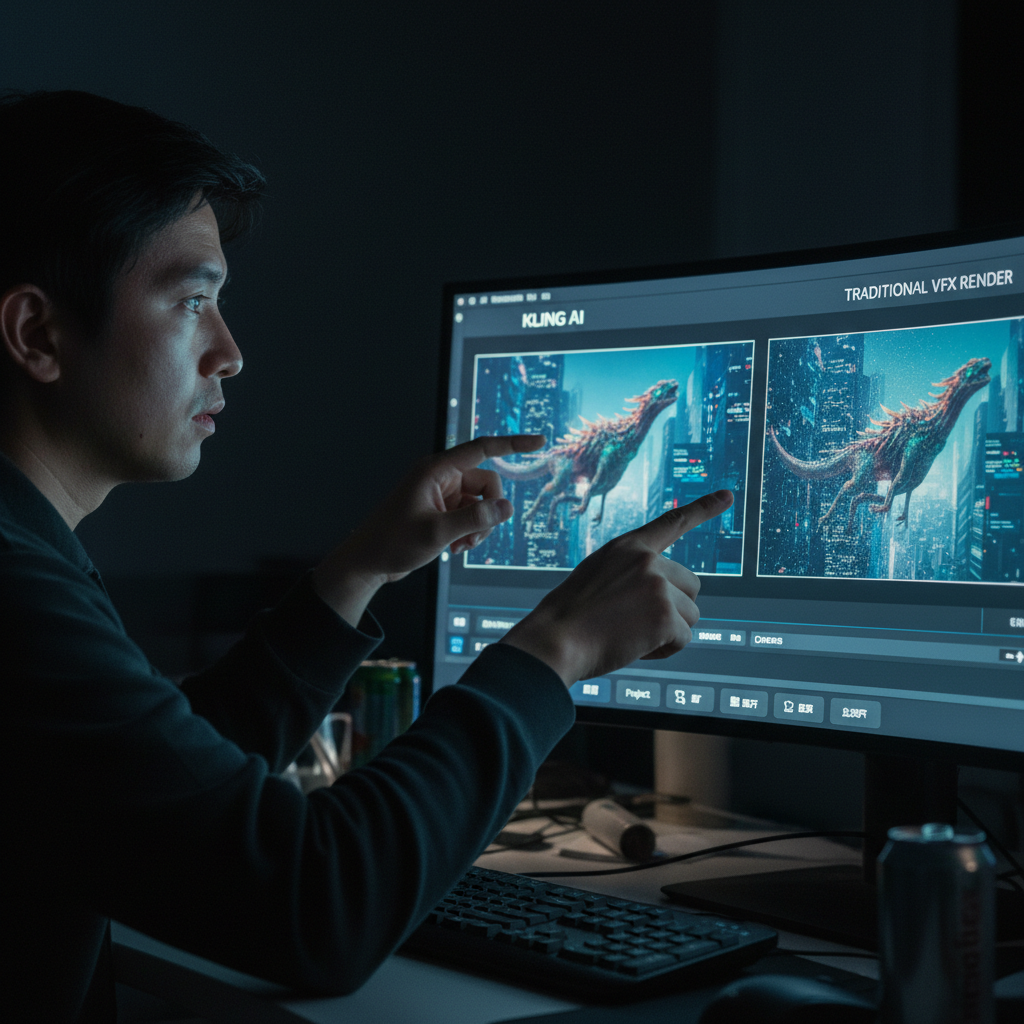
"Hengdian World Studios reports 60% cost reductions using AI tools for pre-visualisation, storyboarding, and visual effects." , Source reporting on China's AI creative industry
The implications extend well beyond China's borders. Studios across Asia are watching Hengdian's adoption closely, and the results are prompting rapid reassessment of how productions are structured, staffed, and budgeted. For an industry long accustomed to high fixed costs, AI video generation represents a genuine structural change, not merely an incremental efficiency gain.
The Asia-Pacific Picture: From Seoul to Singapore to Mumbai
The adoption of Chinese AI video tools across Asia-Pacific is accelerating faster than most observers anticipated, and the geographic spread is striking. Three distinct markets illustrate the breadth of this shift.
Singapore has launched pilot programmes specifically to integrate AI video generation tools into its media industry. The city-state's media development agencies have recognised that staying competitive in content production requires embracing these tools at an institutional level, not leaving adoption to individual creators. Singapore's approach reflects its broader strategy of structured AI integration, a theme explored in depth in our coverage of Asia-Pacific's enterprise AI investment surge.
South Korea's entertainment conglomerates are exploring AI-assisted production for K-drama content. The K-drama industry is under extraordinary pressure to produce high volumes of premium content for streaming platforms, and AI tools that can accelerate pre-production and post-production workflows are attracting serious attention. The ability to generate visual effects sequences and pre-vis content rapidly is particularly appealing given the genre's demanding production schedules.
India's Bollywood studios are testing AI pipelines for dubbing and visual effects, two areas where costs have historically been significant barriers. AI-powered✦ dubbing that preserves emotional performance while translating across languages is especially relevant for a market where films routinely release in five or more language versions simultaneously. Alibaba's EMO platform, with its strength in realistic lip-sync animation, is reportedly among the tools under evaluation.
Southeast Asia: The Democratisation Story
Perhaps the most significant long-term story is happening not in the major studios but among independent creators across Southeast Asia. Content creators in Vietnam, Indonesia, Thailand, and the Philippines are adopting Chinese AI video generation tools at a grassroots level, driven by the combination of accessible pricing and interfaces that do not require English-language prompting. This mirrors the broader pattern we have tracked in our reporting on small business adoption of AI tools across Asia.
The absence of language barriers is a point that Western AI developers have consistently underestimated. When a creator in Ho Chi Minh City can prompt a video generation tool in Vietnamese and receive output that reflects Southeast Asian visual aesthetics, the adoption case becomes self-evident. No amount of capability advantage will overcome a tool that feels culturally foreign to its users.
The Uncomfortable Questions: Jobs, IP, and Creative Integrity
The rapid adoption of AI video generation tools across Asia's creative industries does not come without serious concerns. Two issues dominate industry discussion: job displacement and intellectual property.
| Challenge | Who Is Affected | Current Status |
|---|---|---|
| Job displacement for human VFX artists, storyboard illustrators, and pre-vis teams | Mid-level creative professionals in film and advertising | Already occurring in China; emerging concern in Singapore and India |
| Intellectual property ambiguity around AI-generated content | Studios, distributors, streaming platforms | No consistent legal framework across Asia-Pacific |
| Quality control and brand safety for commercial productions | Advertising agencies and brand marketing teams | Pilot programmes ongoing; editorial oversight still required |
The IP question is particularly complex in Asia, where regulatory frameworks vary enormously across jurisdictions. Vietnam has moved to establish clearer AI governance✦ through Southeast Asia's first standalone AI law, but most markets in the region are still developing their approaches. For studios investing in AI-generated content at scale✦, the absence of clear IP ownership rules represents a genuine commercial risk.
Job displacement concerns are well-founded but nuanced. The evidence from Hengdian suggests that AI tools are primarily eliminating repetitive, low-creative tasks in pre-production rather than replacing senior creative roles. The more significant long-term concern may be the narrowing of entry-level pathways into the industry, as junior storyboard and VFX roles were historically how skilled professionals built their careers. This connects to broader questions about the human cost of AI-driven productivity gains that the industry has been reluctant to address directly.
What Comes Next for Asian Creative AI
The trajectory is clear. Chinese AI video generation platforms will continue to improve rapidly, driven by fierce domestic competition and substantial investment from technology conglomerates with deep pockets. The gap between what is possible in AI video generation today and what will be possible in 2027 is likely to be larger than most creative industry professionals currently expect.
The 30% projection for AI-generated commercial video production by 2027 may prove conservative if platform costs continue to fall and quality continues to improve at current rates. For Asia's creative economy, which is already one of the most dynamic content production regions in the world, the implications are enormous. The question is not whether AI video generation will reshape the industry. It is whether the region's creative professionals, studios, and regulators will move quickly enough to shape how that transformation unfolds.
Frequently Asked Questions
How does Kling AI compare to OpenAI's Sora for video generation?
Kling AI, developed by Kuaishou, is widely regarded as the closest Chinese competitor to OpenAI's Sora in terms of cinematic output quality. It offers comparable video generation capabilities at significantly lower cost, with the additional advantage of better multilingual support and training data more reflective of Asian visual aesthetics. For studios and creators in Asia, this combination makes Kling AI a compelling practical choice over Sora.
Which Asian countries are adopting Chinese AI video tools most rapidly?
Adoption is broadest across Southeast Asia, where lower costs and no language barriers are key drivers. Singapore has launched formal pilot programmes through its media industry bodies. South Korea's entertainment sector is exploring AI-assisted K-drama production, and India's Bollywood studios are testing AI dubbing and visual effects pipelines. China itself remains the most advanced market, with studios like Hengdian World Studios already reporting 60% pre-production cost reductions.
What are the main risks of using AI video generation tools for commercial film production?
The two most significant risks are intellectual property uncertainty and quality control. Across most of Asia-Pacific, there is no clear legal framework governing IP ownership of AI-generated content, creating commercial risk for studios. Quality consistency also remains a challenge for longer-form productions, where maintaining visual coherence across scenes requires significant editorial oversight. Job displacement for mid-level creative professionals is an additional concern that the industry has not yet fully addressed.
Given that AI video generation could represent 30% of commercial production by 2027, how is your studio or creative team preparing for this shift, and are you already using any of these Chinese AI tools in your workflow? Drop your take in the comments below.






No comments yet. Be the first to share your thoughts!
Leave a Comment