

Asia is rewriting the rules of music creation, and the West is still catching up
From Seoul's K-pop factories to Mumbai's Bollywood studios, AI music generation has moved from novelty to necessity across Asia-Pacific. In 2026, a bedroom producer in Jakarta with no formal training and a modest internet connection can generate a radio-ready track in minutes. That shift, once theoretical, is now commercial reality, powered by a wave of Asian-built AI platforms that are outpacing their Western counterparts in both cultural specificity and sheer output volume.
The implications stretch well beyond the studio. Labels, regulators, independent artists, and streaming platforms are all scrambling to work out what this means for ownership, revenue, and the very definition of creativity. The answers are far from settled, and Asia is where the sharpest battles are being fought.
By The Numbers
- USD 4.2 billion: projected value of the Asian AI music market by 2027
- 60%+: share of that revenue attributed to South Korea and China alone
- 22: number of Indian languages supported by Krutrim AI's Bollywood-style music generation tool
- Millions: original songs generated monthly by NetEase Cloud Music's AI composer
- Multiple lawsuits: filed by the Recording Industry Association of Japan against AI music generators
The Platforms Reshaping Asian Music Production
South Korea's Supertone, backed by HYBE, the entertainment powerhouse behind BTS, has built perhaps the most high-profile AI music platform in the region. Its tool allows users to generate K-pop-quality tracks in minutes, drawing on the sonic architecture and production conventions that have made Korean pop a global export. The HYBE connection is not incidental. It signals that major industry players are not merely tolerating AI music generation; they are investing in it.
Japan's Amper Music and China's NetEase Cloud Music AI composer are operating at industrial scale, collectively generating millions of original compositions monthly. NetEase's integration of AI composition directly into its streaming platform creates a closed loop: generate, publish, stream, and monetise, all within one ecosystem✦. That vertical✦ integration is a competitive edge that Western platforms have yet to replicate convincingly.
"The Asian AI music market is projected to reach USD 4.2 billion by 2027, with South Korea and China accounting for over 60 percent of revenue." - Industry projection cited in source reporting
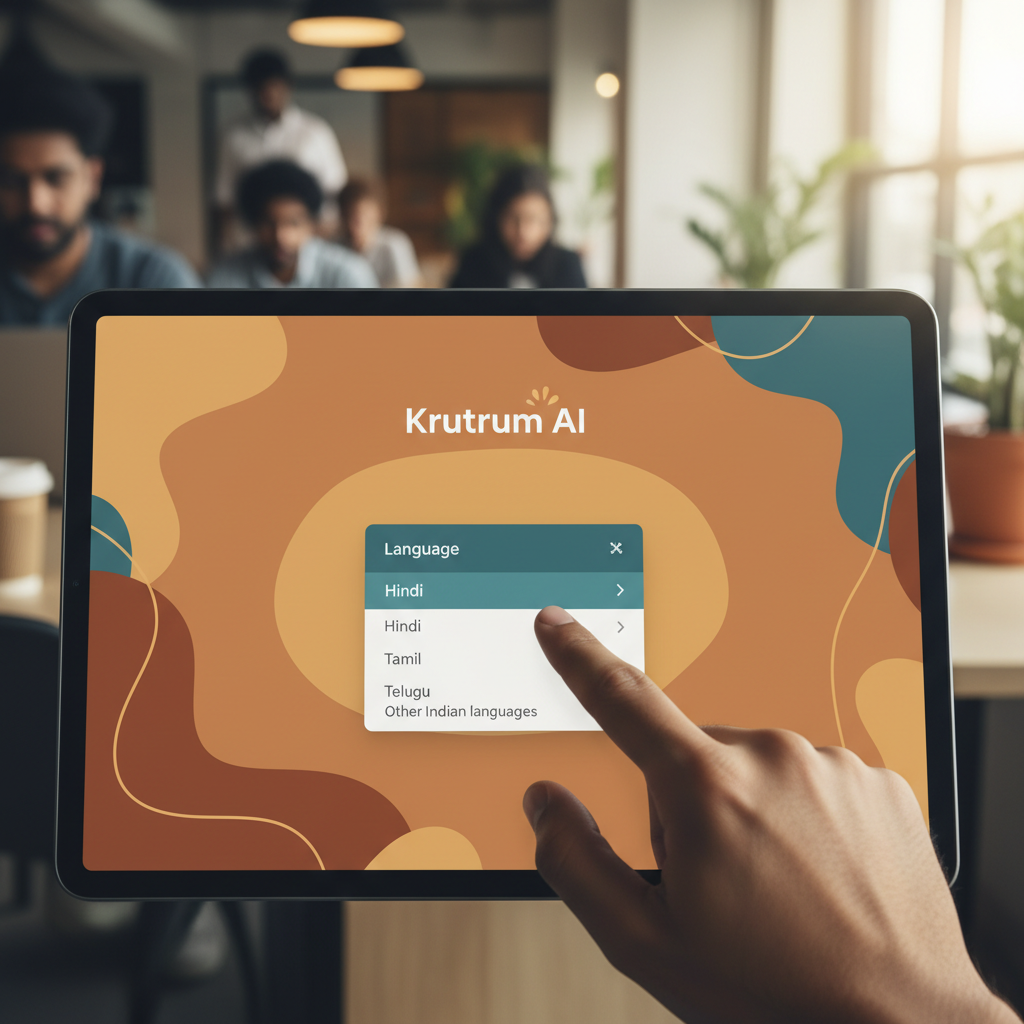
India's entry into this space carries particular weight. Krutrim AI, developed domestically, offers Bollywood-style music generation across 22 Indian languages. This is not a minor technical achievement. India's linguistic diversity has historically been an enormous barrier to scalable digital music tools. The fact that an Indian AI company has addressed that barrier natively, rather than leaving it to a Western platform to retrofit, says a great deal about where AI capability is now being built.
Democratisation in Practice
The most significant near-term impact of AI music generation tools is not at the label level. It is in the bedrooms, small studios, and co-working spaces of Manila, Jakarta, and Mumbai, where independent creators who could never afford professional studio time are producing tracks that compete sonically with major-label releases.
This is the democratisation argument in its most concrete form. The barriers to entry in music production have historically been financial as much as creative: expensive equipment, studio access, session musicians, and mixing engineers. AI music tools collapse those costs dramatically. The question of whether that leads to a richer musical ecosystem or a homogenised flood of algorithmically average content is one the industry has not yet answered. For context on how AI productivity tools are reshaping creative output more broadly, the dynamics explored in the cognitive and creative costs of AI-driven productivity are directly relevant here.
"Several major [K-pop] labels [are] using AI to compose demo tracks and assist with vocal production." - Source reporting, 2026
The K-pop industry's embrace of AI is particularly notable because K-pop has always been a highly engineered product. AI fits naturally into a genre built around precision, trend-responsiveness, and systematic talent development. Labels are using AI not to replace human artists but to accelerate the pipeline, generating demo tracks, testing sonic concepts, and supporting vocal production workflows before committing studio resources.
The Asia-Pacific Picture: Copyright, Lawsuits, and Regulatory Gaps
Not everyone is celebrating the arrival of AI-generated music at scale✦. The Recording Industry Association of Japan (RIAJ) has filed multiple lawsuits against AI music generators, making Japan one of the first jurisdictions in Asia to mount a formal legal challenge to the technology. The core dispute centres on training data: specifically, whether AI companies have used copyrighted recordings to train their models without permission or compensation.
This is the same debate playing out in publishing and visual arts globally, but music carries specific legal complexity. Melody, lyrics, arrangement, and sound recording each attract separate rights in most jurisdictions. An AI system trained on commercial recordings may infringe multiple layers of intellectual property simultaneously, and the liability question is unresolved in most Asian legal systems.
- Japan: RIAJ has filed lawsuits; regulatory attention is growing
- South Korea: Major labels are investing in AI tools while lobbying for clearer IP frameworks
- China: NetEase operates within a tightly regulated domestic digital market; AI music rules remain nascent
- India: No specific AI music regulation exists; the broader AI policy framework is still developing
The regulatory patchwork across Asia-Pacific creates both risk and opportunity. Companies that build in markets with lighter-touch regulation can move faster, but they face significant exposure as rules tighten. Vietnam's recent move to enforce a standalone AI law, detailed in Southeast Asia's first AI legislation framework, signals that the era of unchecked AI deployment in the region is closing. Music generation tools will inevitably face similar scrutiny.
The broader context of enterprise AI investment in the region also matters. As covered in analysis of the USD 50 billion surge in APAC enterprise AI spending, governments and corporations across the region are committing serious capital to AI infrastructure. Music generation, while not the largest slice of that investment, benefits from the same cloud capacity, compute✦ resources, and talent pipelines being built for enterprise applications.
Global Competition and the Chinese Challenge
Asian AI music platforms are not operating in isolation. Western tools such as Suno and Udio have attracted significant attention, but they lack the cultural and linguistic specificity that makes Asian-built platforms genuinely competitive in their home markets. A platform that can generate convincing Bollywood tracks in Bhojpuri, or produce a polished K-pop demo that reflects current sonic trends, has a meaningful advantage over a generalist Western tool, regardless of the latter's technical sophistication.
China's position in this landscape deserves particular scrutiny. NetEase Cloud Music is one of China's largest streaming platforms, with hundreds of millions of registered users. Embedding✦ AI composition at that scale creates a flywheel✦ effect: more users generate more tracks, which creates more training data, which improves the model. Chinese AI companies are also benefiting from state-level support for AI development and relatively permissive domestic data environments, giving them structural advantages in model training that Western and some other Asian competitors cannot easily replicate. The competitive dynamics between Chinese and global AI products are explored further in coverage of Chinese AI models challenging GPT-5.
| Platform | Country | Key Feature | Industry Backing |
|---|---|---|---|
| Supertone | South Korea | K-pop style generation | HYBE (BTS) |
| NetEase Cloud Music AI | China | Millions of tracks monthly, integrated streaming | NetEase |
| Amper Music | Japan | High-volume original composition | Independent |
| Krutrim AI | India | Bollywood-style in 22 Indian languages | Krutrim (domestic) |
What Comes Next for Artists, Labels, and Listeners
The artist experience of AI music generation is genuinely mixed. For independent creators, the tools offer liberation from financial barriers. For session musicians, jingle composers, and others who monetise functional music production, the threat is existential in some market segments. The middle layer of music production, the work that is competent but not irreplaceable, is precisely what AI does well, and that is where many working musicians earn their livelihoods.
Labels face a different set of pressures. AI tools accelerate the A&R process and reduce demo production costs, but they also lower barriers for competitors, including self-releasing artists who no longer need label infrastructure to achieve professional sound quality. The net effect on label revenue and market share will depend heavily on how intellectual property law evolves across Asian jurisdictions in the next two to three years.
- Independent artists gain access to professional-quality production tools at near-zero cost
- Session musicians and functional composers face direct competition from AI generation
- Major labels are investing in AI while simultaneously lobbying for stronger IP protections
- Streaming platforms are integrating AI generation to increase content volume and reduce licensing costs
- Regulators in Japan are already in litigation; others across Asia-Pacific are watching closely
Listeners, for their part, may not notice or care whether a track was produced by a human or an algorithm, particularly in high-volume consumption contexts such as background music, gaming soundtracks, or short-form video. That indifference is commercially significant: if AI-generated music is functionally indistinguishable to the average listener, the economic incentive to pay for human-created music in those contexts diminishes sharply.
Frequently Asked Questions
Which Asian country is leading in AI music generation?
South Korea and China are currently the dominant markets, projected to account for over 60 percent of Asia's AI music revenue by 2027. South Korea's strength is driven by the K-pop industry and platforms like Supertone, backed by HYBE. China's position rests on the scale of platforms like NetEase Cloud Music and state-level AI investment.
Is AI music generation legal in Asia?
The legal landscape varies significantly by country. Japan is the most active jurisdiction in terms of litigation, with the Recording Industry Association of Japan filing lawsuits against AI music generators over copyright concerns. Most other Asian markets, including India and Southeast Asia, lack specific AI music regulation, though broader AI policy frameworks are developing rapidly.
Can AI generate music in regional Asian languages?
Yes, and this is one of the key differentiators for Asian-built platforms. India's Krutrim AI supports Bollywood-style music generation in 22 Indian languages. South Korea's Supertone is optimised for K-pop conventions. These culturally specific capabilities give Asian platforms a meaningful advantage over generalist Western tools in their home markets.
If you are a musician, producer, or music industry professional working in Asia-Pacific, how are these tools changing your workflow or threatening your livelihood? Drop your take in the comments below.






No comments yet. Be the first to share your thoughts!
Leave a Comment