

GITEX AI Asia Confirmed The $78 Billion APAC Number, And Here Is What It Actually Means
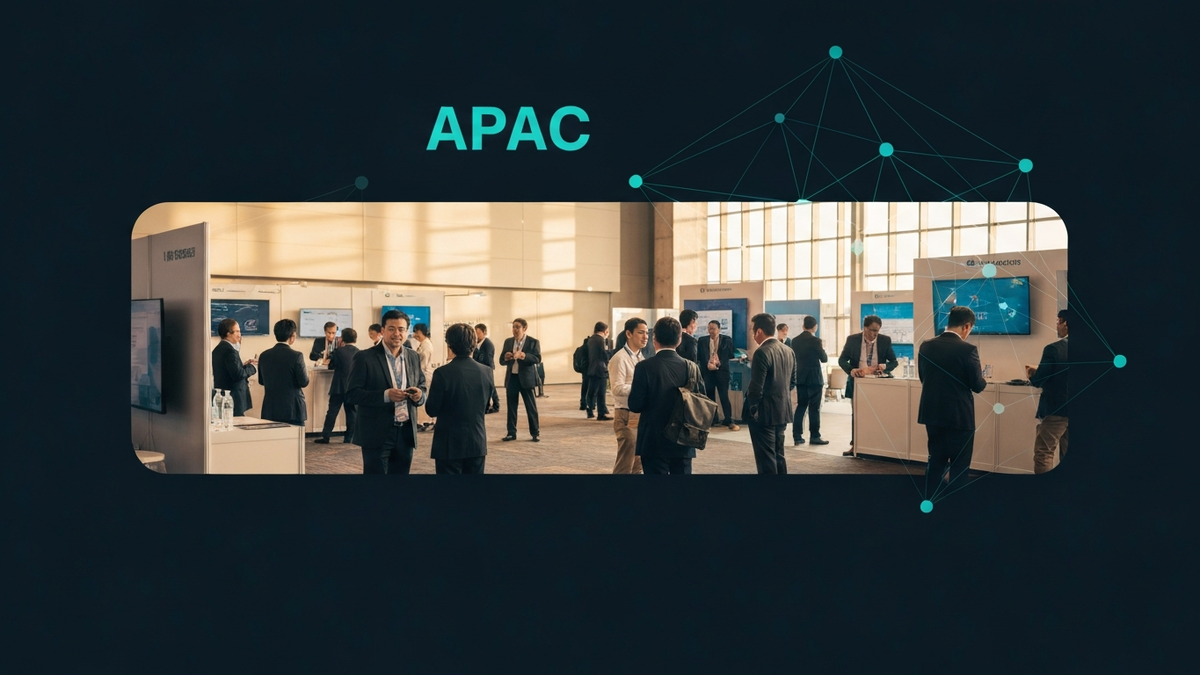
The conference tape and the IDC forecast are now aligned. GITEX AI Asia, held at Marina Bay Sands on 9 and 10 April, drew participants from more than 110 countries and centred its agenda on IDC's projection that Asia-Pacific AI spending reaches roughly $78.4 billion at a 25.5% compound annual growth rate through 2027. The number is not new. The distribution of that spend across the region, however, is the story worth studying.
The Geography Of The Forecast
China accounts for half of all APAC AI spending. IDC projects Chinese AI outlays to reach nearly $38.4 billion by 2027, growing at a 24.8% compound rate. Asia-Pacific excluding Japan and China, a category IDC labels APeJC, represents 34% of regional spend and is expected to grow to $28.2 billion, at the fastest compound rate of any sub-region at 26.8%. Japan ranks third at $12 billion by 2027, growing at 25% annually. Korea, India, and Australia are the largest single-country contributors inside APeJC.
Those percentages matter because they change how the $78 billion gets spent. If China is half the market, Chinese cloud giants and foundation model✦ vendors capture the majority of the regional AI services wallet. APeJC growing faster than any other segment is where the genuine new-market share is up for grabs, and that segment is not dominated by any single player. It is the contested part of the map.
By The Numbers
- $78.4 billion is IDC's projected total APAC AI spend by 2027, at a 25.5% compound annual growth rate.
- $38.4 billion is China's projected AI spend by 2027, 50% of the regional total.
- $28.2 billion is APeJC's projected spend, growing at 26.8%, the fastest regional rate.
- $12 billion is Japan's projected 2027 AI spend at a 25% compound rate.
- 28.5% of the 2023 market was captured by AI Professional Services, the largest market segment. Growing at 22.4% CAGR.
- $3 billion is the forecast Asia-Pacific generative AI✦ market by 2027, growing at an extraordinary 85% CAGR.
Where The Money Actually Goes
AI professional services is the largest category today at 28.5% of regional spend, which reflects the reality of APAC enterprise AI: consulting, integration, and custom deployment still dominate spend, because most Asian enterprises are still early in their AI journeys. Infrastructure, software, and platform services follow. Generative AI is a small share today but the fastest-growing sub-category by a wide margin.
The sector breakdown is instructive. Banking, financial services, and insurance (BFSI) are the largest vertical✦ spender across the region, closely followed by retail and manufacturing. Healthcare is the fastest-growing vertical, driven by the public-sector hospital AI deployments in Singapore, Thailand, and Korea, often anchored on Microsoft Azure, AWS, or regional cloud partners. Logistics and telecom round out the top five. Government spend is surprisingly small in the IDC accounting, which understates the picture because state-owned enterprise spending in China, Vietnam, and Indonesia is partly categorised under non-government verticals.
If last year focused on big tech, this year there is clear demand to invest in pure AI players such as AI labs and AI hardware corporations.
APeJC is the fastest-growing AI sub-market in the world. Every global cloud and AI vendor now needs a Southeast Asia and India strategy separate from its China strategy.
Is The $78 Billion Real?
This is a fair question to ask of any forecast. The IDC number originates from a September 2023 Worldwide AI Spending Guide, updated in subsequent quarterly refreshes. It is a spending projection, not a revenue tally. It captures budgets and committed procurement, and it excludes some state-owned and provincial spending in China and Vietnam that does not surface in public procurement channels. The real Asian AI capex is probably modestly higher than the public figure, but modestly in this context still means single-digit percentage points.
The more interesting question is whether the 25.5% regional CAGR holds. Two pressure points. First, a hardware bottleneck from US export controls on advanced GPUs would suppress Chinese AI infrastructure spend. Second, energy constraints are genuine across the region, particularly in Taiwan, Korea, and Singapore. If either binds, the 2027 number drops. Both are already partial-bite.
What GITEX AI Asia Added
The conference itself did three useful things. It showcased a wide range of Asian AI vendors that are rarely seen outside their home markets: Indonesian AI agriculture firms, Vietnamese agent-framework startups, Thai healthcare AI teams, and Korean industrial AI specialists. It produced deal flow, with several provincial Chinese delegations signing MoUs with Southeast Asian state-owned enterprises. And it gave regional investors a rare opportunity to survey the APeJC segment in one place, at a time when the segment is growing fastest.
- APeJC dealflow at GITEX was denser than at any prior regional AI event.
- Thai, Vietnamese, and Indonesian AI firms got more institutional investor attention than in prior years.
- Chinese provincial delegations actively pitched infrastructure partnerships across ASEAN.
- Korean and Japanese enterprise AI buyers were notably more active on cross-border procurement.
- Indian delegations were smaller than expected, reflecting the current India-focused compliance agenda after the IT Rules 2026.
| Sub-region | 2027 AI spend (IDC) | CAGR 2022-2027 | Share of APAC |
|---|---|---|---|
| China | $38.4B | 24.8% | 50% |
| APeJC (ex-China, ex-Japan) | $28.2B | 26.8% | 34% |
| Japan | $12.0B | 25.0% | 16% |
| APAC total | $78.4B | 25.5% | 100% |
The APAC AI story connects across multiple threads we have been covering. See our analysis of three in four APAC event teams now using AI, our look at APAC grids as the new AI battleground, and our reporting on Stanford's 2026 AI Index. For the investment side, DayOne's $2 billion Singapore data centre round and the PayPay IPO put capital flows in context.
Frequently Asked Questions
Is the $78 billion number for 2026 or 2027?
It is IDC's 2027 forecast, not a 2026 actual. The 2026 number is approximately $60 to $62 billion depending on the exact quarterly refresh. The 2027 number is the one cited most frequently and was reaffirmed at GITEX AI Asia.
Does this include state-owned Chinese AI spending?
Partially. IDC captures public procurement and publicly reported enterprise spending but misses some provincial and state-owned enterprise budgets that do not surface in Western databases. The genuine figure is likely slightly higher than the headline.
What slows the forecast if it slows?
Two binding risks: advanced GPU supply constrained by US export controls, and power availability across Taiwan, Korea, and parts of Southeast Asia. Either would compress spending, with China most exposed to GPU risk and APeJC most exposed to power risk.
Which sectors will see the fastest growth?
Healthcare and retail are IDC's fastest-growing verticals, with BFSI remaining the largest absolute spender. Generative AI is the fastest-growing category overall at an 85% regional CAGR.
Does your organisation have a distinct APeJC AI strategy yet, or are you still lumping it in with China? Drop your take in the comments below.






No comments yet. Be the first to share your thoughts!
Leave a Comment