

Cloud Giants Back Anthropic After Pentagon Supply Chain Blacklist
In a swift and coordinated show of support, Google, Microsoft, and Amazon have each confirmed they will continue offering Anthropic's artificial intelligence models to commercial customers, following a dramatic move by the US Department of Defense to designate the AI safety✦ company as a supply chain risk. The announcements, made within 24 hours of each other, signal that the commercial AI ecosystem✦ is choosing to ring-fence its relationship with Anthropic even as the Pentagon winds down its government contracts.
By The Numbers
- $3 billion+: Google's total financial commitment to Anthropic, including an initial $2 billion stake and a further $1 billion agreed in January 2025
- 1 million: Google Cloud TPUs (tensor processing units) made available to Anthropic following a recently expanded partnership
- 6 months: The wind-down period declared by Defense Secretary Pete Hegseth for existing DOD work with Anthropic
- 3: Major cloud providers (Google, Microsoft, Amazon) that have confirmed Anthropic's Claude models remain available outside of defence work
The sequence of events is remarkable in its speed. After Anthropic refused to agree to the Department of Defense's requested terms of use, President Donald Trump directed federal agencies to cease using the company's technology. Defense Secretary Pete Hegseth confirmed the department's work with Anthropic would be wound down over six months. Within days, all three of the world's leading cloud infrastructure vendors had publicly stated their intention to continue the commercial relationship regardless.
What Each Cloud Provider Has Said
Google was among the first major platform providers to clarify its position. "We understand that the Determination does not preclude us from working with Anthropic on non-defense related projects, and their products remain available through our platforms, like Google Cloud," a Google spokesperson confirmed on Friday.
"We understand that the Determination does not preclude us from working with Anthropic on non-defense related projects, and their products remain available through our platforms, like Google Cloud." - Google Spokesperson
Microsoft had moved even faster, issuing guidance to its customers the night before. The statement was notably direct and, in an unusual moment of corporate candour, took a pointed rhetorical dig at the Pentagon.
"Our lawyers have studied the designation and have concluded that Anthropic products, including Claude, can remain available to our customers - other than the Department of War." - Microsoft
Amazon, the largest public cloud provider by market share, followed on the same Friday, confirming that Anthropic's AI technology would continue to be available to AWS customers in all contexts excluding DOD-related work. The three statements, taken together, represent a near-complete preservation of Anthropic's commercial cloud presence despite the federal designation.
Anthropic's Position and the Legal Challenge Ahead
Anthropic CEO Dario Amodei confirmed late on Thursday that the US government had formally declared his company a supply chain risk. His response was unambiguous: the company has "no choice" but to challenge the designation in court. The legal battle, should it proceed, could set a significant precedent for how the US government can limit or regulate the use of commercial AI technology across the federal supply chain.
The immediate commercial trigger for the designation appears to be Anthropic's refusal to agree to terms of use requested by the DOD. The nature of those terms has not been publicly disclosed, but the standoff has already had ripple effects across the defence technology sector. Several defence-focused technology companies have reportedly instructed employees to stop using Claude and switch to alternatives, with OpenAI models being a commonly cited replacement.
CNBC has confirmed that Anthropic models were used by the US in its most recent military strike on Iran, adding further complexity to the question of what constitutes legitimate versus prohibited use of the company's technology going forward.
The Google and Anthropic Partnership: Deeper Than Cloud Credits
For Google, the stakes in preserving its Anthropic relationship extend well beyond platform revenue. The search giant is one of Anthropic's largest and most strategically significant backers. In January 2025, Google agreed to an additional $1 billion investment, adding to a prior $2 billion commitment, making its total exposure to Anthropic's fortunes substantial.
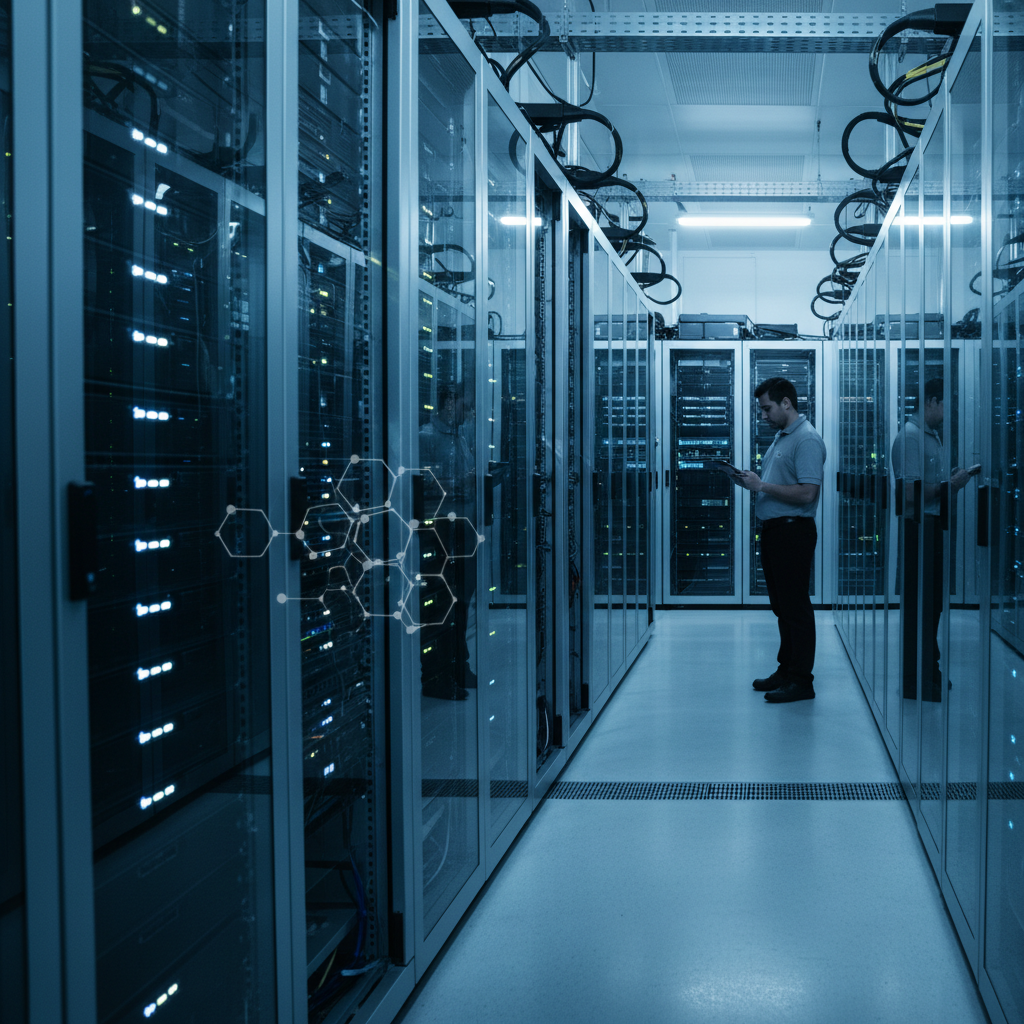
Anthropic's Claude models are available through Google Cloud's Vertex AI platform, and the company uses Google Cloud's infrastructure to train those very models. A recently expanded agreement granted Anthropic access to up to one million of Google's custom tensor processing units, a significant and expensive resource allocation that reflects the depth of the technical and commercial ties between the two organisations.
That context makes Google's public reassurance to customers far more than a routine vendor statement. It is, in effect, a declaration that the company intends to protect a strategic asset regardless of Washington's position on federal contracts. For those tracking Anthropic's growing commercial momentum and its Claude model's rising enterprise adoption, the preservation of these cloud partnerships is critical to maintaining that trajectory.
The Asia-Pacific Picture
The fallout from this US government action carries significant implications for AI adoption across Asia-Pacific, where Google Cloud, Microsoft Azure, and Amazon Web Services collectively power a substantial share of enterprise AI workloads. Enterprises in Japan, South Korea, Singapore, and Australia using Claude via these platforms can take some reassurance that access will continue for non-defence work. However, the episode has surfaced a vulnerability that regional technology procurement teams will need to account for: the risk that geopolitical decisions in Washington can, at speed and without warning, restrict access to specific AI models embedded in existing commercial workflows.
For organisations in the region that have already integrated Claude into customer-facing or back-office systems via Vertex AI or Azure, the question now is one of continuity planning. The fact that all three major cloud providers moved quickly to issue reassurances limits the immediate disruption, but the underlying dynamic remains. AI model availability, at least for US-developed models accessed through US-headquartered cloud providers, is now demonstrably subject to national security determinations. This is a new and important variable for small and medium-sized businesses across Asia that have been building AI strategies around these major platform providers.
China's parallel AI development trajectory, which has produced capable domestic models from companies including Baidu, Alibaba, and DeepSeek, offers one potential hedge for organisations operating within Chinese jurisdictions. But for multi-national firms operating across the region, the fragmentation of the global AI model landscape is becoming a genuine governance and supply chain consideration in its own right. Those watching China's accelerating AI investment and its ambitions to dominate the sector will note that episodes like this one can only strengthen the case for domestic alternatives.
| Cloud Provider | Anthropic Relationship | Position on DOD Designation |
|---|---|---|
| Google Cloud | $3B+ investor; hosts Claude on Vertex AI; provides TPU✦ training infrastructure | Will continue non-defence Anthropic work; products remain available on platform |
| Microsoft Azure | Offers Claude via Azure AI marketplace | Legal review complete; Claude available to all customers except "Department of War" |
| Amazon AWS | Offers Claude via Amazon Bedrock | Will continue offering Anthropic AI to cloud customers, excluding DOD work |
What This Means for Enterprise AI Buyers
For enterprise teams that have built or are evaluating AI pipelines using Anthropic's Claude models, the immediate message from the cloud ecosystem is: your access is not at risk for commercial applications. The three major hyperscalers have each independently reviewed the legal situation and arrived at the same conclusion: the supply chain designation applies to federal and defence use cases, not commercial ones.
That said, the episode underscores the wisdom of building AI architectures with model portability in mind. For those exploring the broader landscape of enterprise AI model options, comparative assessments of leading AI models and their relative strengths offer a useful starting point for contingency planning.
- Commercial Claude users via Google Cloud, Azure, or AWS: No change expected to access or functionality
- Defence and federal contractors: Must transition away from Anthropic models within six months per DOD guidance
- Organisations evaluating AI strategy: Should now formally include geopolitical risk in vendor selection frameworks
- Anthropic itself: Faces a legal battle over the supply chain designation while maintaining its commercial revenue base
The broader context for enterprise leaders is one of increasing AI supply chain complexity. Regulatory and political pressure on AI companies is accelerating globally, and the ability to access specific models is no longer purely a technical or commercial question. It is, increasingly, a policy question too.
Frequently Asked Questions
Can businesses still use Anthropic's Claude models through Google Cloud or Microsoft Azure?
Yes. Google, Microsoft, and Amazon have all confirmed that Anthropic's Claude models remain available to commercial customers through their respective cloud platforms. The US Department of Defense's supply chain designation applies to federal and defence-related work only, not to commercial enterprise use cases.
Why did the US government designate Anthropic as a supply chain risk?
The designation followed Anthropic's refusal to agree to terms of use requested by the Department of Defense. The specific terms have not been publicly disclosed. President Trump subsequently directed federal agencies to cease using Anthropic's technology, and Defense Secretary Pete Hegseth announced a six-month wind-down period for existing DOD contracts.
What does this mean for AI users in Asia-Pacific?
For Asia-Pacific enterprises using Claude via Google Cloud, Azure, or AWS for non-defence applications, there is no immediate disruption. However, the episode highlights a new category of geopolitical risk in AI procurement: US government policy decisions can rapidly restrict access to specific AI models, including those already embedded in commercial workflows. Regional technology teams should factor this into vendor diversification and business continuity planning.
Given how quickly Washington's decisions are reshaping AI access for enterprises worldwide, we want to know: has your organisation built any contingency plans for losing access to a key AI model, and if not, what would it take for you to start? Drop your take in the comments below.





No comments yet. Be the first to share your thoughts!
Leave a Comment