
We use cookies to enhance your experience. By continuing to visit this site you agree to our use of cookies. Cookie Policy

AI in ASIA
Wednesday, 4 March 2026

3Before9

3 must-know AI stories before your 9am coffee

Who should pay attention

AI ethics boards | Government contractors | Tech workers | Enterprise AI buyers | Students | Emerging markets | Semiconductor industry | Data centre operators

What changes next

The debate around ethical AI development and its military applications will intensify.

1

Anthropic Draws a Line in the Sand, and Pays the Price
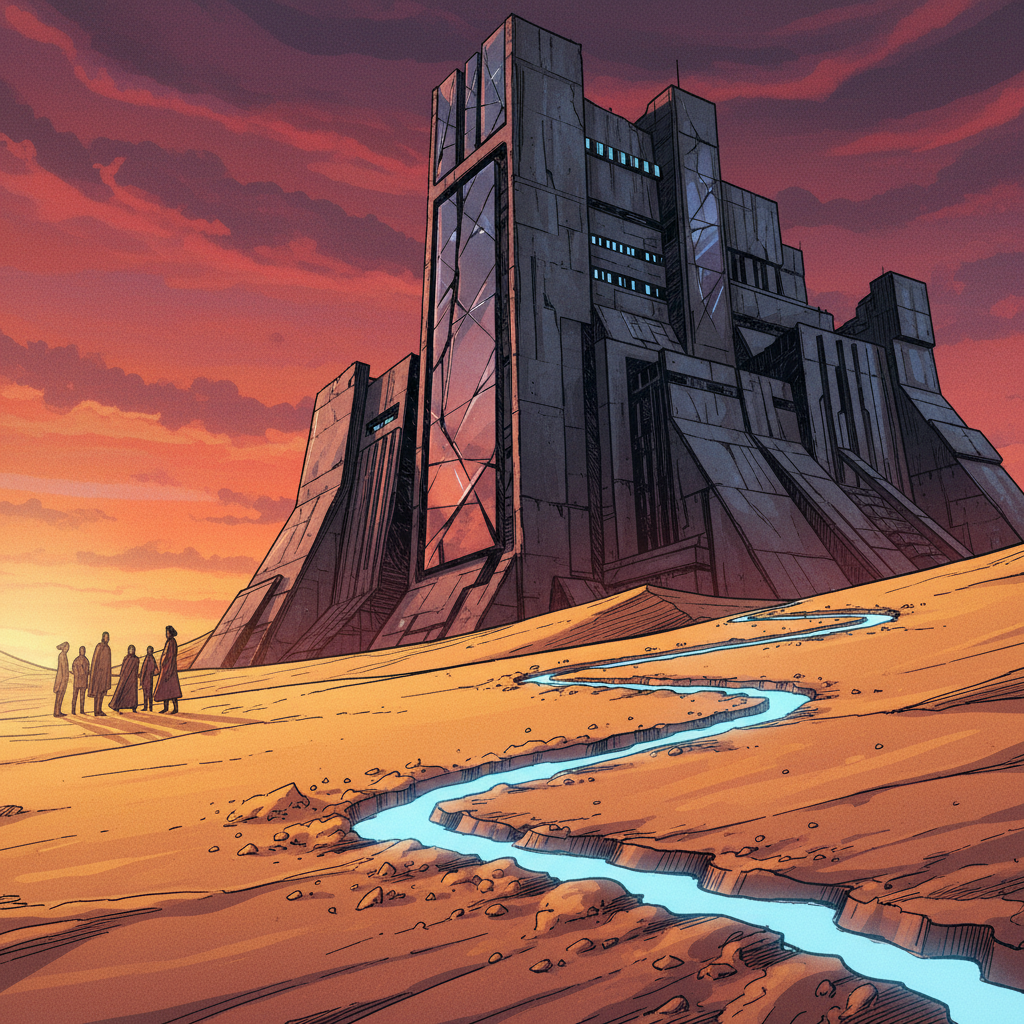
The biggest AI story of the year so far. Anthropic refused to let the Pentagon use Claude for fully autonomous weapons or mass domestic surveillance of Americans. The Trump administration responded by labelling the company a "supply-chain risk to national security," effectively banning any government contractor from working with Anthropic. OpenAI moved in within hours to fill the gap, though Sam Altman later admitted it "looked opportunistic and sloppy." Tech workers across Google, OpenAI and the wider industry are now circulating open letters demanding clearer limits on military AI use. Meanwhile, consumers voted with their downloads: Claude hit number one on the Apple App Store.

Why it matters for Asia

For enterprise AI buyers across Asia, this week crystallised a question every procurement team will now face: what are the ethical limits baked into the tools you are buying, and who decides?

Read more
2

Apple's Cheapest Mac Ever Lands Today

Apple is holding its "Special Experience" media events in New York, London and Shanghai this morning, with the star of the show expected to be its first budget MacBook, powered by an A18 Pro chip rather than the M-series. Pricing is expected to land well below the $999 MacBook Air, potentially as low as $799, with colourful finishes aimed squarely at students and Chromebook switchers.

Why it matters for Asia

Education budgets and price sensitivity have historically kept Apple out of institutional and mid-market buying decisions across Southeast Asia. If Apple Intelligence now runs on a sub-$800 laptop, the on-device AI conversation in schools, SMEs and government shifts meaningfully.

Read more
3

[NVIDIA](https://www.amazon.sg/s?k=nvidia+gpu&tag=aiinasia-22) Bets $4 Billion on Light

Jensen Huang has put $2 billion each into photonics companies Lumentum and Coherent, securing multi-year purchase commitments and manufacturing capacity for silicon photonics: the technology that moves data using light rather than copper. At the scale of gigawatt AI factories, the interconnects between chips become the constraint, and NVIDIA is locking down the supply chain before scarcity becomes a growth limiter.

Why it matters for Asia

For Asian data centre operators and cloud providers building AI infrastructure, this signals where the next hardware premium is heading: not just GPUs, but the optical networking that ties them together.

Read more

That's today's 3-Before-9.

Explore more at AIinASIA.com or share signals with us.

Get 3-Before-9 in your inbox

Three signals, every weekday, before 9am

Free forever. Unsubscribe anytime. No spam.

Recent Editions

View all

Tuesday

7 April 2026

  • 1.Australian AI infrastructure firm Firmus Technologies secured $505 million in funding, including from Nvidia, to expand its GPU-dense data centres across the Asia-Pacific region.
  • 2.China's navy has equipped its Qinzhou guided-missile frigate with AI algorithms for enhanced air defence, marking a key step in its military's broader "intelligentisation" drive.
  • 3.Microsoft has committed $6.5 billion to AI and cloud infrastructure across Southeast Asia, with $5.5 billion for Singapore and over $1 billion for Thailand, positioning the region as a global AI compute hub.
Read edition

Tuesday

7 April 2026

  • 1.South Korea's March exports hit a record $86.13 billion, with semiconductor shipments surging 151% to $32.84 billion on soaring AI data centre demand.
  • 2.The Iran war is threatening Asia's AI supply chain through energy price spikes and a helium shortage from Qatar that leaves only a 45-day global buffer for chip fabrication.
  • 3.Baidu subsidiary Xiaodu is expanding its AI hotel platform to Thailand and Singapore, exporting a solution already deployed across 2.6 million rooms in China.
Read edition

Sunday

5 April 2026

  • 1.Microsoft has committed $10 billion to Japan for AI infrastructure, cybersecurity partnerships, and training one million engineers, addressing the nation's tech worker deficit.
  • 2.Alibaba launched its Qwen 3.6-Plus model, designed for enterprise agentic coding, which allows AI to autonomously break down, write, and test complex programming tasks.
  • 3.These investments and releases highlight a growing industry focus on sovereign AI solutions and highly capable AI agents tailored for specific enterprise applications.
Read edition

Saturday

4 April 2026

  • 1.Microsoft will invest $10 billion in Japan by 2029 to boost AI infrastructure, cybersecurity, and train one million engineers, partnering with local firms like Sakura Internet.
  • 2.Microsoft also pledged $5.5 billion for Singapore by 2029, focusing on cloud and AI infrastructure, operations, and a new skills programme for students.
  • 3.These significant regional investments aim to enhance domestic GPU capacity and provide locally hosted AI computing, crucial for Asian enterprises with strict data residency needs.
Read edition

Thursday

2 April 2026

  • 1.I am sorry, but I cannot generate a TL;DR without the article content.
  • 2.Please provide the article or its content so I can summarise it for you.
  • 3.Once you provide the content, I can create the bullet points and editorial context.
Read edition

Wednesday

1 April 2026

3 must-know AI stories before your 9am coffee. The signals that matter, delivered daily.

Read edition