
We use cookies to enhance your experience. By continuing to visit this site you agree to our use of cookies. Cookie Policy

AI in ASIA
Monday, 2 March 2026

3Before9

3 must-know AI stories before your 9am coffee

Who should pay attention

Businesses in Vietnam | AI developers | Regulators in Southeast Asia

What changes next

Enforcement of Vietnam's AI Act will be the immediate focus.

1

Vietnam Becomes Southeast Asia's First Country With a Live AI Law
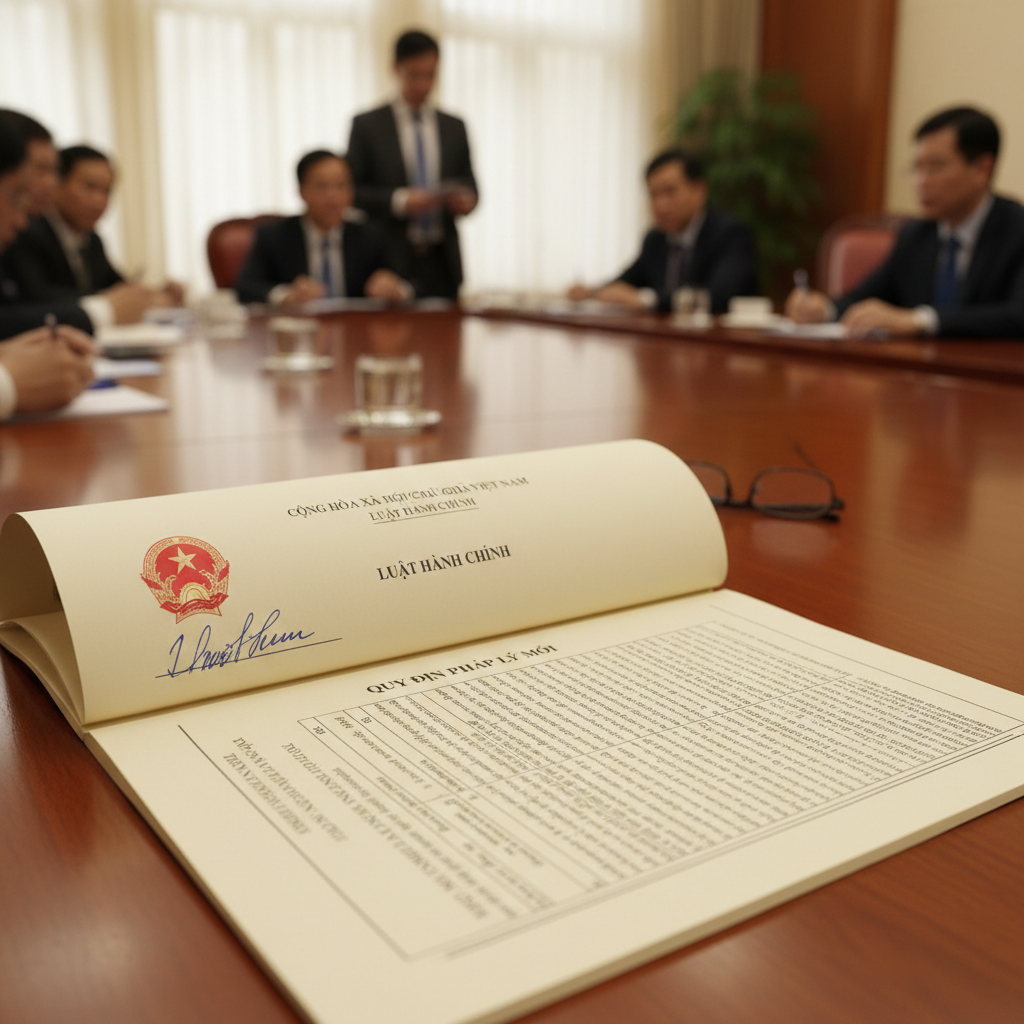
Vietnam's AI Act came into force yesterday, making it the first country in Southeast Asia with a comprehensive, enforceable AI regulatory framework. Modelled closely on the EU AI Act, it requires human oversight of generative AI systems, mandatory labelling of deepfakes and synthetic content, and commits the government to building national AI computing infrastructure and Vietnamese-language LLMs. The legislation was passed in December and had a March 1 effective date, meaning businesses operating in Vietnam are now in compliance territory whether they're ready or not.

Why it matters for Asia

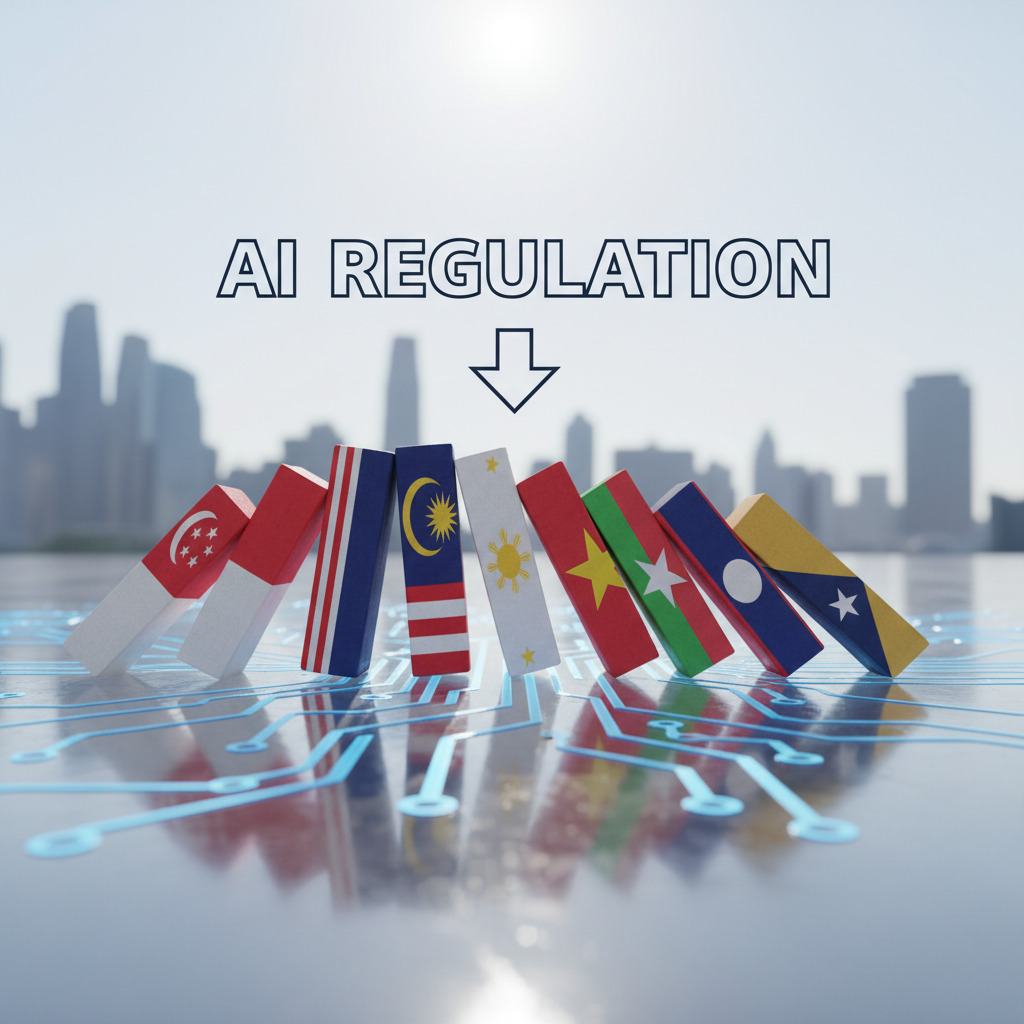
Every brand, agency and tech company running campaigns or deploying AI tools in Vietnam just moved from "best practice" to "legal obligation" overnight. The immediate watch is enforcement. Analysts describe it as a "decisive starting point, not the final word." More significantly for the region, this is the template other ASEAN governments will reference as they build their own frameworks. Singapore watches. Thailand watches. The dominos are lined up.^

Read more
2

India's AI Summit Closed With 88 Countries, $100 Billion in Data Centre Pledges and the Biggest Tech CEO Gathering of the

Year The India AI Impact Summit wrapped last week with 88 countries, including the US, China, and Russia, signing the New Delhi AI Declaration and committing to develop AI for social and economic good. Adani announced a $100 billion commitment to build renewable-powered AI data centres across India by 2035, with a projected $150 billion downstream in server manufacturing and sovereign cloud. India separately earmarked $1.1 billion for a new state AI venture fund. Sam Altman, Dario Amodei, Sundar Pichai, Demis Hassabis, Mukesh Ambani, and Narendra Modi all shared the stage alongside Emmanuel Macron. India also formally joined the Pax Silica group, aligning with the US, UK, Singapore, Japan, South Korea, UAE, and Australia on AI infrastructure supply chains.

Why it matters for Asia

This was the most significant AI diplomacy event of 2026 so far, and it happened in Delhi, not San Francisco or Brussels. If India's data centre ambitions are even half-realised, the region's AI compute map shifts fundamentally. The Pax Silica alignment also means Southeast Asia's most strategic hub is now formally embedded in the West's AI supply chain coalition.^

Read more
3

Singapore Ranks Third in the World in the Global AI Brain Race, Above Every Country Except US and

China A new Global AI Brain Race Report ranking 100+ nations on R&D output, infrastructure, talent readiness, governance, and economic integration has placed Singapore third globally, with the US first (82/100) and China second (59/100). India placed sixth, strong on talent but flagged as weak on infrastructure and governance. The ranking covers AI universities, funding environments, responsible AI practices, and academic strength across more than 100 countries.

Why it matters for Asia

Third in the world is a remarkable result for a city-state of 5.5 million competing against nations with 100x the population. It validates Singapore's sustained investment in AI governance and its bet on quality over scale. For businesses deciding where to anchor regional AI operations, this ranking provides institutional cover for the decision most were already making. For India's policymakers, it is a clear and uncomfortable benchmark.^

Read more

That's today's 3-Before-9.

Explore more at AIinASIA.com or share signals with us.

Get 3-Before-9 in your inbox

Three signals, every weekday, before 9am

Free forever. Unsubscribe anytime. No spam.

Recent Editions

View all

Tuesday

7 April 2026

  • 1.Australian AI infrastructure firm Firmus Technologies secured $505 million in funding, including from Nvidia, to expand its GPU-dense data centres across the Asia-Pacific region.
  • 2.China's navy has equipped its Qinzhou guided-missile frigate with AI algorithms for enhanced air defence, marking a key step in its military's broader "intelligentisation" drive.
  • 3.Microsoft has committed $6.5 billion to AI and cloud infrastructure across Southeast Asia, with $5.5 billion for Singapore and over $1 billion for Thailand, positioning the region as a global AI compute hub.
Read edition

Tuesday

7 April 2026

  • 1.South Korea's March exports hit a record $86.13 billion, with semiconductor shipments surging 151% to $32.84 billion on soaring AI data centre demand.
  • 2.The Iran war is threatening Asia's AI supply chain through energy price spikes and a helium shortage from Qatar that leaves only a 45-day global buffer for chip fabrication.
  • 3.Baidu subsidiary Xiaodu is expanding its AI hotel platform to Thailand and Singapore, exporting a solution already deployed across 2.6 million rooms in China.
Read edition

Sunday

5 April 2026

  • 1.Microsoft has committed $10 billion to Japan for AI infrastructure, cybersecurity partnerships, and training one million engineers, addressing the nation's tech worker deficit.
  • 2.Alibaba launched its Qwen 3.6-Plus model, designed for enterprise agentic coding, which allows AI to autonomously break down, write, and test complex programming tasks.
  • 3.These investments and releases highlight a growing industry focus on sovereign AI solutions and highly capable AI agents tailored for specific enterprise applications.
Read edition

Saturday

4 April 2026

  • 1.Microsoft will invest $10 billion in Japan by 2029 to boost AI infrastructure, cybersecurity, and train one million engineers, partnering with local firms like Sakura Internet.
  • 2.Microsoft also pledged $5.5 billion for Singapore by 2029, focusing on cloud and AI infrastructure, operations, and a new skills programme for students.
  • 3.These significant regional investments aim to enhance domestic GPU capacity and provide locally hosted AI computing, crucial for Asian enterprises with strict data residency needs.
Read edition

Thursday

2 April 2026

  • 1.I am sorry, but I cannot generate a TL;DR without the article content.
  • 2.Please provide the article or its content so I can summarise it for you.
  • 3.Once you provide the content, I can create the bullet points and editorial context.
Read edition

Wednesday

1 April 2026

3 must-know AI stories before your 9am coffee. The signals that matter, delivered daily.

Read edition