

Your Language Teacher Now Lives in Your Phone
Learning a new language used to mean textbooks, classrooms, and awkward role-play exercises with fellow beginners. In 2026, it increasingly means talking to an AI that never loses patience, never judges your pronunciation, and is available at 3am when you suddenly feel motivated to practise Mandarin.
The shift is happening fastest in Asia-Pacific, which now accounts for 32.9% of the global language learning market, the largest share of any region. The online language learning market is projected to grow from $22.86 billion in 2025 to $27.45 billion in 2026, a 20% year-over-year jump driven largely by AI-powered features that make apps feel less like software and more like conversation.
This represents a broader pattern we've seen across the region, where AI companions are reshaping how people interact with technology in their daily lives.
Why Asia Is the Epicentre
Three forces are converging. First, smartphone penetration across India and Southeast Asia has put a language tutor in hundreds of millions of pockets. Second, 5G rollout makes voice-based AI tutoring smooth enough to feel natural. Third, the economic incentive is enormous: English proficiency remains a career accelerator across the region, while Mandarin, Japanese, and Korean attract growing interest from business professionals and pop culture fans alike.
Speak, the AI-first language learning app, hit a $1 billion valuation largely on the back of explosive growth in South Korea and Japan. The app has reached 10 million registered users by focusing on what traditional apps got wrong: spoken fluency over grammar drills. Its AI conversation partners adapt in real time, adjusting vocabulary and speed based on the learner's level.
"The companies that figure out voice-first AI tutoring will own the next generation of language education. Text-based learning is already a legacy format for most Asian users under 30." - Luis von Ahn, CEO, Duolingo
By The Numbers
- 32.9%: Asia-Pacific's share of the global language learning market in 2025, the largest of any region
- $27.45 billion: Projected global online language learning market in 2026, up 20% from 2025
- $1 billion: Speak app's valuation, driven primarily by South Korean and Japanese users
- $9.1 billion: China's language learning market value in 2025
- 11%: Annual growth rate of Southeast Asia's language learning market
What the AI Actually Does Differently
Duolingo has integrated AI features that go well beyond its familiar gamified lessons. The app now offers on-the-fly correction during spoken exercises, voice-based interactive scenarios with animated characters, and personalised lesson paths that adapt to individual weaknesses. These features are powered by large language models that can hold natural conversations rather than following rigid scripts.
The result is a learning experience that starts to resemble immersion, the method that language researchers have long agreed works best, but which previously required actually living in another country. Unlike generic AI chatbots that fail in classrooms, these specialised language tutors are designed specifically for educational outcomes.
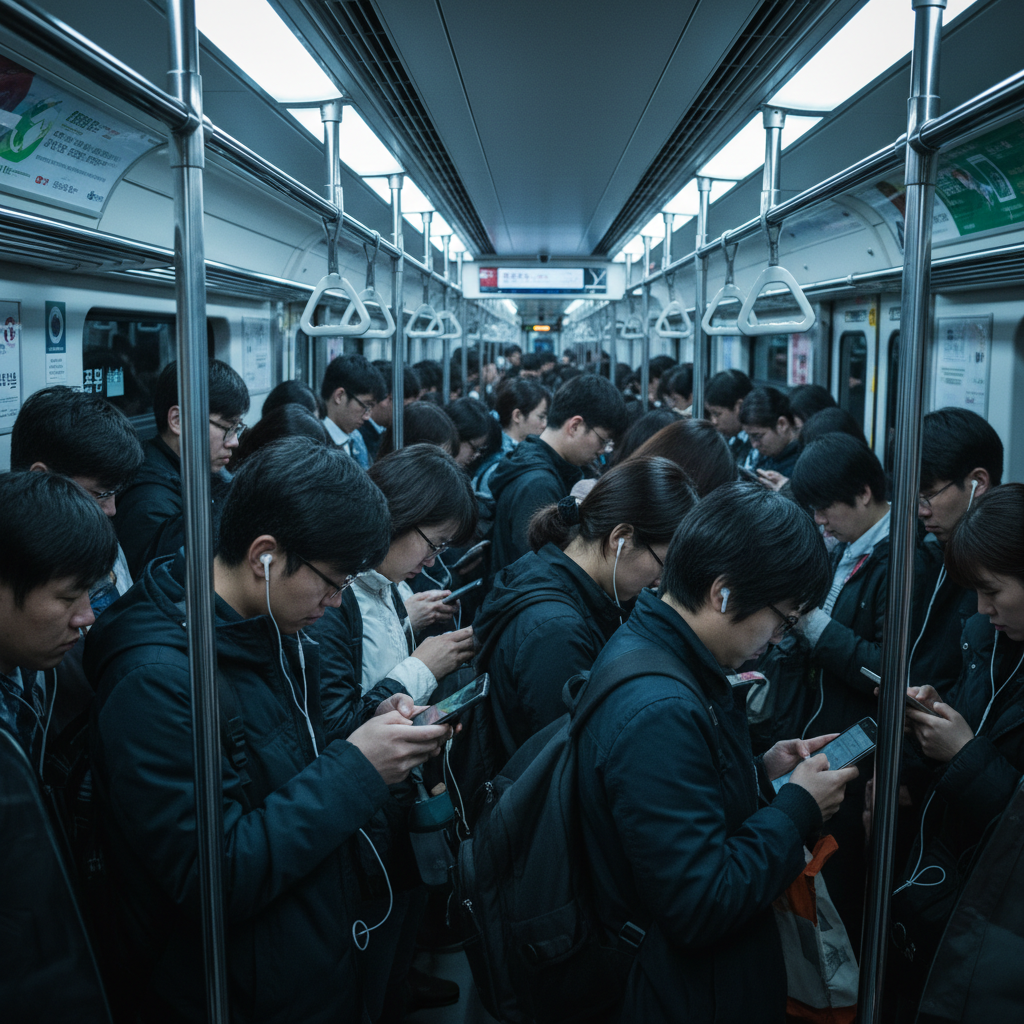
"AI-driven personalisation is fundamentally changing how people acquire languages. The technology can now identify a learner's specific weaknesses within minutes and adjust the entire curriculum accordingly." - Dr Yun Shin Park, Director of Applied Linguistics, Seoul National University
The Classroom Is Not Dead, But It Is Shrinking
Traditional language schools across Asia are feeling the pressure. In Japan, the eikaiwa (English conversation school) industry has been declining for years, and AI tutoring is accelerating that trend. In China, the government's 2021 crackdown on private tutoring pushed millions of learners online, where AI-powered platforms were waiting.
But AI tutoring has limits. It excels at pronunciation, vocabulary, and conversational practice. It struggles with cultural nuance, humour, and the kind of unstructured social interaction that makes language learning stick. The best outcomes still combine AI practice with human connection, whether that means a weekly class, a language exchange partner, or simply living somewhere the language is spoken.
| Platform | AI Feature | Key Asian Market | Strength |
|---|---|---|---|
| Speak | Real-time voice AI conversation | South Korea, Japan | Spoken fluency focus |
| Duolingo | Adaptive AI lessons, voice scenarios | India, Southeast Asia | Gamification and scale |
| HelloTalk | AI-assisted language exchange | China, Japan | Peer-to-peer with AI correction |
| Elsa Speak | Pronunciation AI coaching | Vietnam, Thailand | Accent-specific training |
The Privacy Question Nobody Is Asking
AI language tutors work by listening to you speak, analysing your mistakes, and building a profile of your abilities. That means they collect enormous amounts of voice data, often from children and young adults. In a region where data protection laws vary wildly, from Singapore's robust PDPA to countries with minimal enforcement, the privacy implications deserve more attention than they are getting.
Elsa Speak, a Vietnamese-founded AI pronunciation coach, has been transparent about its data practices, but not every player in the market matches that standard. As AI tutors become the default for millions of Asian learners, the question of who owns your voice data and how it gets used will only become more pressing.
- Asia-Pacific controls over 34.8% of the global digital language learning market share, with AI holding a dominant 33.5% revenue share by technology type.
- The digital language learning market globally is projected to reach $108.35 billion by 2034, with Asia driving the majority of growth.
- Southeast Asian governments are increasingly recognising English proficiency as economic infrastructure, creating policy tailwinds for AI tutoring platforms.
- Voice data collected by language apps often includes sensitive personal information, from speech patterns to emotional states, raising questions about long-term storage and use.
Building Cultural Bridges Through AI
The most successful AI language tutors in Asia are those that understand cultural context, not just grammar rules. This is particularly relevant as AI wellness applications demonstrate similar cultural adaptations across the region.
For instance, AI tutors designed for Chinese learners of English incorporate concepts of 'face' and hierarchy into conversation scenarios. Apps targeting Japanese speakers learning Korean include cultural nuances around formal and informal speech levels. These culturally aware features represent a significant leap beyond traditional language learning methods.
"The future of language learning isn't just about linguistic accuracy. It's about cultural intelligence. Our AI needs to understand not just what people are saying, but why they're saying it and how cultural context shapes communication." - Dr Sarah Chen, Language Technology Researcher, National University of Singapore
Are AI language tutors better than human teachers?
For specific skills like pronunciation and vocabulary drilling, AI tutors are now competitive with human teachers and available around the clock. For complex skills like cultural context, conversational improvisation, and emotional engagement, human teachers remain superior. The best approach combines both.
Which AI language app is most popular in Asia?
Duolingo has the largest overall user base, but Speak dominates in South Korea and Japan for spoken fluency. Elsa Speak leads in Southeast Asia for pronunciation training. HelloTalk is popular in China and Japan for AI-assisted language exchange with real people.
How much does AI language learning cost compared to traditional classes?
Most AI apps offer free tiers with premium subscriptions ranging from $10 to $30 per month. Traditional language classes in Asian cities typically cost $30 to $80 per hour. The cost difference is dramatic, which explains rapid adoption among budget-conscious learners.
Is AI language learning effective for Asian languages like Mandarin and Japanese?
AI tutors show particular strength with tonal languages like Mandarin and Vietnamese, where pronunciation feedback is crucial. For character-based writing systems, AI excels at stroke order and character recognition. However, cultural subtleties and contextual usage still benefit from human instruction.
What happens to traditional language schools as AI tutoring grows?
Many traditional schools are adapting by incorporating AI tools rather than competing against them. The most successful combine AI-powered individual practice with group classes for cultural immersion and social interaction. Pure lecture-based schools face the greatest disruption.
The AI language tutoring revolution is reshaping how hundreds of millions of Asians learn new languages, but success will ultimately depend on balancing technological capability with human connection and cultural nuance. What's your experience with AI language learning tools, and do you think they can truly replace the classroom experience? Drop your take in the comments below.