

Generic AI Chatbots Fall Short in Asia's Classrooms
The OECD's latest findings confirm what teachers across Asia already suspected: ChatGPT, Gemini, and Claude can answer questions brilliantly, but answering questions is not the same as helping someone learn. The shift towards purpose-built AI platforms designed specifically for education shows significantly better results than generic chatbots.
A randomised trial published in Scientific Reports found that students in AI-powered learning environments achieved 54% higher test scores compared to control groups. The critical detail is that these gains came from structured, pedagogically designed AI tools, not from students chatting with a general-purpose chatbot.
As schools across the region grapple with Asia's accelerating AI literacy race, the distinction between educational AI and consumer chatbots has never been more important.
The Problem With General-Purpose AI in Classrooms
When schools first started experimenting with AI, the approach was straightforward: give students access to ChatGPT and see what happens. What happened was messy. Teachers found themselves spending more time supervising AI use than on actual instruction.
Students got fluent answers but shallow understanding. The AI had no concept of curriculum alignment, learning objectives, or assessment scaffolding. This mirrors broader concerns about AI chatbots' limitations in educational contexts.
"Students with access to general-purpose AI chatbots produced higher-quality outputs, but this advantage disappeared when tested independently. Educational AI tools designed with intentional pedagogical purpose showed sustained improvements." - OECD Digital Education Outlook 2026
The OECD's 2026 Digital Education Outlook put it bluntly: general-purpose AI helps students produce better work, but that improvement vanishes when you take the AI away. Purpose-built educational tools, by contrast, showed sustained learning gains because they were designed to teach, not just to answer.
By The Numbers
- 54%: Higher test scores achieved by students using AI-powered learning environments vs. control groups
- 85%: Percentage of teachers who used AI during the 2024-25 school year
- 86%: Percentage of students who used AI during the same period
- US$32.27 billion: Projected AI in education market size by 2030
- 48% CAGR: Asia-Pacific's AI education adoption growth rate, the highest globally
What Purpose-Built Education AI Does Differently
The difference is not just about restricting what an AI can say. Purpose-built education platforms are architecturally different from general chatbots in several important ways.
- They align to specific curricula and learning standards, so responses match what students are actually being taught
- They use spaced repetition and retrieval practice, proven learning techniques, rather than just answering questions on demand
- They track individual student progress over time and adapt difficulty automatically
- They provide teachers with dashboards showing where each student is struggling, rather than replacing teacher oversight entirely
- They are designed to make students think harder, not to give them the answer
This last point is crucial. A good tutor asks questions. A general-purpose chatbot gives answers. The pedagogical difference between those two approaches is enormous.
"The most defining trend of 2026 is the clear movement away from generic AI tools toward platforms purpose-built for education." - TeachBetter.ai, AI Trends in Education 2026
Asia-Pacific Leads the Transformation
Asia-Pacific has the highest AI education adoption rate globally, growing at 48% compound annual growth. The region's combination of large student populations, high parental investment in education, and government willingness to experiment with technology makes it fertile ground for purpose-built AI education tools.
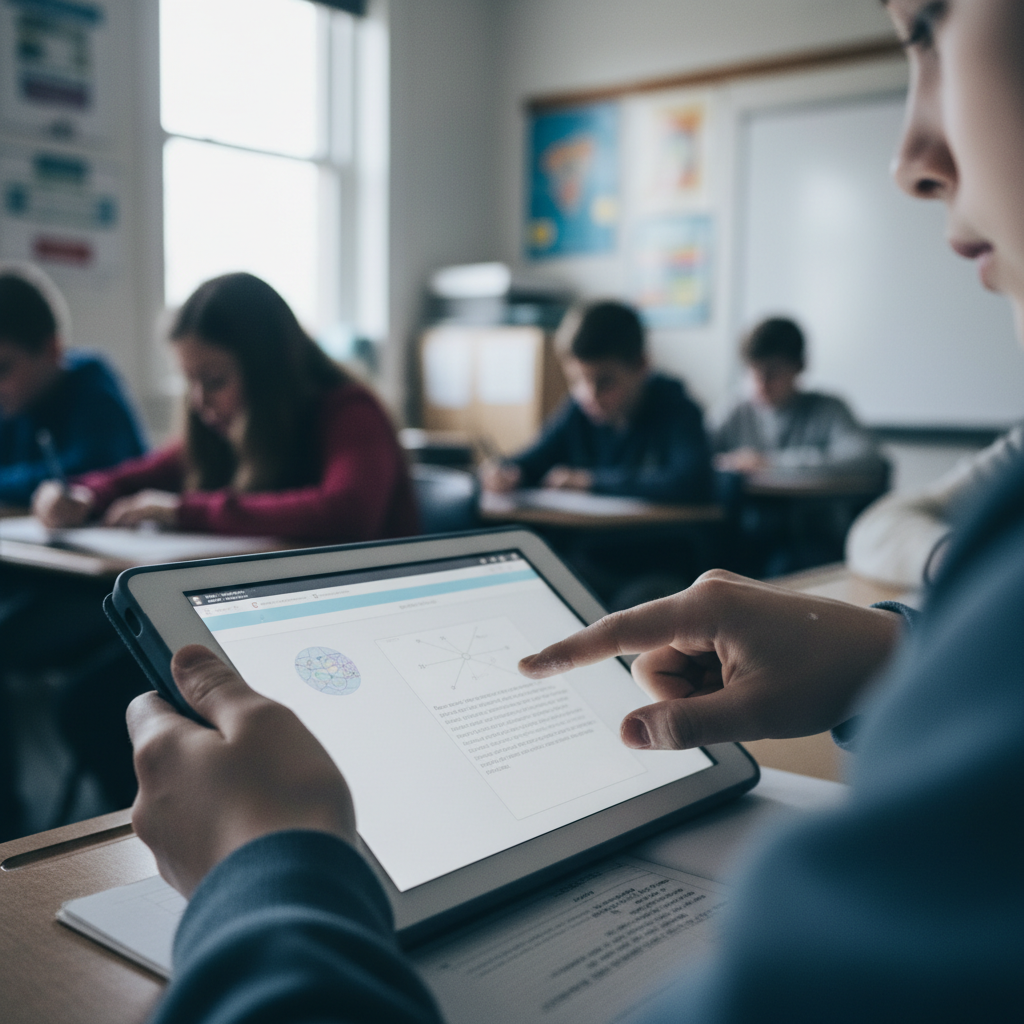
In Australia, a Microsoft study found that students using Copilot in structured educational settings saw grades increase by 10%. The Philippines has 83% of students already using AI tools for educational purposes, making it one of Southeast Asia's most active adopters.
South Korea is hosting the 27th International Conference on Artificial Intelligence in Education (AIED 2026) in Seoul this June, reflecting the country's commitment to advancing AI-driven pedagogy. Meanwhile, Microsoft's massive teacher training initiative in India shows how tech giants are investing in educational AI infrastructure.
In many schools across Asia, AI-powered simulations are eliminating the constraints of inadequate laboratory infrastructure. Students can manipulate variables, observe outcomes, and test hypotheses digitally, a practical solution in countries where physical labs are underfunded or overcrowded.
| Approach | Strengths | Weaknesses | Best For |
|---|---|---|---|
| General AI chatbot | Wide knowledge, free | No curriculum alignment, shallow learning | Quick reference, brainstorming |
| Purpose-built education AI | Curriculum-aligned, adaptive | Narrower scope, cost | Sustained learning, assessment |
| AI simulation labs | Hands-on experimentation | Requires digital infrastructure | Science education, under-resourced schools |
What Teachers Actually Need
The shift to purpose-built tools also reflects something teachers have been saying for two years: they need AI that reduces their workload, not AI that creates new supervisory tasks. A general-purpose chatbot in a classroom requires constant monitoring because teachers cannot predict what it will say or how students will use it.
A purpose-built tool with guardrails, curriculum alignment, and progress tracking is something teachers can trust and delegate to. Industry leaders predict that AI will move from experimentation to embedded infrastructure in education by 2026.
That means AI tools will not be special projects or add-ons. They will be part of the default learning environment, built into the platforms schools already use. This integration approach has already shown success in Vietnam's comprehensive AI education strategy.
How do purpose-built education AI tools differ from general chatbots?
Purpose-built tools align to specific curricula, use evidence-based learning techniques like spaced repetition, track individual progress, and provide teacher dashboards. They're designed to make students think harder rather than simply providing answers on demand.
Why do general AI chatbots fail in educational settings?
General chatbots lack curriculum alignment, pedagogical structure, and learning objectives. Students may produce better-looking work initially, but learning gains disappear when the AI is removed because the tools prioritise output over understanding.
Which regions are adopting educational AI fastest?
Asia-Pacific leads with 48% compound annual growth in AI education adoption. Countries like the Philippines (83% student usage), South Korea, and India are driving this transformation through government initiatives and private sector partnerships.
What should schools look for when choosing AI education tools?
Schools should prioritise curriculum alignment, evidence-based learning techniques, teacher dashboards with actionable data, adaptive difficulty adjustment, and tools that encourage problem-solving rather than providing direct answers to student queries.
Are AI simulations replacing traditional laboratories?
AI-powered simulations are supplementing physical labs, particularly in under-resourced schools. They allow students to manipulate variables and test hypotheses digitally, providing hands-on learning experiences where physical infrastructure is limited or overcrowded.
As Asia continues to lead global AI adoption in education, the choice between generic chatbots and purpose-built learning platforms will define which students truly benefit from artificial intelligence. Are you seeing this shift towards educational AI in your local schools, or are institutions still experimenting with general-purpose tools? Drop your take in the comments below.