
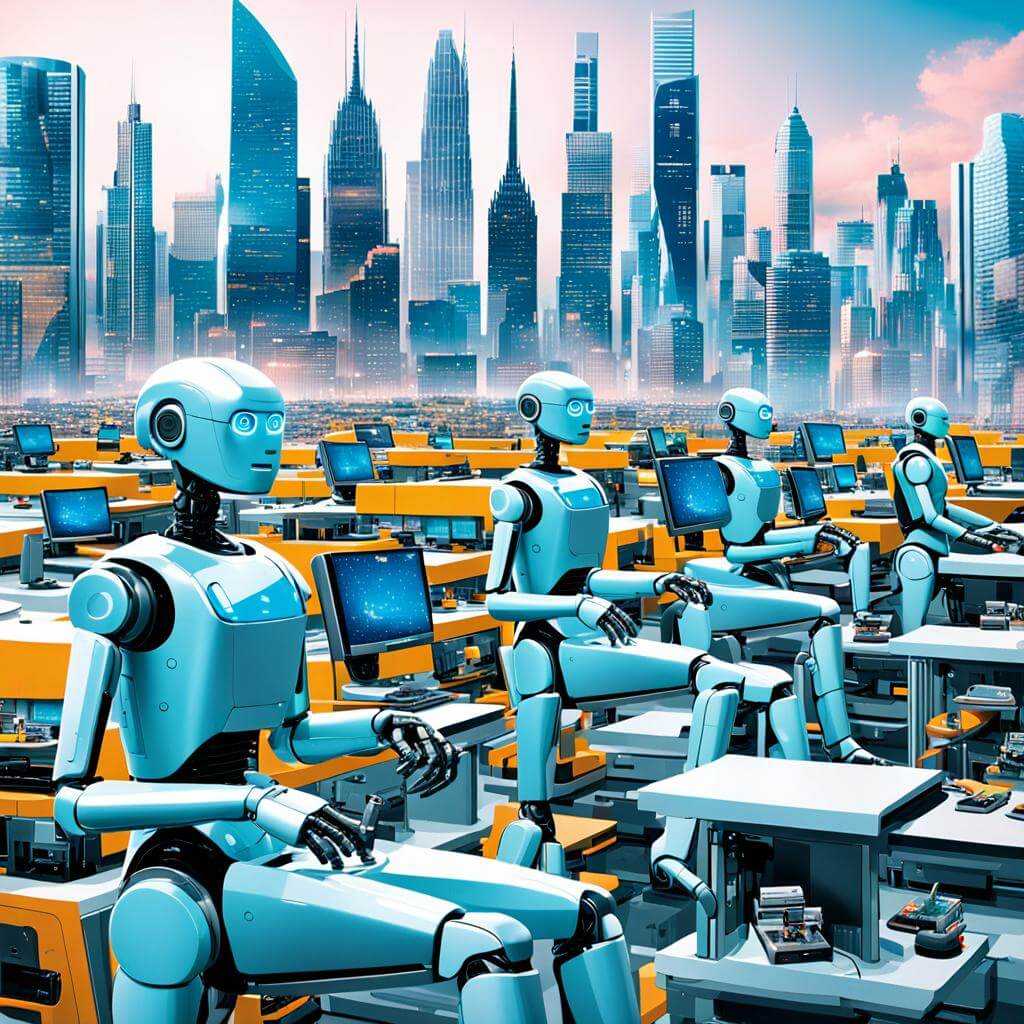
Headlines about AI stealing our jobs can be misleading,While some jobs are susceptible to automation, AI can also create new opportunities and redefine existing roles,Workers need to adapt and develop new skills to stay relevant in the AI-powered workplace.
AI and the Future of Jobs: Are Robots Really Taking Over?
A recent report by ResumeBuilder claims that more than a third (37%) of business leaders implemented AI in 2023, resulting in job losses. Another report by Asana found that employees estimate that 29% of their tasks can be automated. These headlines paint a bleak picture that AI is stealing our jobs. However, the reality is much more nuanced.
AI is a Tool, Not a job stealer
Firstly, the statistics don't tell the whole story. Many businesses, especially smaller ones, are yet to embrace AI at the same pace as larger corporations. Secondly, AI excels at task-based work, freeing humans to focus on higher-value activities. As Alex Hood of Asana points out, AI can tackle the administrative tasks that eat up half our workday, allowing us to focus on core functions and strategic thinking. You might be interested in how AI & Call Centres: Is The End Nigh? or how AI Wave Shifts to Global South.
Human-Centered AI: A Collaborative Future
The rise of "human-centered AI" further underscores this point. This approach leverages AI to augment human capabilities and foster collaboration, not replace workers entirely. Asana's research shows that employees who understand human-centered AI are more optimistic about its impact on their work. For more on this, read about AI with Empathy for Humans.
The Wider Digital Divide
However, the conversation about AI and jobs cannot ignore the digital divide. With a significant portion of the global population lacking internet access, it's crucial to address this inequity to ensure everyone benefits from the potential of AI.
Adapting and Thriving in the AI Era
While some jobs may become obsolete (rather than stolen), new opportunities will emerge. To stay relevant, workers need to embrace continuous learning and skill development. This includes understanding how AI can impact their specific roles and proactively acquiring new skills that complement, not compete with, AI. For instance, What Every Worker Needs to Answer: What Is Your Non-Machine Premium?.
Businesses, too, have a responsibility to invest in employee upskilling to prepare their workforce for the future. Finally, individuals can engage in "AI tinkering" by experimenting with AI tools and exploring their capabilities. This proactive approach empowers individuals to understand and leverage AI for their own benefit.
The question remains: Will AI really steal our jobs?
While AI undoubtedly reshapes the job market, history suggests that technological advancements ultimately create new opportunities. By embracing lifelong learning, fostering human-centered AI development, and bridging the digital divide, we can ensure that AI empowers, rather than hinders, the future of work. The World Economic Forum's "Future of Jobs Report 2023" provides further insights into these trends here.
You may like: