

Taiwan's TAIDE Is Powering a Wave of Traditional Chinese Creators
Traditional Chinese, with its 13,000-plus commonly used characters and the cultural specificity that makes it distinct from simplified Mainland Chinese, has always been an underserved linguistic market inside global AI. That is changing fast. TAIDE, Taiwan's sovereign large language model, has matured to the point where independent creators, publishers, and media producers across Taipei, Kaohsiung, and Taichung are actively building with it. The result is a new wave of Taiwanese creative work that looks nothing like the generic AI-assisted content flooding global platforms.
This matters culturally. Traditional Chinese is not just a script choice. It carries specific idioms, poetic registers, classical allusions, and historical contexts that matter deeply to Taiwanese audiences, the Hong Kong diaspora, and Traditional-reading communities across Southeast Asia. A sovereign model built for that audience behaves differently, and creators have noticed.
Where TAIDE Is Actually Winning
The strongest TAIDE use cases among Taiwanese creators are not the ones a US product manager would predict. Drafting classical-register blessings for weddings and funerals, generating grandparent-appropriate translations of foreign news, auto-captioning Taiwanese variety shows with culturally correct honorifics, composing Hokkien-influenced scripts for travel vloggers, and ghostwriting long-form Matters-style personal essays in a voice that does not sound like a translated American blog. These are small, domestic, and culturally specific, and that is exactly why TAIDE wins.
Global models can write Traditional Chinese. They cannot consistently write it like a fluent, older Taiwanese editor. TAIDE is closer to that editor.
By The Numbers
- 23M: speakers of Traditional Chinese, concentrated in Taiwan, Hong Kong, Macau, and key diaspora communities.
- 13,000+: commonly used Traditional Chinese characters, roughly double the simplified set.
- 72%: estimated global pure foundry market share held by TSMC, the backbone Taiwan also leverages for domestic AI compute✦, a story threaded through our Japan's physical AI gamble piece.
- 30+: independent Taiwanese media, publishing, and creator collectives using TAIDE in production workflows as of Q1 2026.
- 122: US$ billion, TSMC's 2025 revenue, 58% from high-performance computing and AI chips, a scale that funds national AI investment indirectly.
The Creator Playbook
Taiwanese creators are using TAIDE in a small, recognisable set of ways:
- Drafting culturally fluent first passes in Traditional Chinese, then heavy manual editing for voice.
- Generating subtitles and video descriptions that preserve Taiwanese honorifics and regional register.
- Translating technical articles from English or Japanese into Taiwanese-native Traditional Chinese for local audiences.
- Producing newsletter variants across multiple reader-age bands, with a consistent Traditional Chinese voice per band.
- Building small Chinese-first AI agents for community management on Dcard, Line, and Facebook groups.
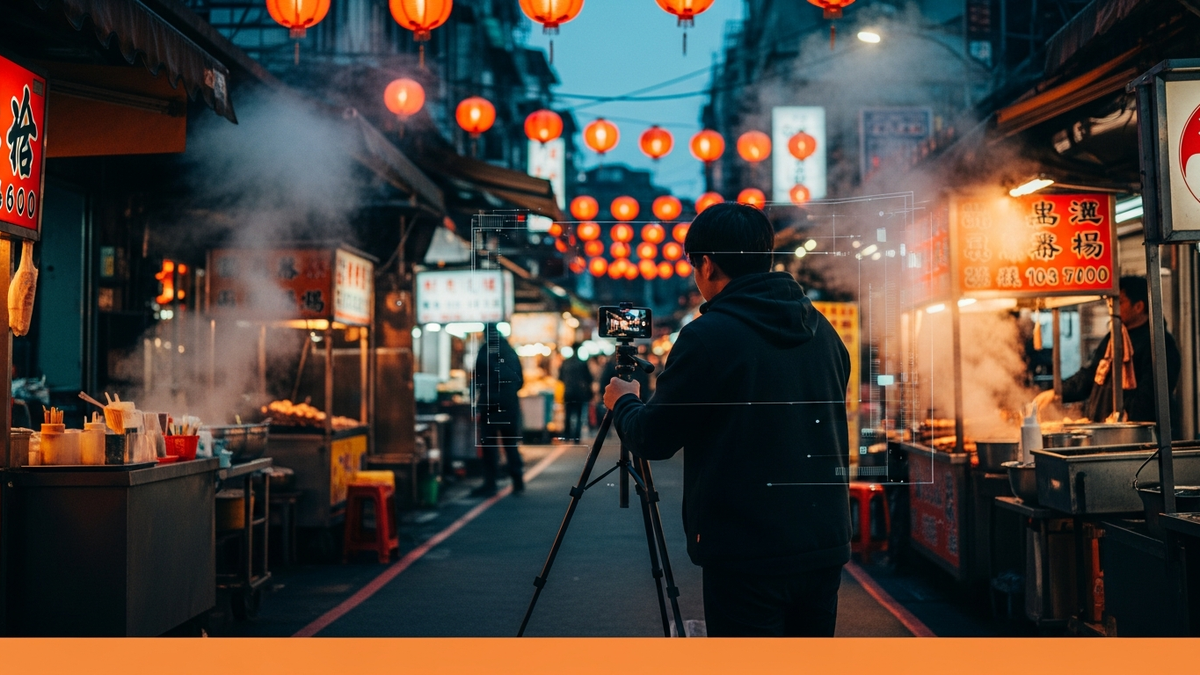
What makes this interesting is that TAIDE is not replacing creators. It is compressing the production pipeline, allowing smaller Taiwanese teams to publish at the cadence we profiled in How Asia's Creators Are Using Global AI Tools. Smaller Taiwanese teams now publish at the cadence of bigger media organisations while keeping cultural fidelity.
The Economics of Small-Market Sovereignty
For the broader Asia AI cultural angle, see our Thailand AI consumer profiles. Traditional Chinese is never going to be the biggest linguistic market for a US model, which means investment in Traditional-specific capability will always lag. That is Taiwan's opening. A sovereign model trained with Taiwanese corpora, cultural consultants, and editorial oversight can credibly serve the 23 million Traditional readers with a product that feels local.
| Model | Traditional Chinese quality | Cultural register | Typical creator use | |---|---|---|---| | TAIDE | High, domestic-grade | Tuned for Taiwan | Long-form, classical, honorifics | | GPT✦ family | Good, improving | Mainland-leaning by default | Short-form, English-to-TC | | Gemini | Good, fast | Mixed register | Multimodal✦ drafting | | Claude | Good, careful | Generic TC | Editorial, analysis | | Mainland sovereign models | Simplified strength | Mainland register | Mainland-targeted content |
TAIDE is the first model that can write a proper Taiwanese wedding note without sounding like a translated American Hallmark card.
Traditional Chinese creators are building small, sustainable businesses on top of TAIDE in a way that simply was not possible two years ago.
What Holds TAIDE Back
The honest answer is scale and product polish. TAIDE's model quality is strong for its target audience, but its consumer-facing product surfaces are fewer than Naver-scale Korean offerings, and its integrations with Taiwanese platforms are still early. Creators using TAIDE typically run API✦ calls through self-hosted or partner-hosted pipelines rather than consumer apps, which raises the bar for less technical users.
The other constraint is compute. Taiwan has the semiconductor advantage the rest of the world envies, but domestic AI compute allocations are still catching up with demand. Expect TAIDE-adjacent tooling, training variants, and creator integrations to pick up sharply as domestic compute capacity expands through 2026 and 2027.
Frequently Asked Questions
What is TAIDE?
TAIDE is Taiwan's sovereign large language model, developed with strong support from the Taiwanese government and research institutions. It is tuned specifically for Traditional Chinese, with particular attention to Taiwanese cultural register, honorifics, and regional linguistic nuance that global models often mishandle.
Why do Traditional Chinese creators prefer TAIDE over GPT?
Global models write serviceable Traditional Chinese but often default to Mainland-leaning register or translate awkwardly from English. TAIDE was designed with Taiwanese corpora, editorial supervision, and local cultural context, so its first drafts require much less heavy rewriting for tone, idiom, and honorific accuracy.
Who is using TAIDE today?
More than 30 independent Taiwanese publishers, newsletter operators, media companies, and creator collectives are in production with TAIDE. Use cases span drafting, subtitling, translation, community management, and long-form editorial work aimed at Taiwanese, Hong Kong, and diaspora audiences.
Is TAIDE available outside Taiwan?
TAIDE is accessible primarily through Taiwanese partners and domestic cloud providers, with growing interest from Traditional-reading communities abroad. Expect broader distribution through partner products, publisher tooling, and creator platforms as domestic compute and consumer integrations scale.
How does TAIDE compare to Mainland sovereign models?
Mainland sovereign models are tuned for Simplified Chinese and Mainland cultural register, which is a distinct market. TAIDE targets the Traditional Chinese linguistic community explicitly, including Taiwan, Hong Kong, Macau, and Traditional-reading diaspora audiences, which is why the two are not substitutes for each other.
Is a sovereign model the best way to protect small-language creative ecosystems, or will global models eventually close the quality gap? Drop your take in the comments below.






No comments yet. Be the first to share your thoughts!
Leave a Comment