

India Stakes Its Claim as Asia's Next AI Infrastructure Powerhouse
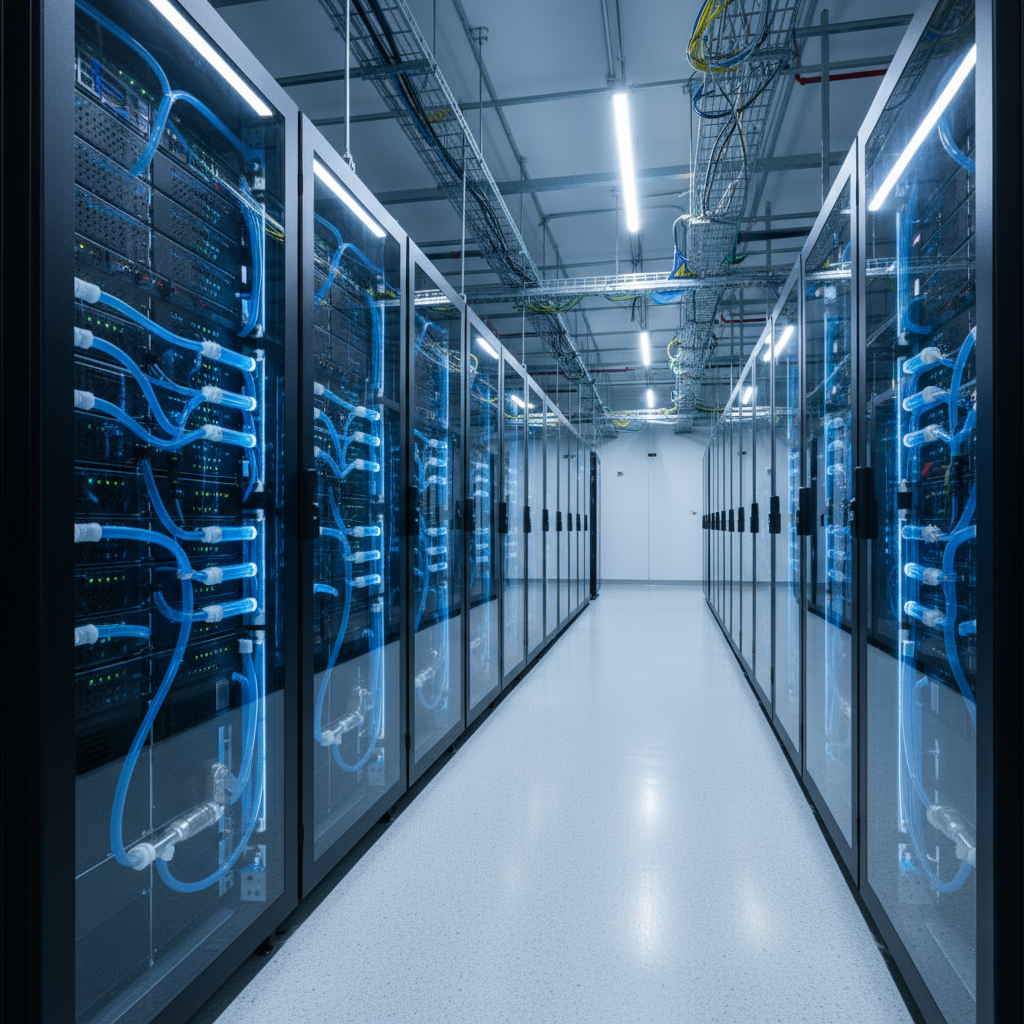
Yotta Data Services has committed over $2 billion to deploy 20,736 liquid-cooled NVIDIA Blackwell Ultra GPUs at its Greater Noida campus, creating one of Asia's largest AI superclusters. The infrastructure will go live by August 2026, marking the single largest AI investment in Indian history.
This announcement follows NVIDIA's four-year engagement worth over $1 billion to establish one of Asia-Pacific's largest DGX Cloud clusters within Yotta's infrastructure. When operational, India will join an exclusive group of nations capable of training frontier AI models domestically, reducing reliance on foreign cloud providers.
"AI infrastructure is becoming foundational economic infrastructure. This Nvidia Blackwell Ultra supercluster reinforces India's position in the global AI value chain." - Darshan Hiranandani, Co-founder and Chairman, Yotta Data Services
The timing aligns with India's IndiaAI Mission, which will receive access to over 10,000 NVIDIA B300 GPUs from the supercluster. These resources will support foundation model✦ training, research institutions, startups, and population-scale public AI platforms. This sovereign approach mirrors broader trends across the region, as demonstrated by Qualcomm's recent $150 million commitment to India's AI startup ecosystem.
By The Numbers
- 20,736 GPUs: Liquid-cooled NVIDIA Blackwell Ultra processors in a single supercluster
- $2 billion+: Total investment for deployment and infrastructure
- 60 MW: Current capacity at Greater Noida, scalable to 250 MW
- 80,000+ GPUs: Yotta's target by FY27 through phased expansion
- $1 billion: NVIDIA's four-year DGX Cloud engagement with Yotta
Asia's Infrastructure Arms Race Accelerates
Yotta's announcement comes amid unprecedented infrastructure investment across Asia-Pacific. OpenAI, Samsung SDS, and SK Telecom are breaking ground on data centres in South Korea this month. Google unveiled a $15 billion AI infrastructure investment in India. Adani announced a $100 billion plan targeting 5 GW of sustainable data centre capacity by 2035.
Southeast Asia witnessed more than $30 billion committed to AI-ready data centres in the first half of 2024 alone across Singapore, Thailand, and Malaysia. Regional capacity is projected to grow by 180%, outpacing the 120% expansion expected elsewhere in Asia-Pacific. This mirrors patterns we've observed in South Korea's $560 million AI commercialisation push.
"India's AI ambition requires sustained, high-performance compute✦ at scale✦. By combining Blackwell Ultra infrastructure with open models like NVIDIA Nemotron and the full NVIDIA AI stack, we are enabling developers to build sovereign, globally competitive AI applications from India." - Sunil Gupta, Co-founder, MD and CEO, Yotta Data Services
Transforming India's Developer Ecosystem
India's GitHub developer community reached 24 million users by Q4 2025, with 36% annual growth. However, this talent pool has been constrained by limited access to large-scale training infrastructure. Indian teams typically route model training through American cloud providers, creating latency, cost, and sovereignty concerns.
Yotta's deployment fundamentally changes this dynamic. Through the IndiaAI Mission allocation, startups and research labs will access over 10,000 B300 GPUs domestically. This enables training models on Indian data for local use cases without cross-border dependencies.
The implications extend beyond technical capability. For sectors requiring cultural context and local language support, such as agriculture, healthcare, and government services, domestic training infrastructure becomes strategically critical. The broader regional context includes significant investments in Asia's AI memory chip capabilities, suggesting coordinated infrastructure development across the supply chain.
| Country | Major 2026 AI Infrastructure Investment | Key Player |
|---|---|---|
| India | $2 billion+ (Yotta supercluster) | Yotta, NVIDIA |
| India | $15 billion (cloud and AI) | |
| India | $100 billion target by 2035 | Adani |
| South Korea | New data centres (20 MW initial) | OpenAI, Samsung SDS, SK Telecom |
| Malaysia | $2.2 billion (AI and digital) | Microsoft |
| Southeast Asia | $55.2 billion committed across region | Multiple |
The Reality Check: Demand, Energy, and Competition
Scale impresses, but infrastructure investments must justify themselves through utilisation. Asia's AI buildout assumes exponential enterprise adoption growth. If adoption plateaus or ROI remains unclear, these facilities risk becoming expensive empty spaces.
Energy presents another constraint. Yotta's Greater Noida facility operates at 60 MW, scalable to 250 MW. Its Navi Mumbai campus can reach 2 GW. Powering 80,000 GPUs requires reliable, industrial-scale electricity, something India's grid doesn't always deliver consistently.
Competition intensifies the challenge. With Google, Microsoft, Adani, and multiple Southeast Asian players building simultaneously, oversupply risks emerge. Winners will be determined by customer acquisition, not facility size. This competitive dynamic reflects broader patterns in Asia-Pacific enterprise AI investment.
Policy and Regulatory Landscape
India's government has actively shaped AI policy through the IndiaAI Mission, providing demand signals that justify private investment. However, policy clarity on data localisation, model governance, and cross-border data flows remains evolving. Companies like Yotta bet that regulatory frameworks will mature alongside infrastructure deployment.
The sovereign AI✦ narrative extends beyond India. Regional governments increasingly view AI infrastructure as strategic national assets, similar to telecommunications or transportation networks. This perspective drives public-private partnerships and shapes investment incentives across the sector.
Why does India need its own AI supercluster?
Training large AI models requires massive compute power concentrated in single locations. Without domestic infrastructure, Indian companies depend on foreign cloud providers, creating cost, latency, and data sovereignty✦ issues. Local superclusters enable model training on Indian data without overseas transfers.
How does Yotta's investment compare to global AI spending?
At $2 billion, Yotta's deployment is significant but represents a fraction of hyperscaler✦ spending. Microsoft committed over $80 billion to AI infrastructure in 2025. However, Yotta's investment concentration in a single emerging market creates outsized local impact and capability development.
Will this infrastructure make AI products cheaper in India?
Potentially yes. Local infrastructure reduces inference✦ costs by eliminating cross-border data transfer fees and reducing latency. For Indian startups building AI products for domestic markets, this should meaningfully lower operational costs and improve performance characteristics.
What happens if demand doesn't materialise?
Infrastructure investments carry utilisation risk. If enterprise AI adoption grows slower than projected, or if specific use cases fail to generate expected returns, facilities may operate below capacity. However, diversified customer bases and government partnerships help mitigate these risks.
How does this affect India's position in the global AI race?
Domestic training infrastructure positions India as an AI producer rather than just consumer. This capability enables development of culturally relevant models, supports local innovation, and reduces dependency on foreign AI services. It represents a strategic shift toward technological sovereignty.
India's AI infrastructure ambitions extend far beyond Yotta's supercluster. The country is positioning itself as a sovereign AI powerhouse, combining technical talent with domestic compute capacity. As other major players commit billions to AI infrastructure, the competitive landscape continues evolving rapidly. Will India's infrastructure investments translate into AI leadership, or will demand challenges constrain utilisation? Drop your take in the comments below.






No comments yet. Be the first to share your thoughts!
Leave a Comment