

Asia's AI Compute Buildout Race Is No Longer Quiet
Asia's race to own sovereign AI infrastructure is accelerating at an unprecedented pace. From India deploying 62,000 GPUs to South Korea leading on a per-capita basis, and Japan securing over 130 global sovereign AI projects, the region is redrawing the computational map. Governments across APAC are no longer content to rely on cloud giants or foreign chip makers. They are building datacenters, securing power supplies, and funding homegrown models in parallel. The stakes are existential: whoever builds the fastest, cheapest, most efficient sovereign infrastructure will set the terms for how AI companies across the region operate.
The 62,000-GPU Reality: India's Gambit
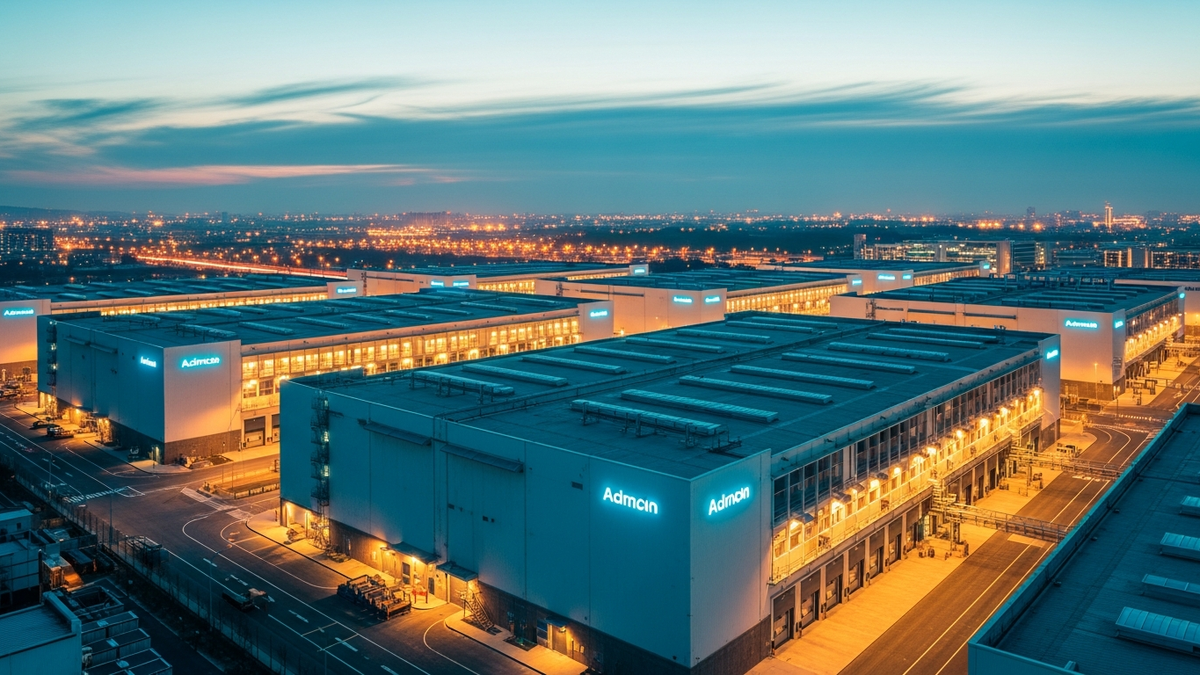
India has made the boldest infrastructure play in the region. Under its IndiaAI program, the country deployed 62,000 GPUs, the highest confirmed count in Asia-Pacific outside of China. Google committed $15 billion for a Visakhapatnam data center hub; Microsoft, OpenAI, and Reliance Industries followed with additional pledges. The result: India's data center capacity grew 66 per cent faster than the global average between 2018 and 2025, cementing its position as the lowest-cost, highest-scale AI compute destination in the Global South.
This growth is deliberate policy. India's government framed sovereign AI not as a luxury but as an economic equaliser. Startups like Sarvam AI (which raised $350 million in Series B funding in April 2026) are training models on 62,000-GPU clusters. The mathematics favours India: electricity costs roughly one-third of North America, and labour costs one-tenth. Yet there's friction. Regulatory clarity lags infrastructure rollout. Power stability remains a choke point outside major metros. Still, by 2031, India's sovereign compute capacity is forecast to reach a significant fraction of Asia-Pacific's 3.1 GW target, if not exceed it.
Countries aren't just buying GPUs. They're building entire national AI ecosystems : data centres, energy infrastructure, cloud platforms, and homegrown models." : Milk Road Analysis, April 2026
Japan's Distributed Bet: 130 Projects, Renewable Focus
Japan has taken a different tack. Rather than one flagship cluster, Japan is spread across over 130 sovereign AI projects globally as of April 2026, the highest count among APAC nations. This reflects Japan's fragmented industrial structure: conglomerates like SoftBank, Mitsubishi UFJ Financial Group (MUFG), and Mitsubishi Electric each back separate initiatives. SoftBank is building an NVIDIA Blackwell-powered AI supercomputer with a renewable-energy data center in Hokkaido Tomakomai. The government is deliberately shifting infrastructure away from urban centres toward rural areas to balance regional development and energy availability. Qualcomm's 2026 APAC AI program supports similar distributed initiatives across Japan, Korea, and Singapore.
Sakana AI, Tokyo's sovereign-model startup, closed a 32-billion-yen Series B in April 2026 (approximately USD $200 million), with backing from Mitsubishi Electric. Sakana's pitch is manufacturing AI and financial applications optimised for Japanese datasets and culture. MUFG began a gradual rollout of Sakana's system starting April 2026 for bank operations. This signals a shift: Japanese firms are not just buying compute capacity but embedding AI into physical operations:factories, financial networks, robotics:rather than chasing frontier-model leaderboards.
The renewable-energy constraint is real. Japan's datacenters are undersized compared to India or South Korea, and power scarcity remains a binding constraint. Yet the 130-project figure hints at depth: Japan is betting on many small, specialised AI operations rather than a few megaclusters.
South Korea's Per-Capita Dominance
South Korea leads Asia-Pacific on a per-capita basis for sovereign AI cloud capacity. The country hosts five competing consortia vying for "national AI champion" status:Naver, SK Telecom, LG, NCSoft, and Upstage:narrowing to two by 2027. Samsung committed $230 billion in total investment, though not all earmarked for AI. The government's AI Basic Act, effective January 2026, established the legal scaffold: data sovereignty, mandatory local processing, and government-NVIDIA-Hyundai AI factories for model training and autonomous mobility. Regional comparison with Korea's AI position shows distinct competitive advantages.
As one ABI Research analyst noted: "South Korea is by far the most advanced and innovative market for sovereign AI cloud, especially if we consider a normalised metric, in this case, sovereign data centre capacity per capita."
Unlike India's scale play or Japan's distributed approach, South Korea is competing on intensity: highest per-capita investment, fastest iteration cycles, and deepest vertical integration. The knock is that South Korea's tech sector is heavily consolidated, creating a narrower talent pool and slower startup ecosystem relative to India or Singapore.
The 1.3 GW to 3.1 GW Gap
The global picture is stark. Sovereign AI compute capacity hit 1.3 GW in 2026 and is forecast to triple to 3.1 GW by 2031, driven by data protection policies. Southeast Asia's tropical climate and power constraints pose an ongoing challenge: multiple nations including Malaysia are reviving nuclear programs:targeting 2031 operationalisation:to feed AI workloads. Global sovereign cloud spending reached $80 billion in 2026 with 35.6 per cent year-on-year growth; Asia-Pacific's mature markets saw 87 per cent growth. Regional enterprise AI budgets are rising 15 per cent in 2026, reflecting confidence in the compute infrastructure buildout.
Yet the headline figure masks asymmetry. China accounts for the largest concentration of sovereign capacity; India, Japan, and South Korea combined lag far behind. The gap creates opportunity: ASEAN nations like Vietnam, Thailand, and Indonesia are racing to build frameworks before foreign tech companies crystallise market power.
Southeast Asia's data centre expansion is an infrastructure race shaped by AI workloads, sovereign data mandates, and a geopolitical tug-of-war between US and Chinese technology stacks." : Digital in Asia, April 2026
The Real Competition: Energy and Policy, Not Just GPUs
Behind the GPU counts lies a harder bottleneck. Power. Tropical datacenters in Malaysia, Thailand, and Vietnam face cooling and grid challenges that temperate zones avoid. India's Visakhapatnam hub depends on stable renewables. Japan's Hokkaido facility is renewable-dependent. South Korea's dense urban infrastructure limits expansion. By 2035, AI workloads are forecast to account for 25 per cent of global energy demand growth, according to the IEA.
Governments are responding. Malaysia budgeted MYR 2.1 billion (approximately USD $490 million) for sovereign AI cloud in 2026 and plans 8 GW of gas-fired capacity by 2030, with nuclear by 2031. Vietnam's AI Act, effective March 2026, mandates local data processing, forcing hyperscalers to replicate compute locally. Indonesia's sovereign AI stack is taking shape through partnerships with NVIDIA and domestic players like BDX.
The winner will not be the nation with the most GPUs, but the one that solves the energy and regulatory puzzle fastest while retaining talent.
Frequently Asked Questions
What is sovereign AI compute?
Sovereign AI compute refers to AI infrastructure (GPUs, datacenters, models) owned and operated by a nation or its companies, independent of foreign cloud providers. It prioritises data residency, regulatory control, and self-sufficiency. India, South Korea, and Japan are leading APAC's shift toward sovereign approaches.
Why does South Korea lead on a per-capita basis?
South Korea combines high per-capita GDP, dense population, and aggressive government funding through its AI Basic Act (January 2026). Government-NVIDIA-Hyundai factories and conglomerate backing (Samsung, SK Telecom) concentrate compute density relative to population.
Will India's 62,000 GPUs be enough?
India's 62,000-GPU cluster is the largest declared count in APAC outside China, but forecasts suggest the region will need 3.1 GW by 2031. India's growth trajectory (66 per cent faster than global average, 2018-2025) positions it to capture a significant share, though global demand will outpace supply for years.
How do energy constraints affect APAC's AI buildout?
Tropical datacenters face cooling challenges; nuclear programmes in Malaysia and Indonesia won't operationalise until 2031 at earliest. This creates a 2026-2031 power crunch. Nations solving renewable or nuclear power first will gain competitive advantage.
What role do private companies play in sovereign AI?
Private firms like Sarvam AI (India), Sakana AI (Japan), and conglomerates like SK Telecom (South Korea) execute government policy by building and operating sovereign infrastructure. Government provides capital, policy, and regulatory protection; companies execute at scale.