

OpenAI's Image Generator 2.0 Just Landed, and Asian Creators Have the Most to Gain
When OpenAI unveiled ChatGPT Images 2.0 on April 21, the first thing that mattered was not the resolution bump or the reasoning engine. It was the text. For the first time, an AI image model can render Japanese kanji, Korean hangul, Chinese hanzi, Hindi Devanagari, and Bengali script cleanly enough to ship without a human redraw pass. That single capability shifts the calculus for millions of designers, marketers, and solo creators across Asia who have spent years working around the broken-text problem that plagued every previous generation tool.
The new model, available via API as gpt-image-2, replaces DALL-E 3 (scheduled for retirement on May 12) and introduces a reasoning-first architecture that plans composition, counts objects, and checks constraints before rendering a single pixel. It supports up to 4K resolution, aspect ratios from 3:1 to 1:3, and can produce up to eight coherent images from a single prompt with character and object continuity across the batch. On the LM Arena Text-to-Image leaderboard, it scored 1,512 points, a 241-point gap over Google's Nano Banana 2 in second place, the largest margin between first and second ever recorded.
Why Asia's $2.4 Billion Design Industry Should Pay Attention
The broken-text problem has been one of the most persistent barriers to AI image adoption across Asian markets. Previous models, including DALL-E 3, Midjourney V7, and even Google's Imagen series, routinely garbled non-Latin scripts. A Japanese poster prompt would return "WELCOOMM" instead of "WELCOME," and dense layouts like restaurant menus, product packaging, and infographics collapsed into nonsense when any CJK characters were involved.
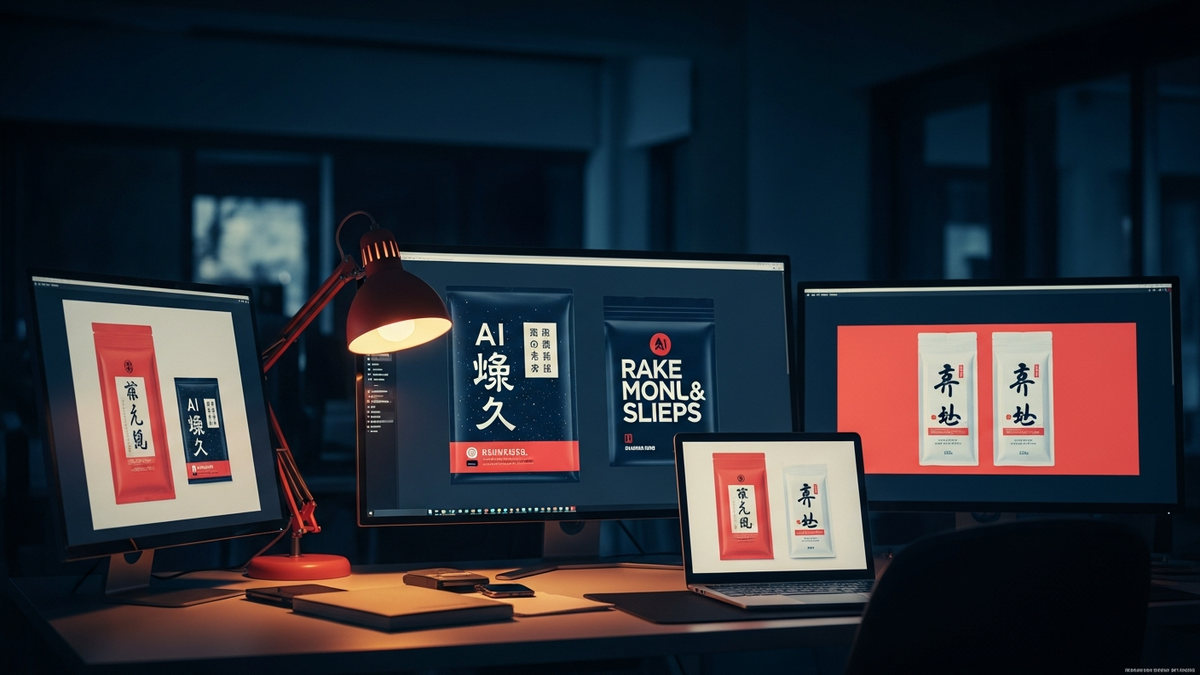
ChatGPT Images 2.0 achieves approximately 99% character-level text accuracy across Latin, CJK, Hindi, and Bengali scripts. OpenAI specifically demonstrated a Japanese poster with Latin product names, showing clean rendering across mixed-script layouts. For agencies across Tokyo, Seoul, Shanghai, Mumbai, and Singapore, this collapses three or four tools (image generator, layout application, typography editor, QR code generator) into a single prompt.
The implications for Asia's creative economy are significant. According to a 2025 report from Research and Markets, the Asia-Pacific graphic design market was valued at $2.4 billion and growing at 7.2% annually. A substantial share of that spend goes toward manual typographic work that ChatGPT Images 2.0 can now automate. For the estimated 12 million freelance designers operating across platforms like Fiverr and regional equivalents in India, the Philippines, and Indonesia, this is both an opportunity and a competitive threat.
By The Numbers
- 1,512 points: ChatGPT Images 2.0's score on the LM Arena leaderboard, 241 points ahead of the nearest competitor
- 99%: Character-level text accuracy across Latin, CJK, Hindi, and Bengali scripts
- 4K resolution: Maximum output at 4,096 x 4,096 pixels, double the previous generation
- $0.21: Cost per image at 1,024 x 1,024 in standard mode via API
- May 12, 2026: DALL-E 2 and DALL-E 3 retirement date
- 8 images: Maximum coherent batch output from a single prompt with character continuity
- 2x faster: Generation speed compared to the previous model
How It Stacks Up Against Asia's Homegrown AI Image Tools
OpenAI is not entering an empty field. Asia has built a substantial ecosystem of AI image generation tools, and the competitive dynamics differ sharply from the Western market.
Baidu's ERNIE-ViLG and its consumer product Wenxin Yige dominate in mainland China, where OpenAI's tools are not directly accessible without VPN workarounds. Stability AI, which relocated significant operations to Singapore and Tokyo, offers open-source alternatives through its Stable Diffusion family. South Korea's Kakao Brain has invested heavily in its own multimodal models, and Japan's Preferred Networks has developed image generation capabilities tailored to anime and manga aesthetics that Western models have historically struggled to match.
The text rendering breakthrough gives OpenAI a genuine technical edge, but distribution remains the challenge. ChatGPT is available across most of Asia (excluding mainland China), and the gpt-image-2 API opens to developers in early May. Standard mode is accessible to all ChatGPT users, while thinking mode, extended reasoning, and web search during generation are gated to Plus, Pro, and Business subscribers.
| Feature | ChatGPT Images 2.0 | Midjourney V7 | Baidu ERNIE-ViLG | Stable Diffusion XL |
|---|---|---|---|---|
| CJK Text Rendering | 99% accuracy | Inconsistent | Good (Chinese only) | Poor |
| Max Resolution | 4K (4096x4096) | 2K | 1K | 1K (base) |
| Reasoning/Planning | Yes (native) | No | Limited | No |
| Multi-Image Batch | Up to 8 | 4 | 4 | Varies |
| API Access | May 2026 | Limited | China only | Open source |
| Pricing (per image) | ~$0.21 | Subscription | ~$0.03 | Self-hosted |
For enterprises across Southeast Asia, the pricing question matters. At roughly $0.21 per image in standard mode, OpenAI sits at the premium end. Baidu's offerings are significantly cheaper in the Chinese market, and self-hosted Stable Diffusion models cost only compute time. But for production-quality work requiring accurate multilingual text, no competitor currently matches the output quality.
The Reasoning Engine Changes the Workflow
The most architecturally significant change is not cosmetic. ChatGPT Images 2.0 is the first OpenAI image model with native reasoning capabilities, using the same thinking pipeline as ChatGPT's text engine. In thinking mode, the model plans layout, verifies object counts, and checks spatial constraints before rendering. It can also search the web mid-generation to pull reference images and verify factual accuracy, producing charts with real numbers and maps with correct labels.
For Asian tech companies building products with visual interfaces, this reasoning capability opens up use cases that were previously impractical. A Singapore-based e-commerce platform could generate product listing images with accurate specifications in English, Malay, and Mandarin from a single prompt. A Japanese game studio could prototype UI mockups with correctly placed kanji labels. An Indian edtech startup could produce textbook illustrations with Hindi annotations that do not require manual correction.
The multi-turn editing capability adds another layer. Users can generate an image and then iteratively modify specific elements ("change the background to sunset," "make the text larger," "remove the person on the left") while the model preserves everything else. This context-aware editing moves AI image generation past the "inspiration board" phase into production asset creation, a shift that TechCrunch noted could fundamentally reshape how Asian creative agencies operate.
What Comes Next for Asian Markets
The immediate impact will be felt most acutely in three sectors: e-commerce (where product imagery with accurate multilingual text is a daily production need), gaming and entertainment (where concept art and UI prototyping benefit from reasoning-aware generation), and digital marketing (where agencies produce hundreds of localised visual assets weekly).
Longer term, the competition between OpenAI, Google, and Asia's homegrown players will intensify. Google's Nano Banana 2 still wins on raw speed and holds an edge in photorealism. Midjourney retains its stylistic strengths in painterly and illustrative work. And China's closed ecosystem means Baidu and its peers will continue to evolve independently, likely matching or exceeding OpenAI's CJK text capabilities within months.
For now, ChatGPT Images 2.0 represents the clearest signal yet that AI image generation has crossed the threshold from novelty to production tool. Asian creators, who have waited longest for models that respect their scripts and visual conventions, finally have a reason to take the leap.
Some links in this article are affiliate links. AIinASIA may earn a small commission at no extra cost to you. This helps support our independent journalism.
Frequently Asked Questions
Does ChatGPT Images 2.0 work with Japanese, Korean, and Chinese text?
Yes. OpenAI reports approximately 99% character-level accuracy across CJK scripts, Hindi, and Bengali. This is the first major AI image model to render non-Latin text reliably enough for production use without manual correction.
How much does ChatGPT Images 2.0 cost?
Standard mode is available to all free ChatGPT users. API pricing is tokenised at roughly $0.21 per 1,024 x 1,024 image. Thinking mode with reasoning and web search is restricted to Plus, Pro, and Business subscribers.
Can ChatGPT Images 2.0 compete with Baidu's image tools in China?
Not directly. OpenAI's tools are not accessible in mainland China without workarounds. Baidu's ERNIE-ViLG offers strong Chinese text rendering at lower cost. However, for markets outside China where multilingual CJK support is needed, OpenAI currently leads.
When is DALL-E 3 being retired?
DALL-E 2 and DALL-E 3 are both scheduled for retirement on May 12, 2026. The gpt-image-2 model will replace them as the default across ChatGPT and the OpenAI API.
What is the thinking mode in ChatGPT Images 2.0?
Thinking mode uses reasoning compute to plan composition, count objects, and verify constraints before rendering. It can also search the web for reference images and facts during generation, improving accuracy for technical diagrams, charts, and information-dense visuals.