

Cookie Consent

We use cookies to enhance your browsing experience, serve personalised ads or content, and analyse our traffic. Learn more

AI in ASIA
Monday, 16 March 2026

3Before9

3 must-know AI stories before your 9am coffee

Who should pay attention

Semiconductor manufacturers | AI hardware developers | Enterprise AI buyers

What changes next

The pace of next-generation chip rollouts will directly impact commercial AI capabilities across Asia-Pacific.

1

Nvidia GTC 2026 Kicks Off With Asia's Chip Giants in the Front Row

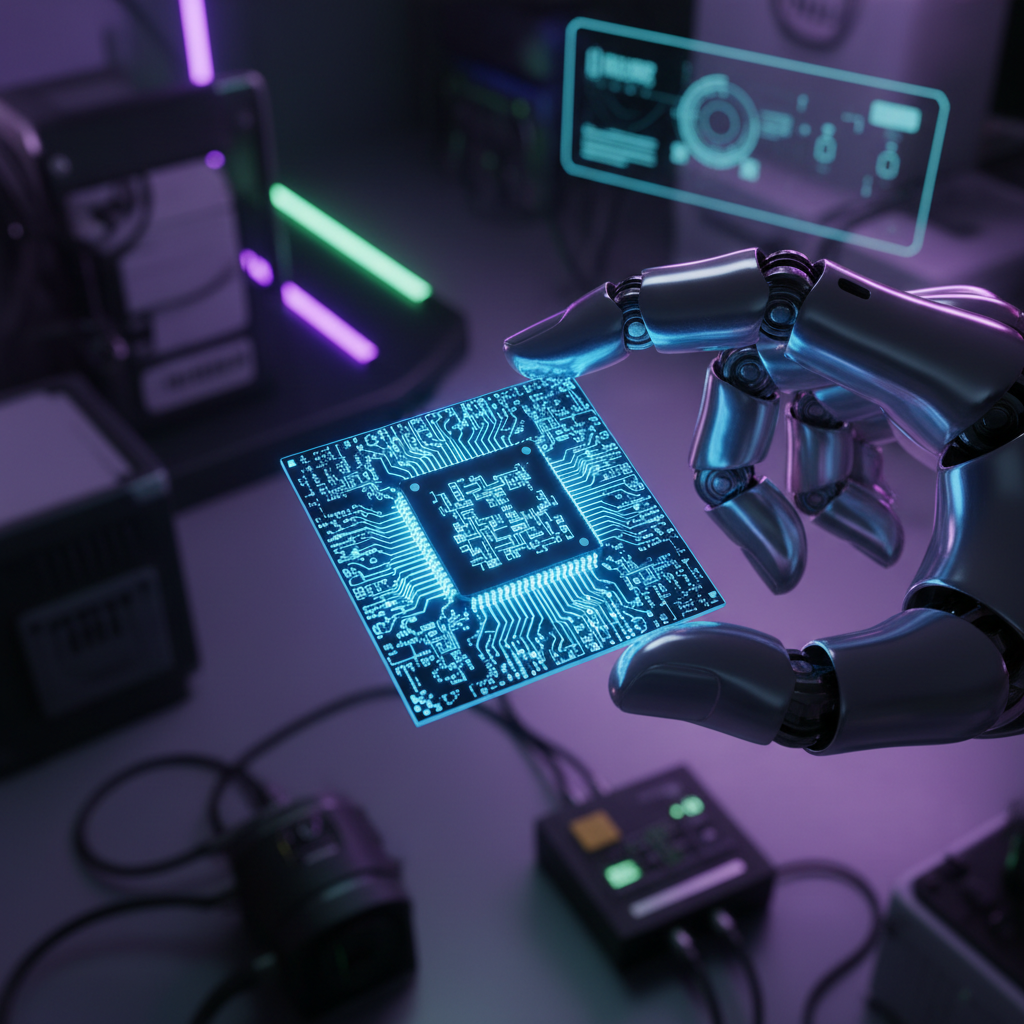
Jensen Huang takes the stage in San Jose today for Nvidia's annual GTC conference, where he has promised to unveil "a chip that will surprise the world." The spotlight falls on the Vera Rubin platform, Nvidia's next-generation GPU architecture reportedly packing up to 288GB of HBM4 memory. SK Group chairman Chey Tae-won is attending GTC for the first time to discuss expanding SK hynix's supply of high-bandwidth memory for Nvidia's new chips. In a parallel move, AMD chief Lisa Su visits Seoul on 18 March to meet Samsung Electronics and Naver executives about HBM supply, underscoring just how central Korean memory makers have become to the global AI hardware race.

Why it matters for Asia

South Korea's semiconductor heavyweights are no longer just suppliers - they are strategic partners shaping the trajectory of AI compute. SK hynix and Samsung are the only two companies capable of manufacturing HBM4 at scale, giving Seoul outsized leverage in the AI infrastructure buildout. For enterprise buyers across Asia-Pacific, the pace of next-generation chip rollouts will directly determine when more powerful AI workloads become commercially viable in the region.^

Read more
2

China's OpenClaw Frenzy Draws in Alibaba, Tencent and Baidu

Alibaba launched a dedicated mobile app on 13 March for OpenClaw, the open-source agentic AI framework created by Austrian programmer Peter Steinberger that has become the fastest-growing open-source project in history. The app, called JVS Claw, lets users without coding knowledge deploy AI agents to handle everyday tasks such as online shopping and travel booking. Alibaba is far from alone: Tencent built WorkBuddy, Minimax launched MaxClaw, and Baidu released its own Android client this week. The phenomenon has been dubbed "raising lobsters" after OpenClaw's mascot, with nearly 1,000 people queuing outside Tencent's Shenzhen headquarters to get the software installed. Beijing has already moved to restrict government agencies from running OpenClaw on office computers over security concerns.

Why it matters for Asia

China's biggest tech firms are treating agentic AI not as an experiment but as a consumer product category, racing to onboard millions of non-technical users. Shenzhen's Longgang district is offering grants of up to 10 million yuan for OpenClaw startup projects, signalling local government support for the ecosystem. For enterprise technology buyers in Asia, the speed of agentic AI adoption in China is setting expectations for what commercial AI tools should be able to do - and raising urgent questions about data security and governance.^

Read more
3

Anthropic Opens Sydney Office as Fourth Asia-Pacific Hub

Anthropic, the maker of Claude, announced on 10 March that it will open an office in Sydney, making it the company's fourth location in Asia-Pacific after Tokyo, Bengaluru and Seoul. The company says Australia and New Zealand rank fourth and eighth globally in Claude usage relative to population. Anthropic already counts Canva, Quantium and Commonwealth Bank of Australia among its regional customers, with enterprise adoption spanning AgTech, climate tech and physical AI applications. The executive team plans to visit Australia at the end of March to formalise partnerships and meet policymakers.

Why it matters for Asia

Anthropic's continued APAC expansion signals that demand for frontier AI models is not confined to the US and China. Australia's strong uptake, particularly among financial services and enterprise software firms, positions it as a significant market for commercial AI deployment. For buyers and builders across the region, having local Anthropic support means faster integration, better compliance alignment with Australian data regulations, and a clearer path to deploying Claude in production environments.^

Read more

That's today's 3-Before-9.

Explore more at AIinASIA.com or share signals with us.

Get 3-Before-9 in your inbox

Three signals, every weekday, before 9am

Free forever. Unsubscribe anytime. No spam.

Recent Editions