
Cookie Consent

We use cookies to enhance your browsing experience, serve personalised ads or content, and analyse our traffic. Learn more

AI in ASIA
Tuesday, 10 March 2026

3Before9

3 must-know AI stories before your 9am coffee

Who should pay attention

AI Developers | Healthcare Professionals | Robotics Engineers | Investors | Government Policy Makers

What changes next

Expect increased competition and innovation in the world model AI space, with a focus on real-world applications.

1

LeCun's $1 Billion World Model Startup Names Singapore as Asia Hub
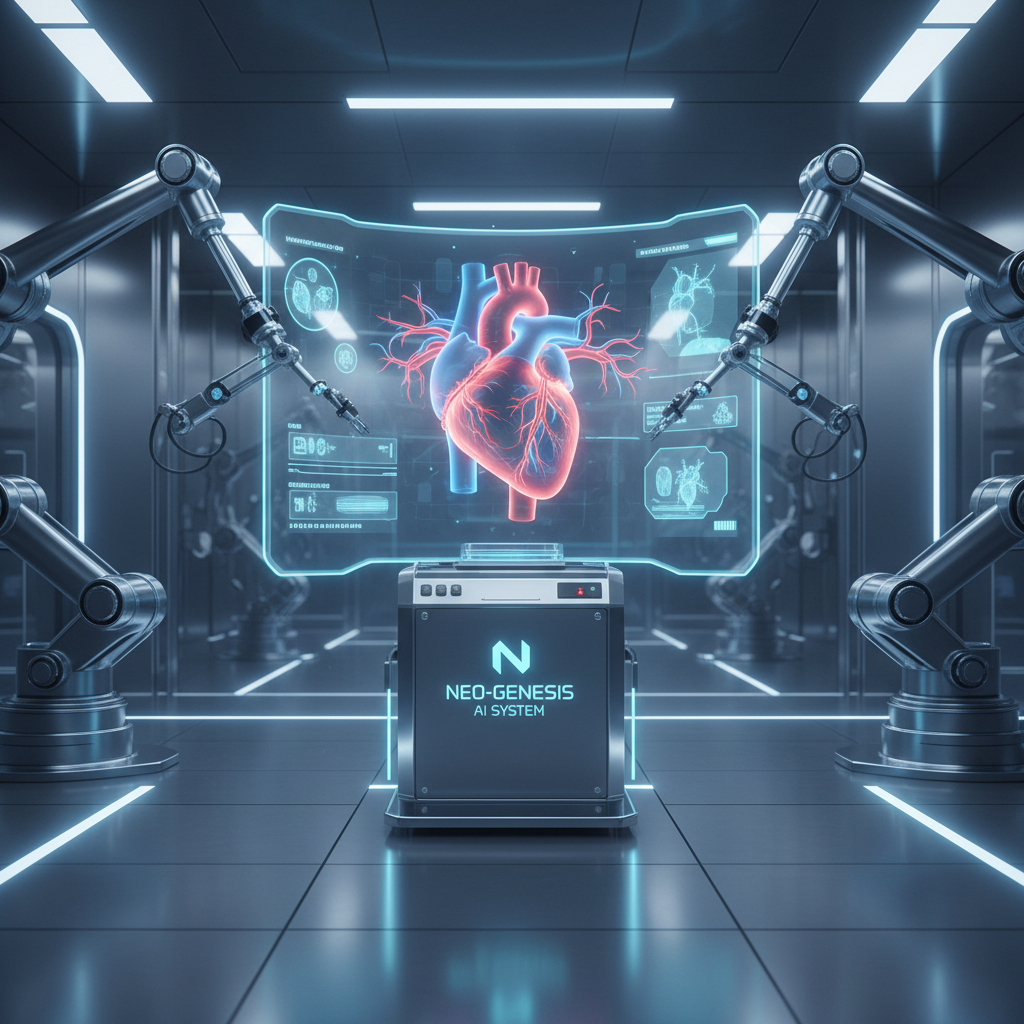
Advanced Machine Intelligence, the Paris-based research startup co-founded by former Meta chief AI scientist Yann LeCun, confirmed on 10 March that it has closed a $1.03 billion seed round - reportedly the largest ever for a European company. The round values AMI at $3.5 billion before investment and includes backing from Nvidia, Singapore's Temasek, South Korean fund SBVA, Jeff Bezos' personal investment vehicle, and a clutch of European VCs. Day-to-day leadership sits with Alexandre LeBrun, previously CEO of medical AI firm Nabla, while LeCun serves as executive chair. The company is building what it calls world models - AI systems designed to reason from real-world physical data rather than from text prediction - with initial applications aimed at healthcare, robotics, and industrial automation. Offices are confirmed in Paris, New York, Montreal, and Singapore, with LeBrun citing proximity to future Asian clients as the rationale for the regional base.

Why it matters for Asia

Temasek's participation puts Singapore money directly behind what may become the defining alternative to large language model architecture, and the SBVA backing connects AMI to South Korea's enterprise market from the outset. With a Singapore office confirmed and healthcare as the first disclosed commercial focus, regional hospital systems, medtech buyers, and industrial operators should expect early outreach from a well-funded lab with serious scientific credibility.^

Read more
2

Japan Puts Physical AI on State-Backed Priority Investment List

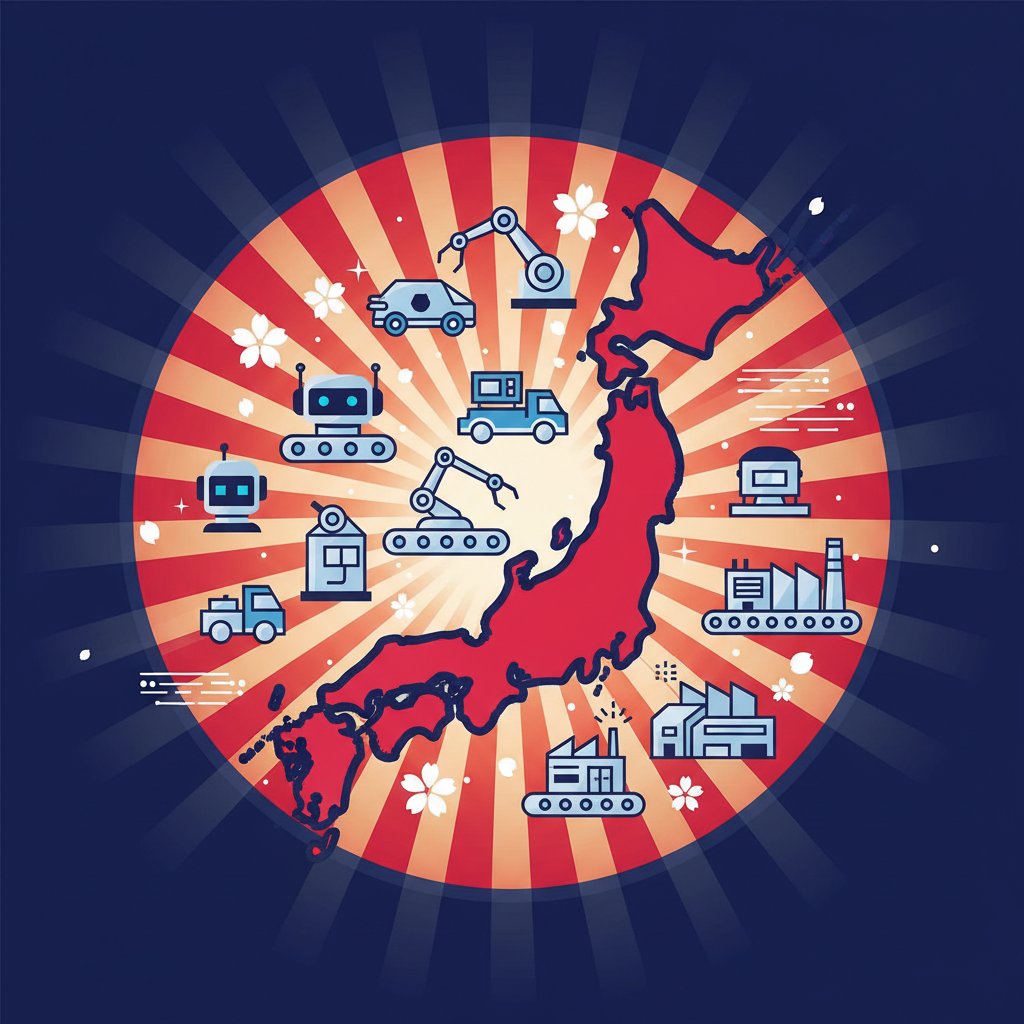
Japan's government formally designated 61 goods and technologies as priority targets for state investment on 10 March, following a meeting of Prime Minister Sanae Takaichi's growth strategy panel. Physical AI systems - software-driven AI that controls robots and industrial machinery - were listed among 27 items under early-stage review, alongside quantum computing, regenerative medicine, and marine drones. Each of the 17 identified strategic sectors will have a designated minister responsible for multi-year budget planning, and officials have committed to publishing spending estimates and implementation timelines for every priority item by the summer. Japan's Ministry of Economy, Trade and Industry had already earmarked roughly 387 billion yen for domestic AI development in fiscal 2026 alone, quadrupling prior-year levels. The selection explicitly reflects both economic security considerations and export potential.

Why it matters for Asia

Japan placing physical AI alongside semiconductors in a formal growth strategy signals procurement intent on a scale that will matter to enterprise vendors selling automation, robotics, and AI infrastructure into the market. IDC projects Japan's AI infrastructure spend will exceed $5.5 billion in 2026 - and this priority list is effectively a procurement map for where public money and private co-investment will flow first. Vendors and investors with Japan exposure should mark the summer roadmap release in their diaries.^

Read more
3

Nebius Lands in Singapore to Chase Asia's AI Infrastructure Demand

Nebius, the Nasdaq-listed AI cloud company, announced on 10 March that it is formally expanding across Asia-Pacific, appointing John Haarer as General Manager for the region. Haarer - formerly at Cloudflare and Twilio - will be based in Singapore and will lead commercial growth across Singapore, Japan, South Korea, and India. The move comes off the back of 479% year-on-year revenue growth in 2025, a contract backlog exceeding $20 billion tied to multi-year infrastructure deals with Microsoft and Meta, and $3.7 billion in cash on hand. Nebius positions itself as purpose-built for AI workloads, offering GPU cloud capacity to research institutions and enterprise customers who cannot or do not want to rely solely on hyperscaler supply. The company is targeting annualised run-rate revenue of $7 billion to $9 billion by end of 2026.

Why it matters for Asia

Nebius entering APAC via Singapore adds a well-capitalised GPU cloud alternative at a moment when AI compute demand across the region continues to outstrip supply - particularly for mid-sized enterprises and AI-native startups outside the hyperscaler tier. A dedicated regional GM signals the company intends to compete for local deals rather than serve the market remotely. Buyers in Singapore, Japan, South Korea, and India now have a new vendor worth putting into procurement conversations.^

Read more

That's today's 3-Before-9.

Explore more at AIinASIA.com or share signals with us.

Get 3-Before-9 in your inbox

Three signals, every weekday, before 9am

Free forever. Unsubscribe anytime. No spam.

Recent Editions

View all

Tuesday

10 March 2026

  • 1.The Trump administration is pressuring US states to align their AI regulations with a national deregulatory agenda through today's Department of Commerce and Federal Trade Commission reports.
  • 2.States face the potential loss of up to $21 billion in federal broadband infrastructure funds if their AI laws are deemed inconsistent with the federal framework.
  • 3.The US government seeks to establish a singular federal AI standard, replacing disparate state laws, but short-term uncertainty remains as existing state laws persist until court challenges are resolved.
Read edition

Monday

9 March 2026

  • 1.OpenAI's head of robotics resigned due to the company's decision to deploy its AI models on the Pentagon's classified cloud networks, citing a lack of clear guardrails for domestic surveillance and lethal autonomy.
  • 2.This high-profile departure highlights growing internal dissent within OpenAI regarding ethical governance and the rapid implementation of AI technologies in sensitive sectors.
  • 3.The incident underscores that governance concerns are not merely external criticism but represent a significant internal operational risk for AI vendors and enterprise buyers alike.
Read edition

Friday

6 March 2026

  • 1.GPT-5.4 offers native computer use, achieving 75% on the OSWorld-Verified benchmark, surpassing human performance.
  • 2.It boasts a 1 million token context window, direct integrations with Microsoft Excel and Google Sheets, and a 47% reduction in token usage for specific agentic tasks.
  • 3.OpenAI’s new model matches or exceeds human professionals in 83% of 44 evaluated occupations, according to their GDPval benchmark.
Read edition

Thursday

5 March 2026

  • 1.Apple launched the MacBook Neo, a new budget-friendly laptop priced from $599, featuring the A18 Pro chip and a 13-inch Liquid Retina display.
  • 2.OpenAI released GPT-5.3 Instant, an updated ChatGPT model designed to be less preachy, with reduced moralising and fewer conversational preambles.
  • 3.This update also reportedly decreased hallucinations by 26.8% when utilising web search, suggesting an improvement in model accuracy and user experience.
Read edition

Wednesday

4 March 2026

  • 1.Anthropic's refusal to allow military use of its AI led to a US government ban, prompting industry-wide calls for ethical AI limits and boosting consumer support for Claude.
  • 2.Apple is launching its most affordable Mac to date, powered by an A18 Pro chip, targeting students and emerging markets with a competitive price point and colourful designs.
  • 3.NVIDIA invested $4 billion in photonics companies Lumentum and Coherent, securing critical supply for its next-generation data centre interconnects.
Read edition

Tuesday

3 March 2026

  • 1.Claude experienced a significant global outage yesterday, affecting various services including its app, Code, console, and government platforms.
  • 2.Anthropic attributed the outage to "unprecedented demand" and confirmed that while the core enterprise API was mostly stable, some methods malfunctioned.
  • 3.This incident highlights the critical need for enterprise AI buyers to implement robust failover strategies and consider multi-provider fallbacks to mitigate supply-side reliability risks.
Read edition