

Cookie Consent

We use cookies to enhance your browsing experience, serve personalised ads or content, and analyse our traffic. Learn more

Install AIinASIA

Get quick access from your home screen

AI in ASIA
Monday, 9 March 2026

3Before9

3 must-know AI stories before your 9am coffee

Who should pay attention

AI Ethics Researchers | Government Contractors | AI Developers | Regulators

What changes next

Debate is likely to intensify regarding AI governance and military applications.

1

OpenAI's Head of Robotics Quits Over the Pentagon Deal

Caitlin Kalinowski, who led hardware and robotics at OpenAI, announced her resignation on Saturday, directly citing the company's agreement to deploy its models on the Pentagon's classified cloud networks. In a post on X she said the decision to proceed without clearly defined guardrails around domestic surveillance and lethal autonomy was rushed. "These are too important for deals or announcements to be rushed," she wrote. Kalinowski joined OpenAI in late 2024 from Meta, where she had led development of the company's AR glasses. OpenAI confirmed the departure and reiterated its red lines: no domestic surveillance, no autonomous weapons. CEO Sam Altman had already acknowledged the deal announcement looked sloppy. The resignation is a visible crack in internal consensus at a company that moved fast to fill the gap left by Anthropic's Pentagon standoff.

Why it matters for Asia

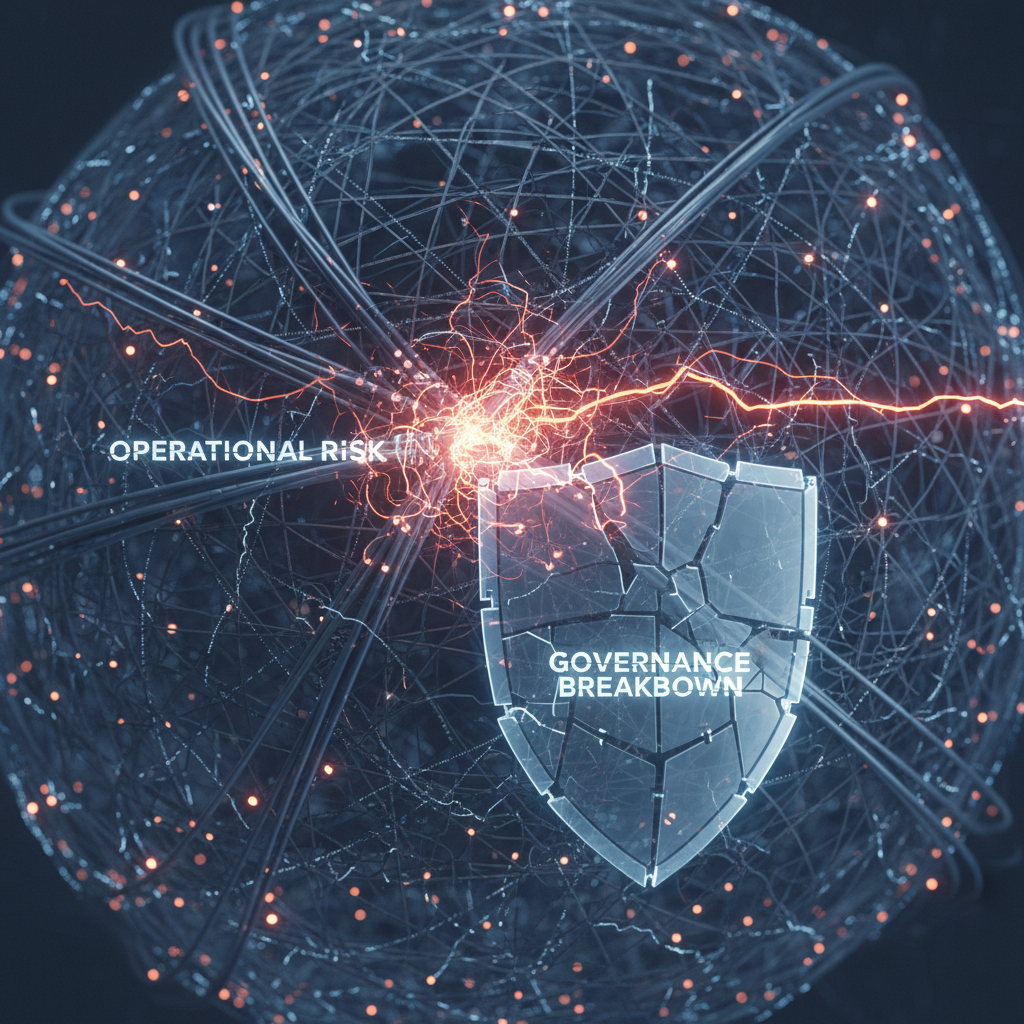
Talent departures over governance concerns carry a different weight than external criticism. They signal internal disagreement that cannot be easily managed by a press statement. For enterprise AI buyers in Asia, particularly in regulated industries or government-adjacent sectors, this episode underscores that governance is not just a procurement checkbox. It is becoming a live operational risk that can destabilise the vendor you depend on.

Read more
2

Anthropic Published the Most Rigorous Map Yet of AI's Real Impact on Jobs

A new Anthropic research paper released last week introduces a metric called "observed exposure" - the gap between what AI can theoretically do to a job and what it is actually doing today. Analysing around one million real Claude conversations against 800 occupations, researchers found that while large language models could theoretically handle 94% of tasks in computer and maths roles, actual observed coverage sits at around 33%. Unemployment rates for the most AI-exposed workers have not risen significantly since ChatGPT launched in 2022. The one clear early signal: job-finding rates for workers aged 22 to 25 entering high-exposure fields have dropped by approximately 14% compared to pre-AI baselines, suggesting companies are using AI to absorb entry-level workloads rather than hire.

Why it matters for Asia

This is the most grounded AI employment research published to date, built from real usage data rather than theoretical capability estimates. For employers across Southeast Asia navigating workforce planning, skills investment, and graduate hiring, the "hiring freeze over mass layoffs" pattern is a more actionable frame than the headline panic. The junior talent pipeline is where the pressure is landing first.

Read more
3

The World's Most Anticipated AI Model Is Now Weeks Overdue

DeepSeek V4, the Hangzhou startup's first major release since R1 launched in January 2025, has missed three consecutive release windows: mid-February, Lunar New Year, and the opening of China's National People's Congress in early March. Multiple credible sources including the Financial Times and Reuters confirmed the model exists and is in final testing. It is expected to be a trillion-parameter multimodal model with a 1 million token context window, natively processing text, images, and video. It was reportedly optimised for Huawei Ascend chips rather than Nvidia hardware, in a deliberate break from industry norms. Community consensus on developer forums now puts the release in the second week of March. DeepSeek has confirmed nothing.

Why it matters for Asia

The longer the delay, the more significant the release is likely to be. When R1 dropped, it rattled markets and triggered a global reassessment of Chinese AI capability. V4, if it matches the leaked benchmarks, would arrive as an open-weight multimodal model at roughly one-twentieth the cost per token of GPT-5, running on domestic Chinese hardware. For Asian enterprises evaluating AI infrastructure costs and supply chain exposure to US export policy, V4's architecture choices matter as much as its capabilities.

Read more

That's today's 3-Before-9.

Explore more at AIinASIA.com or share signals with us.

Get 3-Before-9 in your inbox

Three signals, every weekday, before 9am

Free forever. Unsubscribe anytime. No spam.

Recent Editions

View all

Friday

6 March 2026

  • 1.GPT-5.4 offers native computer use, achieving 75% on the OSWorld-Verified benchmark, surpassing human performance.
  • 2.It boasts a 1 million token context window, direct integrations with Microsoft Excel and Google Sheets, and a 47% reduction in token usage for specific agentic tasks.
  • 3.OpenAI’s new model matches or exceeds human professionals in 83% of 44 evaluated occupations, according to their GDPval benchmark.
Read edition

Thursday

5 March 2026

  • 1.Apple launched the MacBook Neo, a new budget-friendly laptop priced from $599, featuring the A18 Pro chip and a 13-inch Liquid Retina display.
  • 2.OpenAI released GPT-5.3 Instant, an updated ChatGPT model designed to be less preachy, with reduced moralising and fewer conversational preambles.
  • 3.This update also reportedly decreased hallucinations by 26.8% when utilising web search, suggesting an improvement in model accuracy and user experience.
Read edition

Wednesday

4 March 2026

  • 1.Anthropic's refusal to allow military use of its AI led to a US government ban, prompting industry-wide calls for ethical AI limits and boosting consumer support for Claude.
  • 2.Apple is launching its most affordable Mac to date, powered by an A18 Pro chip, targeting students and emerging markets with a competitive price point and colourful designs.
  • 3.NVIDIA invested $4 billion in photonics companies Lumentum and Coherent, securing critical supply for its next-generation data centre interconnects.
Read edition

Tuesday

3 March 2026

  • 1.Claude experienced a significant global outage yesterday, affecting various services including its app, Code, console, and government platforms.
  • 2.Anthropic attributed the outage to "unprecedented demand" and confirmed that while the core enterprise API was mostly stable, some methods malfunctioned.
  • 3.This incident highlights the critical need for enterprise AI buyers to implement robust failover strategies and consider multi-provider fallbacks to mitigate supply-side reliability risks.
Read edition

Monday

2 March 2026

  • 1.Vietnam has implemented a new AI Act, becoming the first Southeast Asian nation with a comprehensive regulatory framework for artificial intelligence.
  • 2.The legislation, closely mirroring the EU AI Act, mandates human oversight for generative AI, requires deepfake labelling, and supports national AI infrastructure development.
  • 3.Businesses operating in Vietnam must now comply with these new legal obligations, setting a potential precedent for other ASEAN countries to follow.
Read edition

Friday

27 February 2026

  • 1.Anthropic has refused the Pentagon's ultimatum to remove AI safeguards, citing concerns over autonomous weapons and mass surveillance.
  • 2.The Pentagon threatens to use the Defense Production Act or blacklist Anthropic, while xAI has agreed to the government's terms.
  • 3.Samsung unveiled the Galaxy S26, promoted as the first agentic AI smartphone, integrating three AI engines for autonomous multi-step task execution.
Read edition