

Pack Your Bags, Let the Algorithm Drive: Vietnam Is Leading Asia’s AI Travel Boom
Vietnam is about to change how 100 million Asians plan their holidays. While the rest of the region still debates AI's role in travel, 81% of Vietnamese travellers already intend to use artificial intelligence for their next trip, the highest rate in Asia and well above the regional average of 63%.
This is not hype. The numbers are real, the technology is launching, and Vietnam's national tourism platform represents something new: a government-backed AI travel system designed to reshape not just how people book trips, but how they move through Southeast Asia itself.
The Adoption Story Nobody Expected
When Agoda released its 2026 Travel Outlook Report, one metric jumped out. Vietnam's AI travel adoption intention sits at 81%, higher than any other Asian nation. More striking still, 86% of Vietnamese travellers either trust or feel neutral about AI-generated travel information. That is the kind of consumer confidence most technology companies spend millions trying to build.
Vietnamese users are increasingly turning to AI tools to optimise their itineraries." — Vũ Ngọc Lâm, Country Director for Vietnam, Agoda
But "optimise" undersells what is happening. The lines between searching, planning, and booking are blurring into a single act. Ask an AI for restaurant recommendations in Hoi An, and within minutes you are looking at menus, reviews, real-time availability, and payment options all in one place. The same pattern driving zero-click commerce across Asia^ is now reshaping travel: simplification, personalisation, and removal of friction.
The Visit Vietnam Platform Arrives
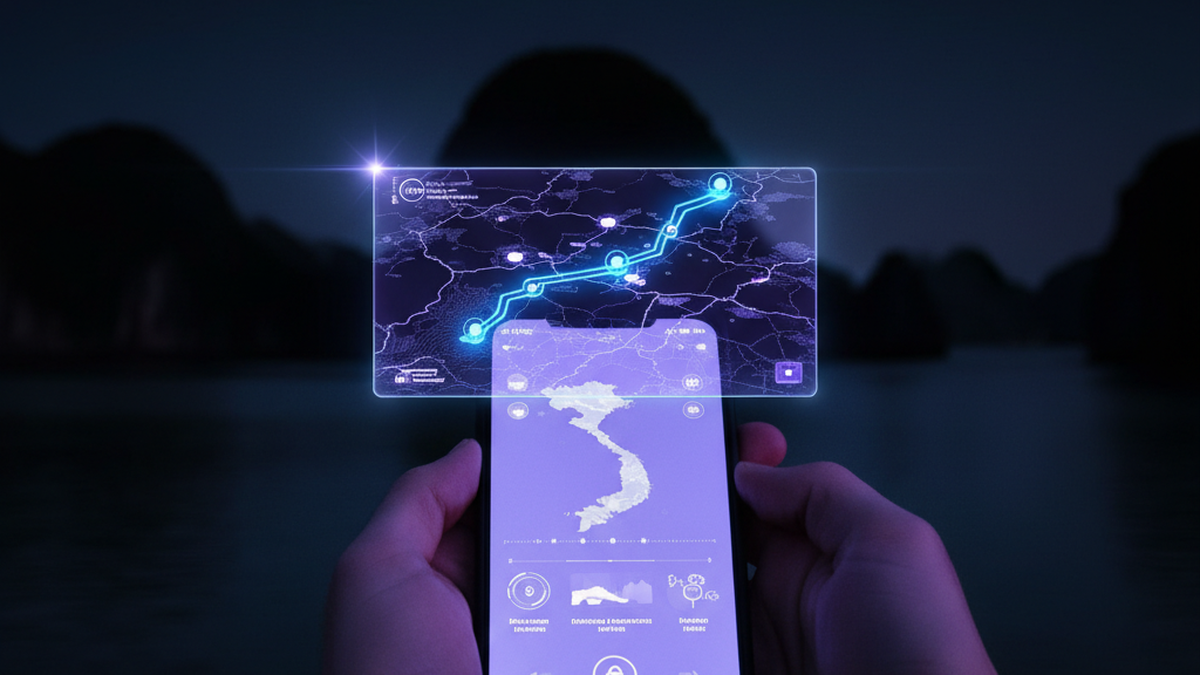
In December 2025, Sun Group, alongside the Vietnam National Administration of Tourism (VNAT) and government support, unveiled a project that had been quietly building for two years: the Visit Vietnam platform. Think of it as a national AI super-app for tourism, built from the ground up to handle everything a traveller needs.
The platform launched in limited form in December, with full public availability scheduled for Q2 2026. Its core features include an AI Travel Assistant that generates personalised itineraries based on interests, budget, and travel dates, plus one-click booking for accommodation, flights, activities, and restaurants. Real-time crowding data, weather updates, and local event calendars round out the offering, all designed for mobile-first users with offline functionality for areas with patchy connectivity.
By The Numbers
- 81%: Vietnamese travellers intending to use AI for next trip planning, the highest rate in Asia (Agoda 2026 Travel Outlook Report)
- 86%: Vietnamese travellers who trust or feel neutral about AI-generated travel information
- 63%: Regional Asian average for AI travel adoption intention
- 30%: Travellers who use AI specifically for personalised itinerary creation
- 25 million: Vietnam's international arrivals target, with the Visit Vietnam platform designed to convert interest into bookings
By 2027, Sun Group plans to expand Visit Vietnam into a full super-app with blockchain authentication and data-as-a-service capabilities. Third-party travel companies, tour operators, and even regional competitors could eventually plug into this infrastructure, turning Vietnam's platform into something larger than a single nation's tourism project.
From Booking Tool to Lifestyle Shift
Imagine landing in Da Nang. Your phone already knows which beaches have good weather tomorrow, which restaurants near your hotel have tables at 7pm, how crowded the temples are at different times, and what translation support you need. An AI assistant has already built three alternative itineraries based on your preferences. You book a cooking class with one click. A driver is arranged. By the time you have cleared customs, your entire first day is structured, personalised, and booked.
For many travellers, especially those using AI for the first time, this feels seamless. For Vietnam's tourism industry, it is economic opportunity. For the platform makers, it is data.
The comparison to other AI-driven lifestyle shifts is instructive. When Samsung rolled out AI companions for everyday life in Asia^, adoption depended on trust and usefulness. When on-device AI began replacing the smartphone's traditional role^, the pattern was the same: simplification, personalisation, and removal of friction. Travel planning had all the inefficiencies of shopping. AI travel just applies the same logic.
Agentic AI will redefine travel and hospitality in 2026." — IDC Market Analysis, 2026
The Trust Question
The 86% trust figure deserves unpacking. Vietnam's data suggests three things are happening simultaneously. First, when AI recommendations link to real, verifiable data (booked tables, actual pricing, confirmed locations), trust increases dramatically. Second, Vietnamese travellers using AI for domestic travel already know the territory, so they can instantly verify whether a suggestion is credible. Third, the 59% who responded "neutral" are not sceptics. They are pragmatists who will use AI if it works, and that is actually the healthiest stance toward new technology.
When CNBC reported in March 2026^ on the problem of "AI travel hallucinations," where AI systems confidently recommend non-existent restaurants or attractions, it surfaced a real gap. Vietnam's Visit Vietnam platform addresses this by connecting directly to local business data, real-time booking systems, and official tourism databases rather than relying solely on AI training data.
| Market | AI Travel Adoption | Trust in AI Info | Notable Initiative |
|---|---|---|---|
| Vietnam | 81% | 86% trust/neutral | Visit Vietnam super-app (Q2 2026) |
| Asia Regional Average | 63% | Not reported | Various private platforms |
| Singapore | High (exact % unreported) | High | World leader in per-capita AI use |
| Philippines | Growing | Moderate | ASEAN tourism AI integration |
| Thailand | Growing | Moderate | Government AI tourism strategy |
Agoda, Google, and ChatGPT are already acting as AI travel assistants. So why does a national platform matter? Integration. The Visit Vietnam platform connects directly to local businesses, real-time data sources, booking systems, and government tourism infrastructure. A third-party AI works from the outside in, scraping data and making guesses. Vietnam's platform works from the inside out, with verified information, official partnerships, and zero latency between discovery and booking.
That is the same advantage Singapore has built^ with its AI infrastructure: local systems, government backing, and integration depth that foreign platforms cannot match. It is also what is driving Southeast Asia's enterprise AI adoption^ ahead of global averages. Vietnam's new AI law^ provides the regulatory backbone that gives both businesses and consumers confidence in platforms like this.
Frequently Asked Questions
Will the Visit Vietnam platform work for international travellers who do not speak Vietnamese?
Yes. The platform includes real-time translation and is designed for mobile-first use by non-Vietnamese speakers. The December 2025 soft launch confirmed that English-language interfaces and multilingual support are core features, with full language options available at the Q2 2026 public release.
How does the platform prevent AI hallucinations about attractions and restaurants?
The platform uses verified local business data, real-time booking confirmations, and integration with official tourism databases rather than relying solely on AI training data. When the AI recommends a restaurant, that recommendation is cross-referenced against live reservation systems and current reviews, reducing the risk of recommending closed or non-existent venues.
Could this platform eventually replace travel agents?
For routine bookings and itinerary planning, likely yes. For complex trips requiring specialist expertise, or for travellers who value human advice, travel agents will remain valuable. The platform will handle transactional work but might actually increase demand for advisory services in areas like luxury travel or niche interests.
Why does Vietnam lead Asia in AI travel adoption?
A combination of factors: a young, digitally native population, high smartphone penetration, a culture of early technology adoption (Vietnam was among the fastest adopters of ride-hailing and mobile payments in Southeast Asia), and a tourism industry that accounts for a significant share of GDP, creating strong incentives for innovation.
When does the Visit Vietnam platform fully launch?
The full public version is scheduled for Q2 2026. Sun Group plans to expand it into a complete super-app by 2027, adding blockchain authentication and data-as-a-service capabilities that would let third-party travel companies plug into the infrastructure.