

South Korea's Answer to the Loneliness Crisis Sits on 12,000 Sofas
In a cramped flat in Seoul's Guro district, a 78-year-old woman shares her breakfast routine with a soft companion perched on her sofa. The doll, called Hyodol, responds with the voice of a seven-year-old grandchild, asking gentle questions about her health and reminding her when it's time for blood pressure medication. More than 12,000 of these AI-powered companion robots now live with elderly South Koreans who spend their days alone, representing the country's most ambitious attempt to address a demographic crisis through artificial intelligence.
South Korea crossed into "super-aged" territory in 2024, with over 20% of its population aged 65 or older. Single-person households hit a record 8.05 million that same year, accounting for more than 36% of all households. Among those aged 60 and above, nearly three million live entirely on their own. The question facing South Korea today will confront most of Asia within a decade: when families shrink and care workers disappear, who looks after the old?
As we explored in our recent analysis of AI companions across Asia, South Korea's approach represents one of the most comprehensive deployments of eldercare technology in the world. But it also raises fundamental questions about privacy, surveillance, and what happens when machines become primary caregivers.
From Confucian Values to ChatGPT Conversations
Hyodol takes its name from a Confucian principle of filial devotion. The company behind it, also called Hyodol, launched the first version in 2019 with backing from South Korea's Ministry of Industry and Technology and the Guro district government, which jointly invested 200 million won. Each unit costs around 1.6 million won (roughly $1,150), though most users receive government subsidies.
What began as a simple talking toy has evolved into something closer to a remote care platform. The current model runs on ChatGPT for natural conversation, uses an infrared neck sensor to detect whether its owner is moving around the home, and records daily voice responses through a chest microphone. Microsoft AI analyses those voice logs to assess emotional state and cognitive decline. If no movement is detected within 24 hours, the system alerts a nursing team automatically.
"What older adults fear is not death. What they fear most is loneliness." - Kim Sun-hwa, Director, Gungdong Welfare Centre
The doll asks simple health questions each morning, administers cognitive quizzes, plays songs on request, and connects directly to a 24/7 healthcare centre in an emergency. For the social workers managing hundreds of elderly residents, it has become an essential screening layer that catches problems before they become crises.
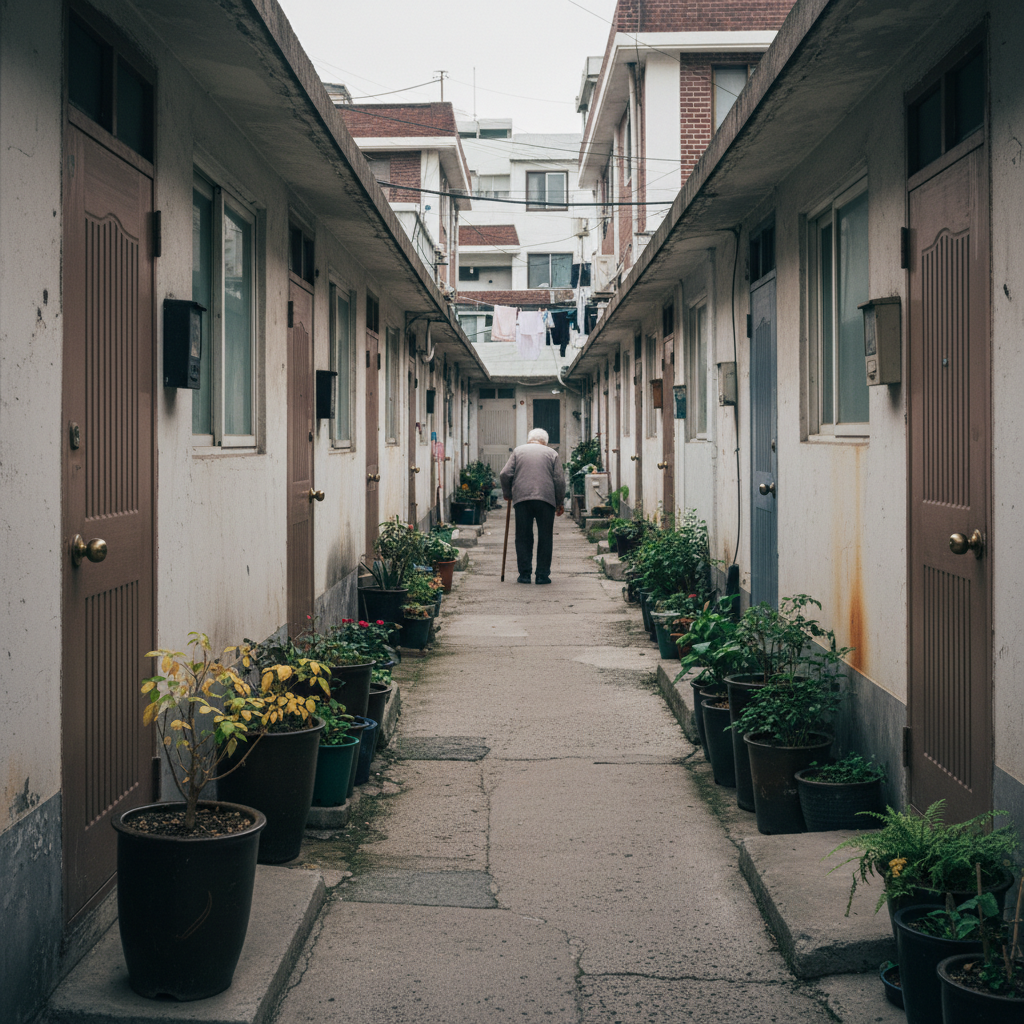
"Hyodol now handles our first layer of oversight. I can't possibly keep an eye on everyone from my desk." - Ryu Ji-yeon, Social Worker, Gungdong Welfare Centre
The Stark Reality Behind the Statistics
South Korea's demographic data reveals a crisis that numbers alone struggle to convey. In 2024, 76.9% of unclaimed deceased bodies in Seoul were aged 60 or older. Publicly funded funerals for people who died alone rose to 1,407, up from 382 in 2018. The elderly suicide rate ranks first among OECD nations, a grim testament to the isolation many face.
A March 2024 government survey found that loneliness rates climb sharply with age and poverty. Among those in their 50s, 41.7% reported persistent loneliness. For households earning less than one million won per month (roughly $700), the loneliness rate hit 57.6%, about 20 percentage points above the national average.
The care infrastructure cannot keep pace with demand. South Korea lacks 190,000 care workers today, a gap projected to hit 1.55 million by 2032. The national long-term care insurance fund faces exhaustion by 2030. Home-care aides visit for brief windows, sometimes just 30 minutes, leaving elderly residents alone for most of their days.
"The care we provide is just a fleeting moment for them." - Sung Kwang-hee, Home-Care Aide, Guro District
Asia's Companion Robot Arms Race
South Korea is not alone in turning to machines for eldercare solutions. Japan, the world's oldest major economy, has invested heavily in care robots since the early 2010s, with companies like SoftBank deploying Pepper in nursing homes and Sony repositioning its Aibo robotic dog as a companion for elderly owners. Japan's government subsidises up to two-thirds of the cost for care facilities adopting approved robots.
China faces a similar demographic cliff, with its population aged 60 and above surpassing 300 million in 2024. A University of Hong Kong-backed study found that AI chatbots significantly reduced loneliness among empty-nest elderly in rural provinces. This trend aligns with broader patterns we've seen in AI therapy applications across Asia, where technology fills gaps in traditional mental health support.
In Singapore, whilst youth mental health chatbots like Wysa have gained traction, the government is also piloting smart home monitoring for elderly residents living in public housing blocks. Taiwan has taken a different approach, integrating AI health coaches directly into national healthcare systems to reach millions of users.
| Country | Elderly Population Share | Key AI Companion Initiative | Stage |
|---|---|---|---|
| South Korea | 20.1% (65+) | Hyodol AI doll, 12,000+ deployed | Scaling nationwide |
| Japan | 29.3% (65+) | Government-subsidised care robots | Established |
| China | 21.1% (60+) | LLM chatbots for rural elderly | Research and pilots |
| Singapore | 19.1% (65+) | Smart home monitoring pilots | Early pilots |
Hyodol's ambitions now stretch well beyond South Korea. The company registered the doll with the US Food and Drug Administration in late 2024 and is adapting the chatbot to speak English, Chinese, and Japanese. CEO Kim Ji-hee has said the US launch targets early 2026, aimed squarely at America's ageing baby boomer population.
The Privacy Cost of Digital Caregiving
For all its benefits, Hyodol raises questions that South Korea has barely begun to address. The doll records daily conversations, monitors movement patterns, and analyses emotional states from voice data. All of this feeds back to care teams and, potentially, to the company's servers, creating what amounts to comprehensive surveillance of the most vulnerable population.
Hyodol says it stores anonymised user data for three years, but the definition of "anonymised" varies, and elderly users are unlikely to read or understand data consent forms. The people most vulnerable to loneliness are also the people least equipped to evaluate surveillance trade-offs. This mirrors broader concerns we've documented about AI mental health applications across Asia.
- Hyodol records daily voice responses and analyses emotional tone using Microsoft AI, with data stored for three years
- Infrared sensors track movement continuously, alerting care teams if no activity is detected within 24 hours
- South Korea has no dedicated regulatory framework for AI companion data collected in private homes
- Elderly users rarely have the digital literacy to evaluate data consent terms or privacy implications
- The doll's FDA registration in the US may impose stricter data handling requirements than currently exist in South Korea
How does Hyodol protect user privacy?
The company claims to anonymise and encrypt voice data, storing it for three years on secure servers. However, South Korea lacks specific regulations for AI companion privacy, and elderly users rarely understand the implications of data collection in their homes.
Can Hyodol replace human caregivers?
No, Hyodol is designed to supplement, not replace, human care. It provides monitoring, companionship, and emergency alerts, but cannot perform physical care tasks like medication administration, mobility assistance, or medical treatment.
How much does Hyodol cost?
Each unit costs approximately 1.6 million won ($1,150), but most elderly users receive government subsidies through local district programmes. The Guro district government co-funded the initial deployment with 200 million won in investment.
What happens if the AI system fails?
Hyodol includes backup systems and direct connection to 24/7 healthcare centres. If the device malfunctions or loses internet connectivity, care teams are automatically notified. The infrared sensors operate independently of the conversational AI system.
Are other countries adopting similar programmes?
Japan has extensive government-subsidised care robot programmes, whilst China pilots AI chatbots for rural elderly populations. Hyodol plans US market entry in 2026, with FDA registration completed in late 2024 for regulatory approval.
The broader implications extend far beyond South Korea's borders. As AI eldercare robots expand across Asia's ageing societies, the Hyodol model offers both a template and a warning. The technology works, the demand is undeniable, but the long-term consequences remain unknown. How do you weigh companionship against surveillance, efficiency against human connection? Drop your take in the comments below.
Comments
Sign in to join the conversation. Be civil, be specific, link your sources.