

The Wearable AI Revolution Starts in Asia's Manufacturing Heartlands
Global smart glasses shipments grew 139% year-on-year in the second half of 2025, according to Counterpoint Research. AI-enabled models accounted for 88% of those shipments, effectively ending the era of basic audio-only smart glasses. Total global shipments reached 4.3 million units in late 2025, up 74% in a single year.
China sits at the centre of this wave. The country shipped more than 620,000 smart glasses units in the same period, with IDC projecting that China's market will nearly double by the end of 2026. Rokid, XREAL, and Xiaomi are expanding aggressively, while Meta's Ray-Ban partnership continues to set the global pace.
The timing isn't coincidental. As we've seen with other AI-powered consumer devices, Asia's manufacturing dominance creates a feedback loop where innovation happens faster and reaches mainstream adoption sooner.
Why AI Transformed Smart Glasses From Novelty to Necessity
Smart glasses have existed for over a decade, but earlier versions like Google Glass failed because they were expensive curiosities without clear daily use cases. The addition of AI changes the proposition fundamentally. Instead of a heads-up display showing notifications, AI-powered glasses can translate languages in real time, identify objects, summarise documents, navigate cities, and respond to voice commands with contextual understanding.
"China's advantages are self-evident. The ecosystem and its supply chain are all in China, and China produces a lot." - Misa Zhu, CEO, Rokid
This shift from display to intelligence makes 2026 different from every previous attempt at mainstreaming smart eyewear. The glasses aren't just showing information; they're understanding what you're looking at and helping you act on it.
China's Supply Chain Stranglehold
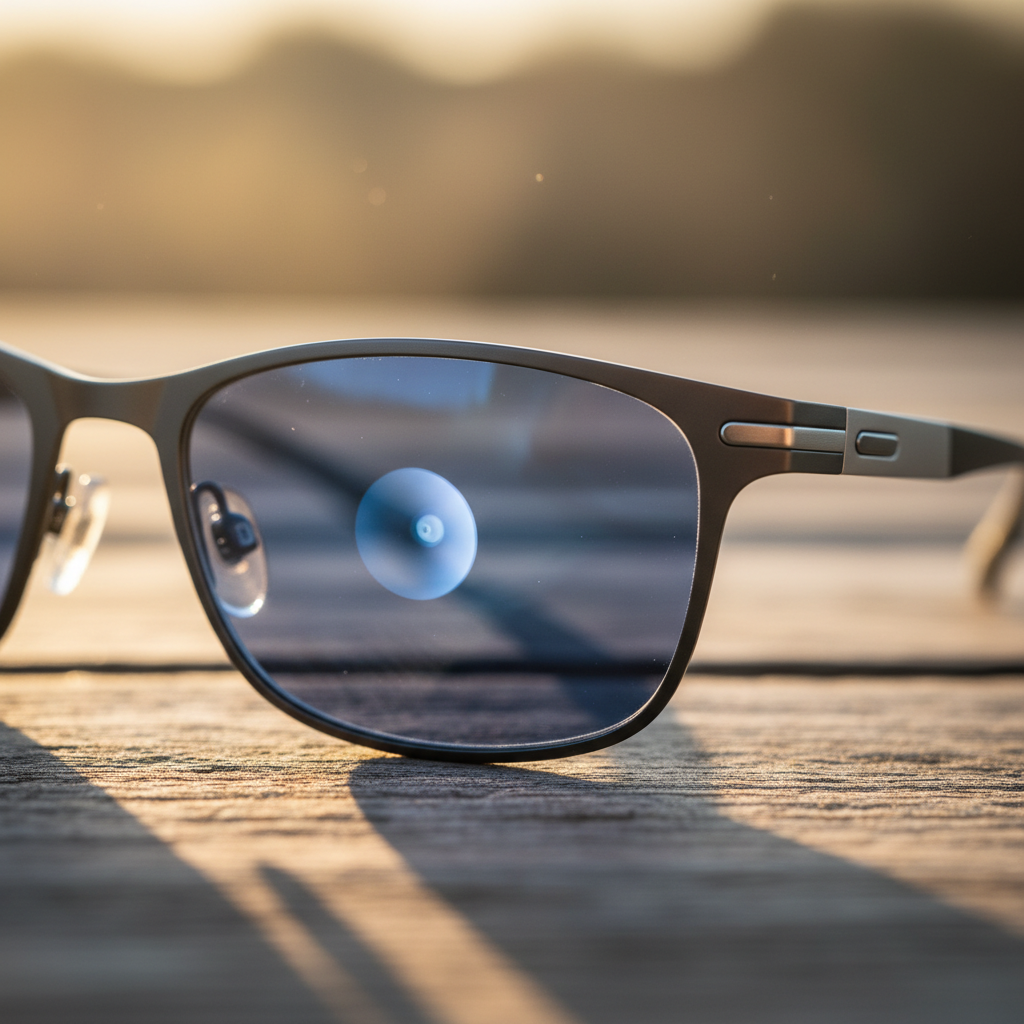
China controls more than 80% of the global smart glasses supply chain, according to Bank of America Securities data. This isn't just about assembly. Chinese companies manufacture the micro-displays, lenses, sensors, and chipsets that go into smart glasses from nearly every brand, including Western ones.
That supply chain advantage translates directly into price competitiveness. Chinese-made AI smart glasses retail for a fraction of what Western competitors charge, making mass adoption feasible in price-sensitive Asian markets. Rokid is expanding its retail network across Asia and Europe, while Xiaomi's debut AI glasses became the third best-selling model in the first half of 2025.
The Key Players and Their Strategies
| Company | Product | AI Capabilities | Key Market |
|---|---|---|---|
| Rokid | Multiple models | Multi-model AI (including OpenAI) | China, expanding globally |
| XREAL | AR glasses | Spatial computing, AI assistant | China, United States |
| Xiaomi | AI glasses (debut 2025) | Integrated AI assistant | China, Southeast Asia |
| Meta | Ray-Ban Meta | Meta AI multimodal | Global (India launch April 2025) |
Meta's Ray-Ban smart glasses remain the global volume leader, but their India launch in April 2025 marked a significant push into Asia-Pacific. The Indian market offers massive scale potential for a device priced as a premium lifestyle accessory rather than a tech gadget. This mirrors broader patterns we've observed in Asia's AI consumer adoption.
Daily Life With AI Glasses: Beyond the Tech Demos
The use cases gaining traction aren't the futuristic ones that tech demos emphasise. They're mundane, practical tasks that become easier when your hands are free and your eyes are on the world rather than a phone screen.
- Real-time translation overlays during conversations, particularly useful in multilingual Asian cities like Singapore, Hong Kong, and Tokyo
- Navigation directions displayed in your field of vision while walking or cycling
- Voice-driven messaging and calling without reaching for a phone
- Object and text recognition for accessibility, including reading menus in foreign languages
- Quick AI queries answered through voice while cooking, shopping, or commuting
- Document scanning and summarisation during meetings or conferences
"2026 is expected to be a key turning point for the mass rollout of smart glasses in China, with major shifts anticipated in product design, user interaction, and service models." - IDC forecast, cited in China Daily, February 2026
These practical applications align with how people actually use AI technology in their daily lives: for convenience, efficiency, and solving immediate problems rather than transformational experiences.
What Could Slow the Momentum
Battery life remains the biggest practical constraint. Most AI smart glasses last four to six hours with active AI use, which works for a commute but not for an all-day device. Privacy concerns are also real: cameras on faces make people uncomfortable, and several Asian cities are already debating whether smart glasses should be restricted in certain public spaces.
There's also the fashion problem. Smart glasses need to look like glasses people would actually choose to wear. Rokid and Meta have made progress here, but many models still look distinctly tech-forward in a way that limits mainstream appeal.
Cultural acceptance varies significantly across Asia. While younger consumers in cities like Seoul, Shenzhen, and Tokyo embrace wearable technology, more conservative markets remain skeptical about face-mounted cameras and always-on AI assistants. This connects to broader questions about AI safety and privacy that Asian governments are actively addressing.
Are AI smart glasses ready for everyday use in 2026?
For specific tasks like translation, navigation, and voice queries, yes. As an all-day replacement for checking your phone, not yet. Battery life and social acceptance remain the main barriers to widespread adoption.
How much do AI smart glasses cost in Asia?
Chinese-made models start from around US$200-400, while Meta's Ray-Ban smart glasses retail at US$299 and up. Premium AR models from XREAL can exceed US$500. Prices are falling as supply chains scale.
Will AI smart glasses replace smartphones?
Not in 2026, and probably not for several years. They'll increasingly handle tasks that currently require pulling out your phone: quick searches, navigation, translation, and messaging. Think complement, not replacement.
Which countries in Asia are adopting AI smart glasses fastest?
China leads in both manufacturing and adoption, followed by South Korea and Japan. Singapore and Hong Kong show strong uptake among professionals, while India's market is growing rapidly following Meta's April 2025 launch.
What privacy concerns exist with AI smart glasses?
Recording capabilities raise concerns about consent and surveillance. Several Asian cities are considering regulations around usage in public spaces, schools, and workplaces. Data storage and AI processing locations also remain contentious issues.
As AI continues reshaping how we interact with technology, smart glasses represent a fundamental shift towards ambient computing. The devices that succeed will be those that seamlessly integrate into daily routines without demanding constant attention. What's your experience with wearable AI technology? Drop your take in the comments below.