

Netflix Bets on Filmmaker-Led AI With Its Boldest Acquisition in Years
Netflix has agreed to acquire InterPositive, an AI filmmaking technology company founded by actor and director Ben Affleck, in a move that signals the streaming giant's most direct push yet into proprietary AI tooling for creative production. Affleck will join Netflix as a senior adviser, and the entire InterPositive team will transition across as part of the deal. Financial terms were not disclosed.
The acquisition is notable for several reasons. It positions Netflix not merely as a distributor of AI-assisted content, but as a developer of the underlying tools. It also marks one of the rare occasions Hollywood's most powerful streaming platform has chosen to buy rather than build, and it does so with a filmmaker's fingerprints explicitly on the product.
By The Numbers
- 2022: The year Ben Affleck quietly founded InterPositive, working alongside engineers, researchers, and creative executives.
- December 2024: Netflix's previous acquisition was Ready Player Me, an avatar creation platform, making InterPositive one of only two recent buys outside the Warner Bros. discussions.
- 1 model: InterPositive's first AI model, trained on a proprietary dataset captured on a closed soundstage, focuses on visual logic and editorial consistency rather than actor performance.
- 2024: Affleck publicly outlined his AI philosophy at a CNBC conference, predicting the technology would lower barriers to entry and reduce production costs without replacing creative talent.
- 2 roles: Affleck now holds both a senior adviser position at Netflix and a first-look streaming deal for his production company Artists Equity, announced just days before the InterPositive deal.
What InterPositive Actually Does
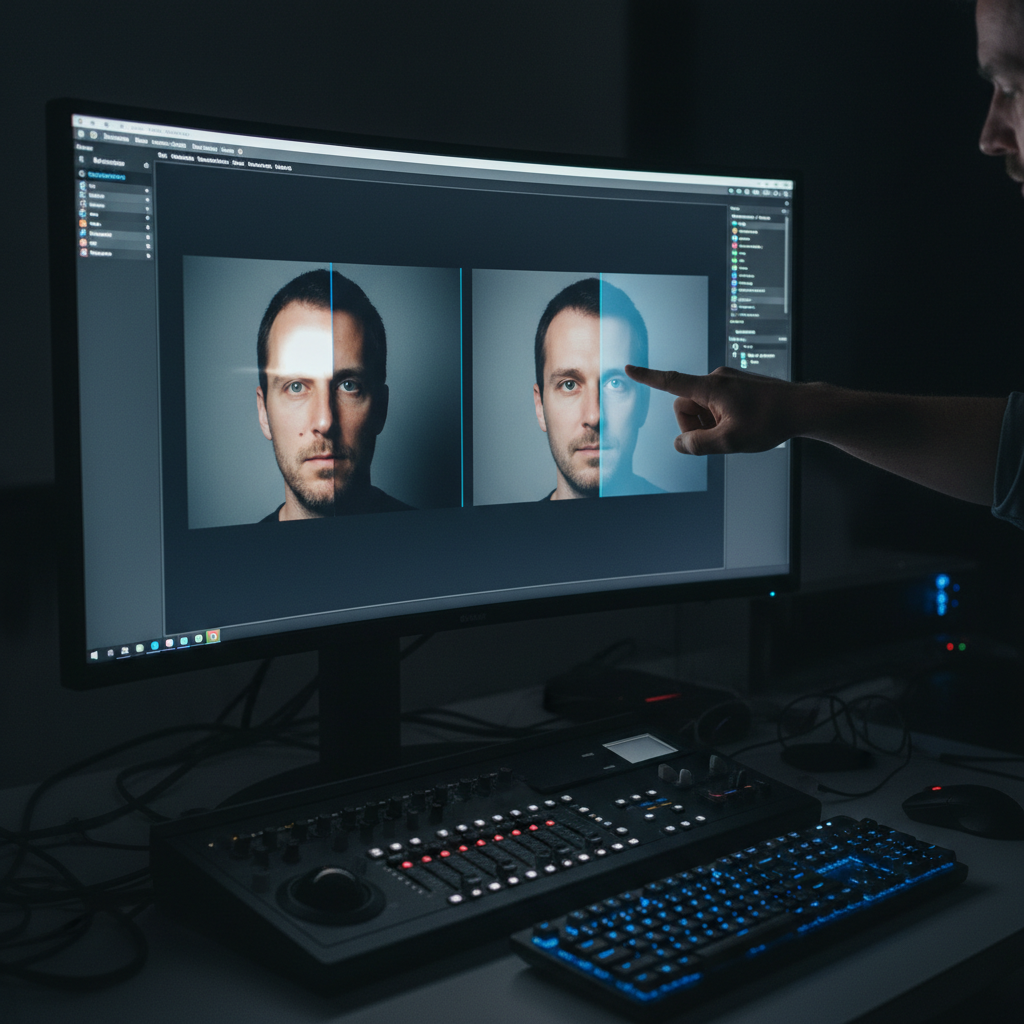
InterPositive is not a general-purpose generative AI tool. Its focus is narrow and deliberately so. The company captured a proprietary dataset on a closed soundstage, using that footage to train a model designed to understand the visual grammar of filmmaking: shot continuity, lighting logic, editorial rhythm, and how to handle real-world production problems such as missing shots, background replacements, or incorrect exposure.
Crucially, the technology is not designed to synthesise or replace actor performances. It operates at the level of production craft, helping directors and editors maintain visual consistency and resolve technical problems faster. Filmmakers can also upload their own dailies to fine-tune the model for a specific project, giving the tool a degree of production-specific customisation that generic AI platforms cannot match.
"What AI is going to do is going to disintermediate the more laborious, less creative and more costly aspects of filmmaking that will allow costs to be brought down, that will lower the barrier to entry, that will allow more voices to be heard, that will make it easier for the people who want to make Good Will Huntings to go out and make it." , Ben Affleck, CNBC Conference, 2024
That framing matters enormously in the current climate. The entertainment industry remains deeply suspicious of AI following the 2023 writers' and actors' strikes, both of which placed AI rights at the centre of contract negotiations. Any tool that touches creative production carries significant political weight in Hollywood, and Netflix appears acutely aware of this.
Netflix's Strategic Position on AI Filmmaking Tools
To get ahead of potential backlash, Netflix released a video discussion on the same day as the announcement, featuring Affleck alongside Elizabeth Stone, Netflix's chief product and technology officer, and Bela Bajaria, chief content officer. The message was consistent: these tools expand creative choice, they do not replace creative labour.
"Our relationship with artists has always been grounded in trust: supporting the full range of their creativity and ensuring they have the power to decide how their films and shows are made. We believe new tools should expand creative freedom, not constrain it or replace the work of writers, directors, actors, and crews." , Bela Bajaria, Chief Content Officer, Netflix
Stone was equally pointed in her framing, describing InterPositive's technology as "purpose-built for filmmakers and showrunners" and emphasising that the acquisition reflects a shared philosophy rather than an opportunistic technology grab. Whether that framing will satisfy the guilds and unions that fought hard to establish AI protections in their contracts remains to be seen.
What is clear is that Netflix is now one of the few major entertainment companies that owns its own AI filmmaking infrastructure. That is a meaningful competitive advantage as production costs rise and the pressure on studios to deliver content faster intensifies.
Affleck's Evolving Role at Netflix
The InterPositive acquisition deepens what is already becoming a substantial relationship between Affleck and Netflix. Just days before the deal was announced, his production company Artists Equity, co-founded with Matt Damon, signed a streaming first-look deal with the platform. His next directorial feature, Animals, starring Affleck alongside Kerry Washington and Gillian Anderson, is also scheduled for a Netflix release later this year.
But the InterPositive deal is something categorically different. Affleck is no longer simply a talent relationship or a content partner. He is now a technology adviser embedded within one of the world's most powerful media companies, with a mandate that appears to extend to shaping how Netflix thinks about the intersection of AI and the creative process.
Affleck has been unusually forthcoming about his views on AI for a working filmmaker. He has consistently argued that the technology poses the greatest threat to the most mechanical parts of production, not to the human imagination at the centre of storytelling. InterPositive was built to embody that thesis.
The Asia-Pacific Picture
The Netflix-InterPositive deal has direct implications for the Asia-Pacific content market, where Netflix has spent heavily building original production capacity. The platform has invested billions across South Korea, Japan, India, and Southeast Asia, funding original series and films that increasingly serve both local and global audiences.
AI filmmaking tools of the kind InterPositive has developed could significantly reduce post-production costs in these markets, where local studios often lack the technical infrastructure available to major Hollywood productions. Tools that handle visual consistency, lighting correction, and shot replacement automatically would be particularly valuable on productions with tighter budgets and faster turnaround requirements, characteristics that describe the majority of Netflix's Asian originals slate.
South Korea is an especially relevant case. The Korean production industry has become one of Netflix's most strategically important markets following the global success of titles like Squid Game, and the pressure to replicate that success at scale is intense. AI-assisted production tooling could help Korean studios deliver at a pace and quality level that sustains Netflix's investment there.
Beyond production, the deal lands at a moment when Vietnam has enforced Southeast Asia's first AI law, signalling that regulatory frameworks around AI use in commercial contexts are beginning to take shape across the region. Netflix will need to navigate these emerging rules carefully as it deploys InterPositive's tools on productions in multiple jurisdictions.
India is another market where the acquisition could reshape dynamics. With India positioning itself as an AI superpower, Netflix's move to own proprietary AI production technology rather than licence it from third parties puts the company in a stronger position to argue that its use of AI is controlled, transparent, and creator-aligned, arguments that will matter as Indian regulators and talent guilds develop their own positions on AI in the creative industries.
The broader regional story is one of convergence. As explored in our coverage of how AI has already changed how Asia shops and consumes content, the technology is reshaping audience expectations as fast as it is reshaping production. Netflix owning the tools on both sides of that equation is a significant strategic position.
What Makes This Acquisition Different
| Factor | Generic AI Platforms | InterPositive |
|---|---|---|
| Training data | Broad, web-scraped, mixed provenance | Proprietary, closed-soundstage capture |
| Focus | General-purpose content generation | Visual logic, editorial consistency, production problem-solving |
| Actor performance | Often includes synthetic performance tools | Explicitly excluded from scope |
| Customisation | Limited project-level personalisation | Directors can upload dailies to tune the model |
| Founding philosophy | Varies; often commercially led | Built by a filmmaker, explicitly for filmmakers |
The distinction between InterPositive and the broader AI tool landscape is more than marketing. The training data provenance question has become central to AI litigation and regulation globally. A model trained on a proprietary, consent-clear dataset is in a fundamentally different legal and ethical position than one trained on scraped internet content. For Netflix, that provenance clarity is not just philosophically appealing: it is commercially protective.
Netflix's acquisition strategy here also contrasts interestingly with how other technology and media companies are approaching AI. Rather than partnering with one of the large frontier model providers or deploying off-the-shelf generative tools, the company is building a differentiated stack specific to its core business. That reflects a maturity in thinking about AI that goes beyond the hype cycle. For more on how agentic AI thinking is developing beyond surface-level tutorials, see Andrew Ng's approach to teaching the underlying patterns of agentic AI.
Frequently Asked Questions
What is InterPositive and what does its AI technology do?
InterPositive is an AI filmmaking technology company founded by Ben Affleck in 2022. Its core product is an AI model trained on a proprietary dataset captured on a closed soundstage, designed to assist directors and editors with visual consistency, lighting logic, and editorial problem-solving. It does not synthesise actor performances. Filmmakers can upload their own dailies to customise the model for a specific production.
Why did Netflix acquire InterPositive rather than build similar tools internally?
Netflix has historically preferred to build technology internally, making this acquisition notable. The decision to buy InterPositive appears driven by the proprietary nature of its training data, the clear filmmaker-first philosophy embedded in the product, and the strategic value of having Ben Affleck as a credible industry advocate for responsible AI use in creative production. The acquisition also gives Netflix a head start over rivals who are still partnering with third-party AI providers.
How does the Netflix-InterPositive deal affect Hollywood's concerns about AI replacing workers?
Netflix and Affleck have been deliberate in positioning InterPositive as a tool that handles the most mechanical and technical aspects of production, not one that replaces writers, actors, directors, or crew. The technology focuses on post-production consistency and problem-solving rather than content generation or performance synthesis. Whether Hollywood's unions accept that framing will depend on how the tools are deployed in practice and what contractual protections are negotiated around their use.
Netflix is now both a content platform and an AI toolmaker. Does that change how much you trust what ends up on your screen? Drop your take in the comments below.