

AI in Asia
3 Before 9: March 9, 2026
3 Before 9

Monday, 9 March 2026

3 Before 9: March 9, 2026

3 daily AI stories and 1 bold opinion before your 9am kopi

Listen to today's 3 Before 9

Who should pay attention

AI Ethics Researchers | Government Contractors | AI Developers | Regulators

What changes next

Debate is likely to intensify regarding AI governance and military applications.

1

OpenAI's Head of Robotics Quits Over the Pentagon Deal

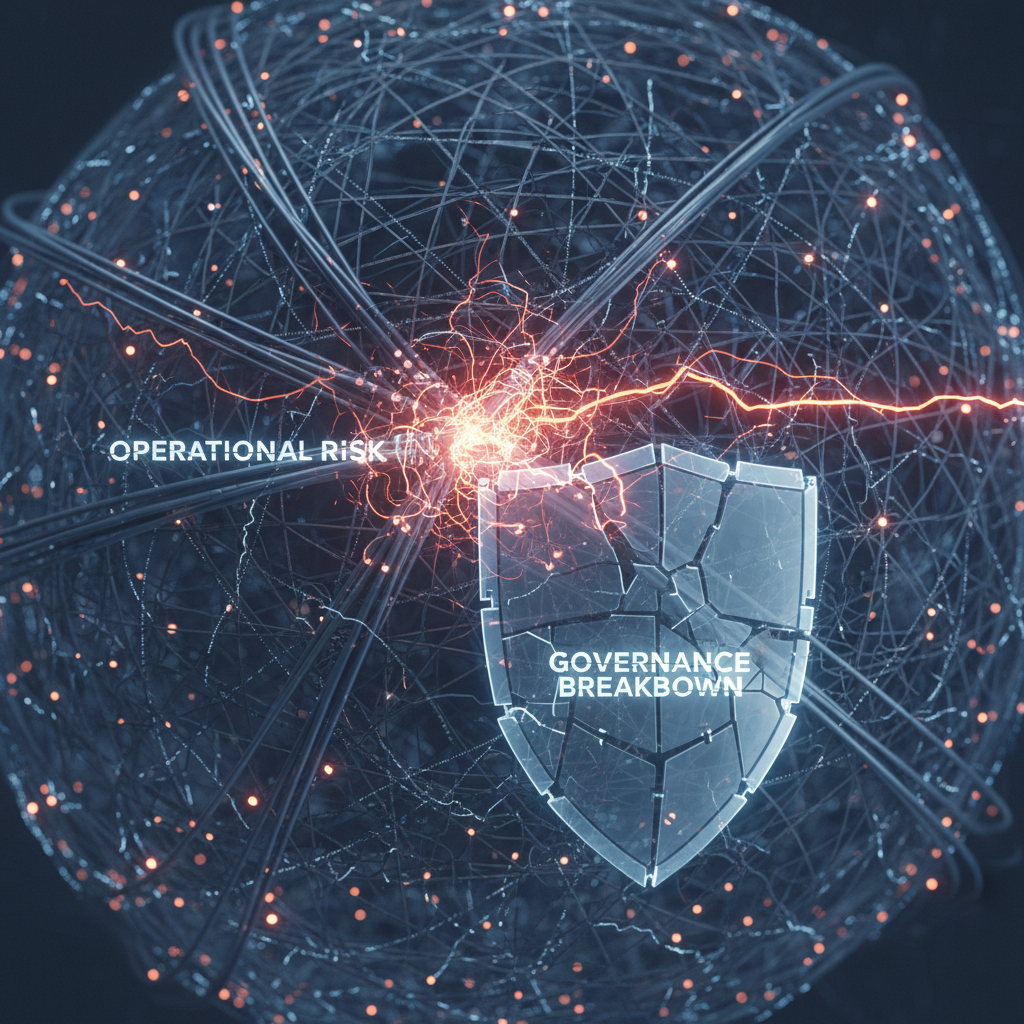
Caitlin Kalinowski, who led hardware and robotics at OpenAI, announced her resignation on Saturday, directly citing the company's agreement to deploy its models on the Pentagon's classified cloud networks. In a post on X she said the decision to proceed without clearly defined guardrails around domestic surveillance and lethal autonomy was rushed. "These are too important for deals or announcements to be rushed," she wrote. Kalinowski joined OpenAI in late 2024 from Meta, where she had led development of the company's AR glasses. OpenAI confirmed the departure and reiterated its red lines: no domestic surveillance, no autonomous weapons. CEO Sam Altman had already acknowledged the deal announcement looked sloppy. The resignation is a visible crack in internal consensus at a company that moved fast to fill the gap left by Anthropic's Pentagon standoff.

Why it matters for Asia

Talent departures over governance concerns carry a different weight than external criticism. They signal internal disagreement that cannot be easily managed by a press statement. For enterprise AI buyers in Asia, particularly in regulated industries or government-adjacent sectors, this episode underscores that governance is not just a procurement checkbox. It is becoming a live operational risk that can destabilise the vendor you depend on.

Read the full story
2

Anthropic Published the Most Rigorous Map Yet of AI's Real Impact on Jobs

A new Anthropic research paper released last week introduces a metric called "observed exposure" - the gap between what AI can theoretically do to a job and what it is actually doing today. Analysing around one million real Claude conversations against 800 occupations, researchers found that while large language models could theoretically handle 94% of tasks in computer and maths roles, actual observed coverage sits at around 33%. Unemployment rates for the most AI-exposed workers have not risen significantly since ChatGPT launched in 2022. The one clear early signal: job-finding rates for workers aged 22 to 25 entering high-exposure fields have dropped by approximately 14% compared to pre-AI baselines, suggesting companies are using AI to absorb entry-level workloads rather than hire.

Why it matters for Asia

This is the most grounded AI employment research published to date, built from real usage data rather than theoretical capability estimates. For employers across Southeast Asia navigating workforce planning, skills investment, and graduate hiring, the "hiring freeze over mass layoffs" pattern is a more actionable frame than the headline panic. The junior talent pipeline is where the pressure is landing first.

Read the full story
3

The World's Most Anticipated AI Model Is Now Weeks Overdue

DeepSeek V4, the Hangzhou startup's first major release since R1 launched in January 2025, has missed three consecutive release windows: mid-February, Lunar New Year, and the opening of China's National People's Congress in early March. Multiple credible sources including the Financial Times and Reuters confirmed the model exists and is in final testing. It is expected to be a trillion-parameter multimodal model with a 1 million token context window, natively processing text, images, and video. It was reportedly optimised for Huawei Ascend chips rather than Nvidia hardware, in a deliberate break from industry norms. Community consensus on developer forums now puts the release in the second week of March. DeepSeek has confirmed nothing.

Why it matters for Asia

The longer the delay, the more significant the release is likely to be. When R1 dropped, it rattled markets and triggered a global reassessment of Chinese AI capability. V4, if it matches the leaked benchmarks, would arrive as an open-weight multimodal model at roughly one-twentieth the cost per token of GPT-5, running on domestic Chinese hardware. For Asian enterprises evaluating AI infrastructure costs and supply chain exposure to US export policy, V4's architecture choices matter as much as its capabilities.

Read the full story

That's today's 3 Before 9.

Explore more at AI in Asia or share signals with us.

Recent Editions

View all

Sunday

26 April 2026

  • 1. Sarvam AI is closing a $300-350M Series B at a $1.5B valuation led by Bessemer with Nvidia, Amazon and HCLTech, India's first major sovereign-AI unicorn round.
  • 2. Tencent launched Hy3 Preview, a 295B-parameter MoE model, and swapped DeepSeek out of its Yuanbao chatbot in favour of the new in-house technology.
  • 3. Nissan committed to fitting AI-driven Level 2-plus hands-free driving from UK startup Wayve into 90 per cent of its future vehicle line-up.
Read edition

Friday

24 April 2026

  • 1. DeepSeek launches V4-Pro and V4-Flash with a 1-million-token context window, running on Huawei's new Ascend 950 supernode clusters and priced at roughly a tenth of OpenAI's output-token rate.
  • 2. SoftBank is seeking a $10 billion two-year margin loan collateralised by its OpenAI stake, pushing its total commitment to the ChatGPT maker to about $64.6 billion.
  • 3. TSMC unveiled A13, a 1.3nm-class shrink of A14 aimed at AI accelerators, with production slated for 2029 alongside a 1.2nm A12 variant, while A16 slips to 2027.
Read edition

Thursday

23 April 2026

  • 1. Microsoft pledges A$25 billion (US$17.9 billion) to make Australia its largest AI infrastructure hub, including skills training for three million workers.
  • 2. SK Hynix posts a record 72 per cent operating margin and US$27 billion quarterly profit as HBM demand keeps Asia's memory duopoly in the driver's seat.
  • 3. Japan's Nikkei 225 breaches 60,000 for the first time, but only 17 per cent of Tokyo stocks rose on the day, exposing a dangerously narrow AI-driven rally.
Read edition

Wednesday

22 April 2026

  • 1. LINE Yahoo launched Agent i on 20 April, a single AI agent now embedded in both the LINE app's 100m-plus user base and Yahoo! JAPAN, with enterprise and no-code versions due over the summer.
  • 2. SoftBank named Arm CEO Rene Haas to also run SoftBank Group International from 21 April, tightening coordination across the group's overseas chip and AI bets including Arm, OpenAI, Stargate and Project Crystal Land.
  • 3. Meta's $2 billion acquisition of Singapore-based Chinese AI start-up Manus is still under Beijing's national-security review, with co-founders barred from leaving China and the 'Singapore washing' route for China AI firms now under serious pressure.
Read edition

Tuesday

21 April 2026

  • 1. Qualcomm CEO Cristiano Amon met Samsung and SK Hynix executives in Seoul to pitch 2nm wafer orders and lock in memory supply for Snapdragon and AI platforms.
  • 2. Chinese humanoid robot makers shipped roughly 90 per cent of global units in 2025 but still trade at a valuation discount to pre-production US rivals.
  • 3. Volkswagen confirmed its China cars will ship with an on-device AI voice agent from H2 2026, built on tech from Tencent, Alibaba and Baidu.
Read edition

Monday

20 April 2026

  • 1. SK Hynix has begun mass production of its 192GB SOCAMM2 memory module, a low-power AI server part for Nvidia's Vera Rubin platform.
  • 2. Alibaba launched Qwen3.6-Max-Preview, its strongest Qwen model to date, demonstrating top performance in several coding benchmarks.
  • 3. TSMC raised its 2026 outlook after Q1 profit jumped 58 per cent, citing "extremely robust" AI chip demand that still outpaces supply.
Read edition